

It’s time to pull back the curtain on what’s really happening in Customer Success
We surveyed 394 CS professionals across seniority levels and company sizes to understand the state of AI in customer success beyond the flashy LinkedIn posts and doom and gloom prophecies.

The robots aren't coming for you (yet).
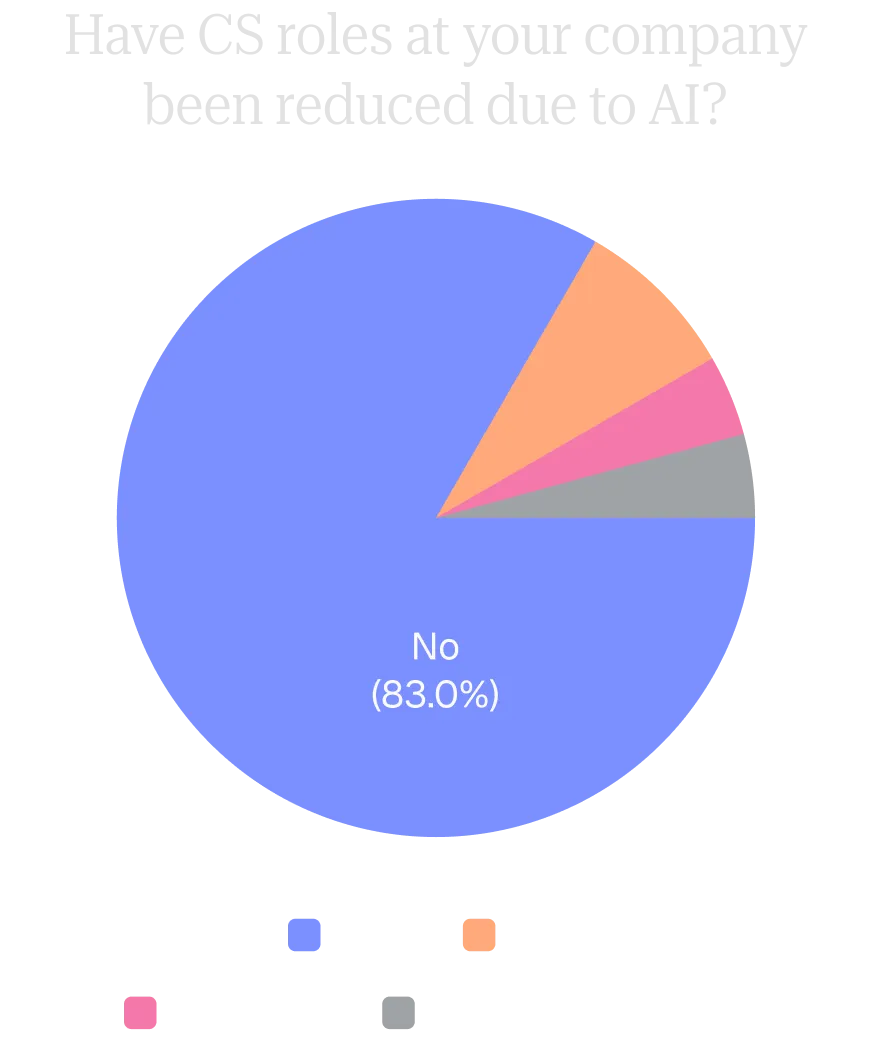
The mass layoff narrative isn't playing out for CS roles, at least not yet, and not at the scale the doom-sayers would have you believe. The vast majority of CS teams are intact.
But there's a catch. Senior leaders are more likely than ICs to report confirmed job cuts at their company, suggesting that the people most affected by headcount decisions are also the least informed about them.
83% of respondents reported that there have been no CSM workforce reductions at their companies due to AI.
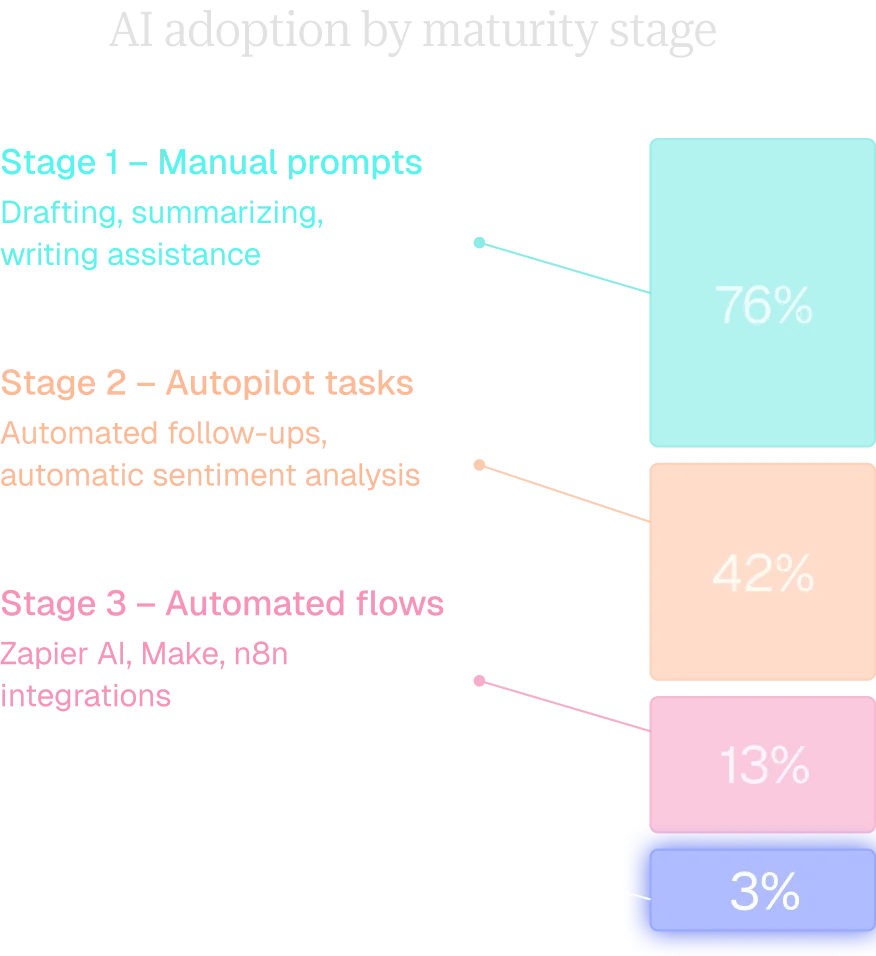
Only 3% of teams report having deployed AI that can operate with full autonomy…
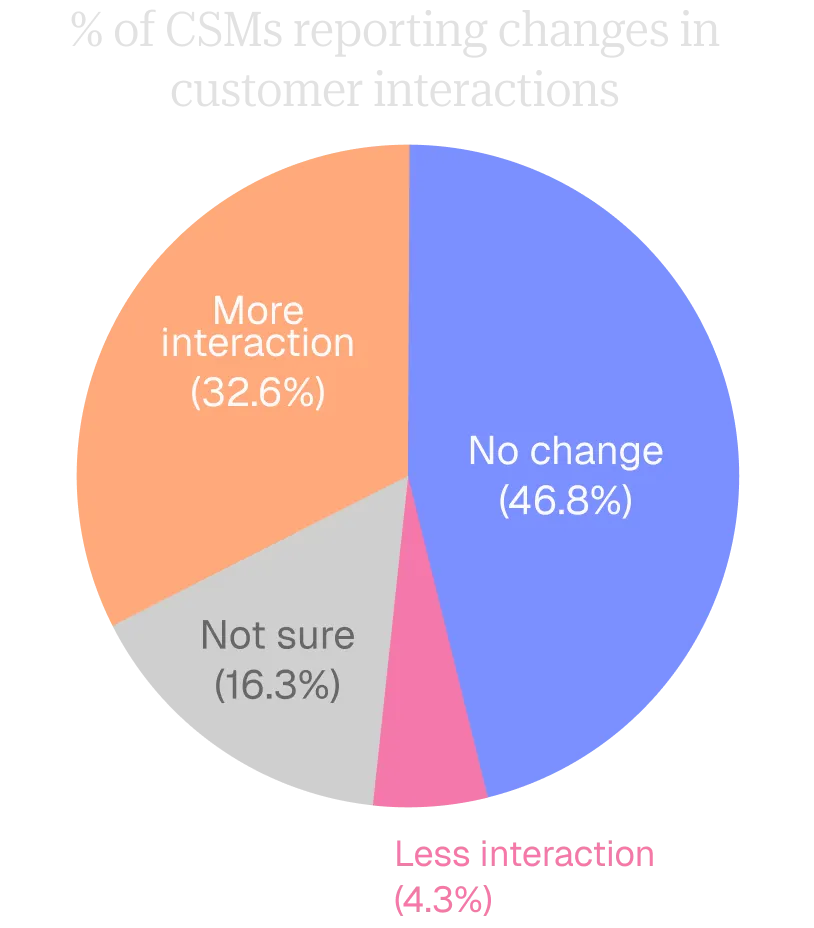
…and customer interaction levels remains high
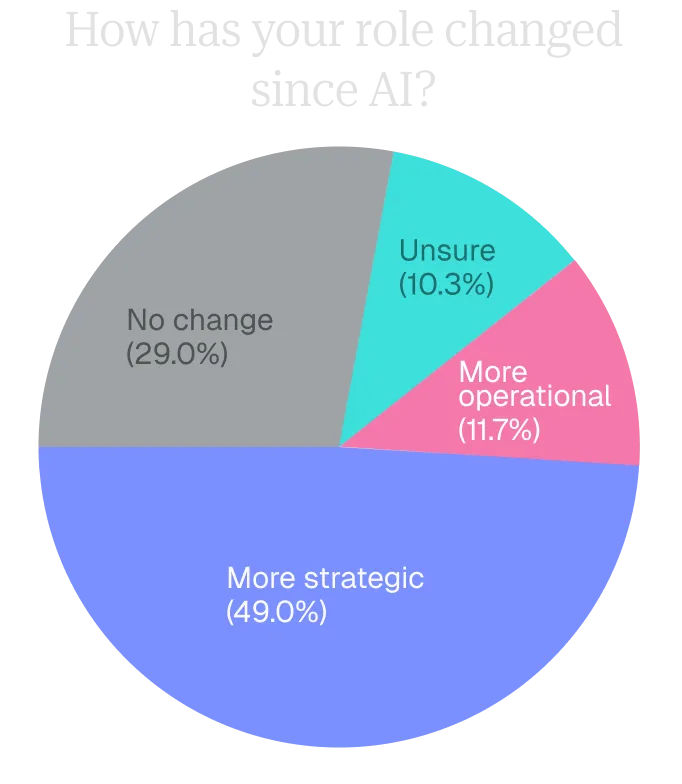
AI is making CS a more strategic function, and people are happier for it.
For a significant chunk of CS professionals, AI is changing the nature of the work itself. Less admin, more strategy, and more subsequent satisfaction within roles.
The pattern is consistent across the data. The teams that have moved beyond basic AI use aren't just more efficient, they're happier and more optimistic about where the profession is heading.
And when we asked CS professionals how they really feel about AI (the honest version, not the LinkedIn version), the positive sentiment won out.
Most people, when the survey is anonymous and the pressure to perform optimism is off, still think this is going somewhere good. That's not nothing.
49% of CS professionals reported their role becoming more strategic after using AI, which indicates that the hours saved are being reinvested into strategic work.
Among those who use AI in some form, the number of more satisfied individuals outnumbered the less satisfied ones by more than 3-to-1.

Respondents agreed more often with positive statements about AI than negative ones

Leaders and ICs are experiencing the “AI revolution” very differently — and it’s not how you might expect.
ICs show the most amount of pessimism about the future of CS compared to senior leaders.
But here's where it gets interesting:
Day-to-day, ICs are more likely to be satisfied in their roles than senior leaders since adopting AI.
For senior leaders, the data shows the opposite. They’re more likely to be dissatisfied (although the majority report greater satisfaction), but most likely to be optimistic about the future of CS.
Middle managers are doing well on all counts. They’re the most likely to be satisfied, most trusting of AI, and almost as optimistic about the future as senior leaders.
Senior leaders are
ICs are
Middle managers are
Changes you can make right now to build a satisfied, efficient team that embraces AI (instead of fearing it).
The data points to a clear path.
Teams that use AI to handle the busywork so they can maximize strategic work are the ones pulling ahead.
Here's what that looks like in practice.
Move beyond manual prompting by thinking in systems

Document your processes, identify the steps where AI could help, and begin incorporating it into your workflow.
Instead of asking AI ad hoc questions, you’re turning it into a repeatable part of your workflow:
- A consistent way to prep for QBRs
- A structured approach to summarising calls
- A repeatable method for spotting risks or expansion signals
This is how you ‘operationalize’ AI for maximum gains.
You don’t need full automation to get value. Even semi-structured workflows with AI embedded at key steps can significantly help save time.
Keep your foundations solid
If your data is messy, your processes are unclear, or your understanding of the customer is shallow, AI will reflect that. Faster outputs don’t fix weak foundations.
The teams that get the most out of AI are usually the ones that already:
- Have a clear view of their customer lifecycle
- Maintain reasonably clean and structured data
- Know what “good” looks like for their accounts
- Have defined playbooks, even if they’re not perfect
AI works best when it has something solid to build on.
Introduce friction in the right places
AI is a high-speed junior teammate. It can do the groundwork, generate the first draft, and identify patterns. But it still needs direction, correction, and final approval.
One mistake teams make is trying to remove friction completely with AI. But that friction might be where your value sits.
If an AI output is: 80% correct, the final 20% is your expertise.
Instead of avoiding review, build it into your workflow.
5. The bottom line
CS still needs humans. But humans that use AI to make work better are more strategic and more fulfilled.
CS is becoming the strategic function it’s always meant to be, and we built Velaris to accelerate that process.
Our AI platform centralizes customer data, surfaces signals, and handles the admin work so teams can experience more strategic, fulfilling work.
More insights in the full report
We have 50+ pages of findings, analysis, and recommendations that didn't make the highlight reel. Download the full report.



Velaris is an AI-native Customer Success Platform built for mid-market and enterprise B2B SaaS teams. From customer health scoring and churn prediction to onboarding automation, renewals, and expansion workflows, Velaris helps recurring revenue teams understand account health, reduce churn, and scale customer success with greater visibility and control.