We look forward to showing you Velaris, but first we'd like to know a little bit about you.


Top 10 Best AI Agents for Customer Success (2026)
AI agents can now handle much of the repetitive work in Customer Success, from monitoring account health to flagging churn risk and taking action. We compare 10 of the best AI agents for CSMs in 2026, including Gainsight Atlas, Agentforce, ChurnZero and Planhat, covering standout features, fit and pricing.
The Velaris Team
October 1, 2026
AI has become a staple of modern Customer Success Management, and the priority is no longer whether you are (or aren’t) using AI tools, but which ones you’re choosing to use. And of these, AI assistants that know how to autonomously fix your problems have become crucial in the CSM toolkit.
We gathered 10 of the best AI agents for Customer Success Managers in 2026, from AI-native Customer Success Platforms to marketplaces that provide Customer Success-focused agentic assistants. Whether you’re handling 50, 500 or 5000 accounts, all of these platforms are worth evaluating.
1. Gainsight Atlas Agents
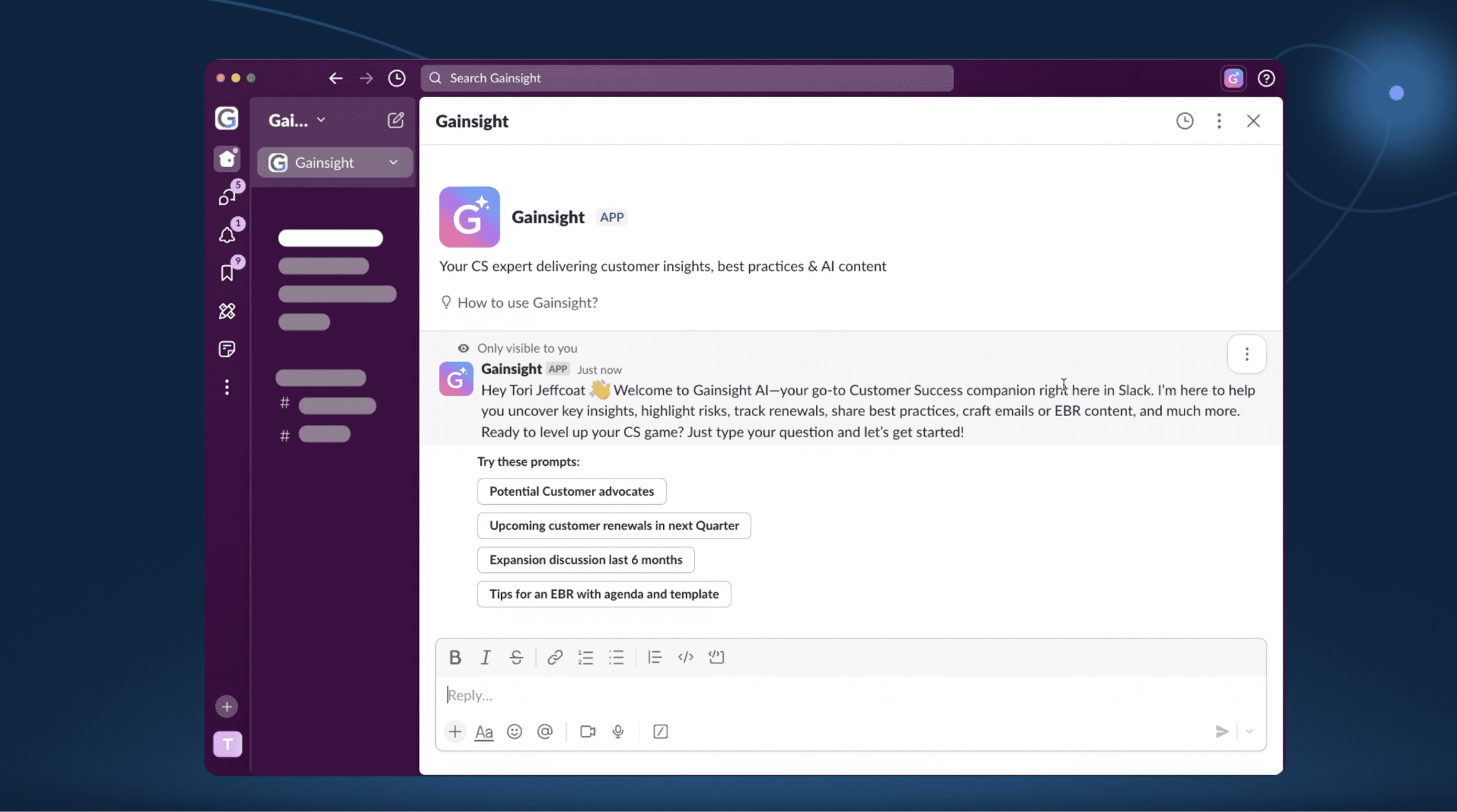
Launched at Pulse 2025, Atlas is Gainsight's family of purpose-built AI agents that sit on top of CustomerOS (their customer management system). Rather than replacing the workflows CS teams already have in Gainsight, Atlas agents handle the repetitive execution layer, freeing CSMs to focus on relationships and strategy.
Best for: Enterprise CS teams already on Gainsight who want to add an agentic layer without changing platforms.
Agentic Features
What makes it stand out: Atlas is native to CustomerOS, which means no additional integrations are needed, no data is siloed, and agents already understand your existing account structure and playbooks from day one.
Is it right for you? Gainsight Atlas is best for enterprise CS teams already invested in the Gainsight platform. If you're not on Gainsight, the configuration overhead to get started may not be worth it compared to more modern, lighter-weight alternatives.
Gainsight Atlas Agents pricing: Gainsight does not publish fixed pricing for Atlas AI Agents. Atlas is sold as part of Gainsight's broader product portfolio, with pricing available by request.
2. Velaris
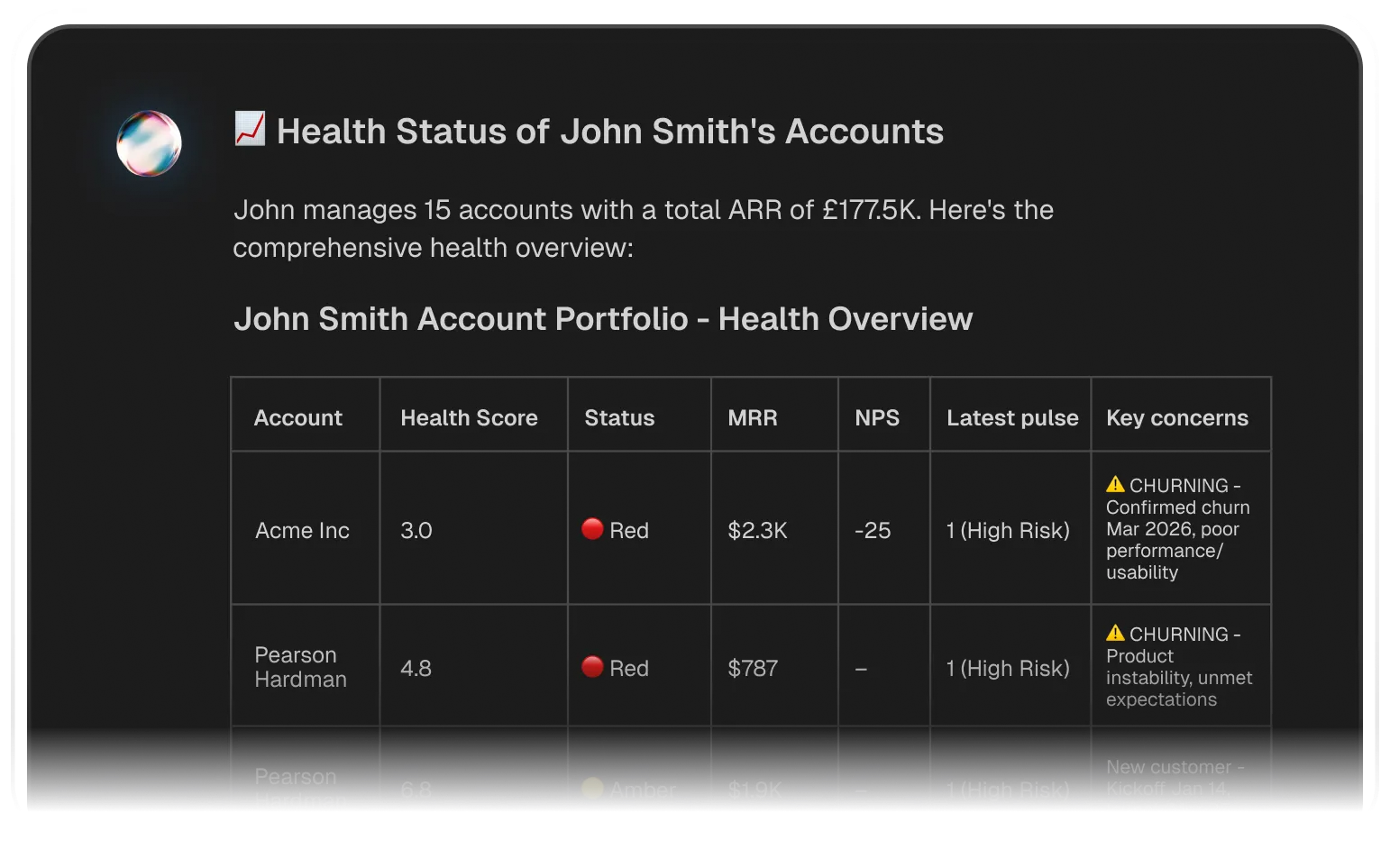
Velaris is an agentic post-sales platform built to give Customer Success teams complete visibility over every account and automate the work that slows them down. While most platforms attach AI onto existing infrastructure, Velaris was built with intelligence at its core.
Best for: CSMs who want an AI-native platform that handles the full post-sales journey without any complex configuration required from the user-end.
Agentic Features
What makes it stand out: Unlike most agentic tools that bolt AI onto a single workflow, Velaris combines agents with a full system of record, playbooks, success plans, and a customer portal, giving CS teams a central hub where agents and humans work together to manage everything related to post-sales.
Is it right for you? Velaris is best suited for mid-market and enterprise B2B SaaS teams spending more time on coordination and reporting than on customers, and need agents that operate within a shared system of record rather than in isolation.
Velaris pricing: Velaris uses custom pricing based on the organization’s requirements. The core license includes five users and unlimited viewers, with additional post-sales products and add-ons available separately.
3. Hook
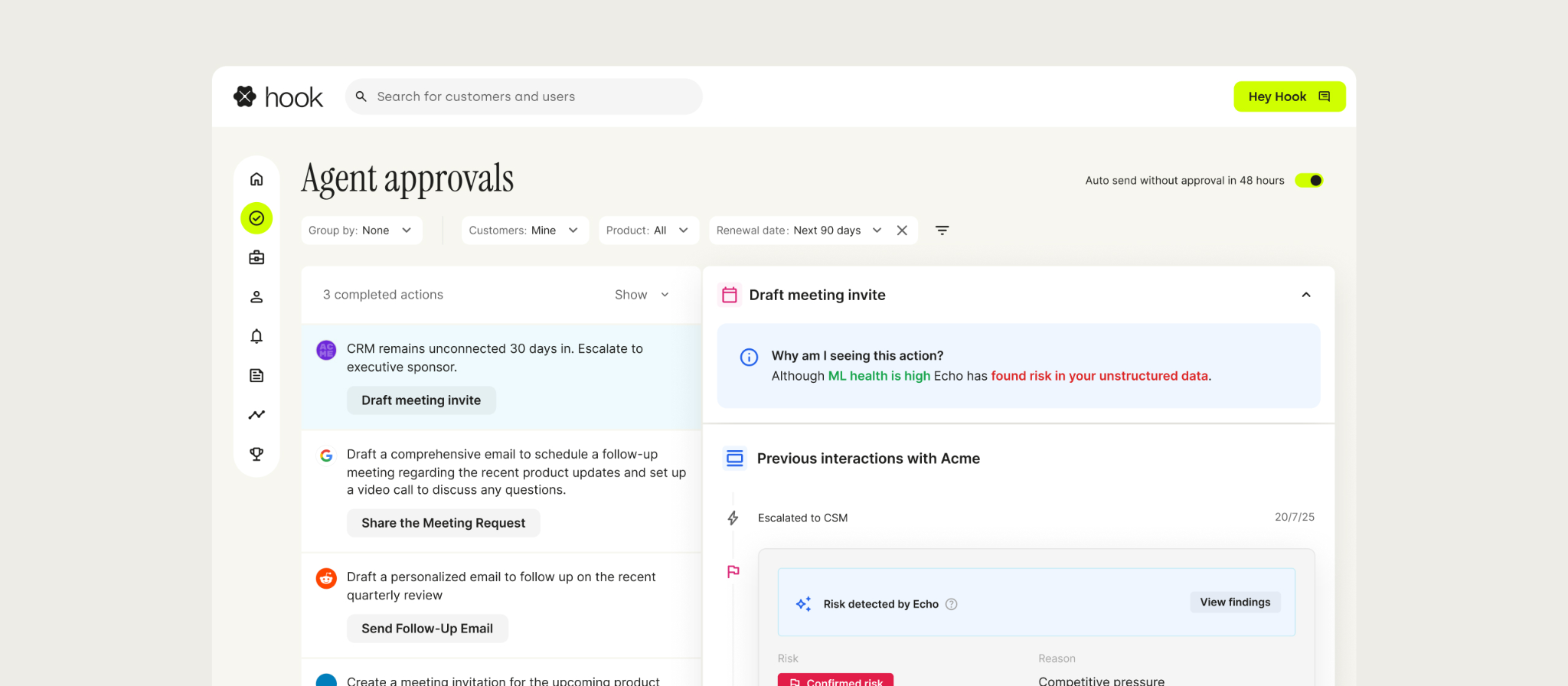
Hook is a CS platform focused primarily on churn prediction and renewal risk. Its flagship agent Echo combines call, meeting, and product usage signals to identify at-risk accounts ahead of renewal dates up to 180 days out.
From there, Hook can build a tailored playbook for the at-risk account and trigger execution automatically, rather than waiting for a CSM to act on the alert.
Best for: CSMs in smaller B2B teams looking for an AI agent for flagging churn risks.
Agentic Features
What makes it stand out: Hook's core strength is, specifically, how far in advance it can flag renewal risk and how tightly that signal is tied to automated playbook execution. For teams whose primary pain point is late-stage churn surprises, that focus is the appeal.
Is it right for you? Hook is a strong fit for B2B SaaS CS teams that want agents that take action rather than just surface insights. It's particularly well-suited for teams managing large books of business who need autonomous execution to stay proactive at scale.
Hook pricing: Hook does not publish standard pricing for its Customer Success platform or agents. Pricing is provided through its sales process, so teams need to request a quote based on their requirements.
4. Fin by Intercom
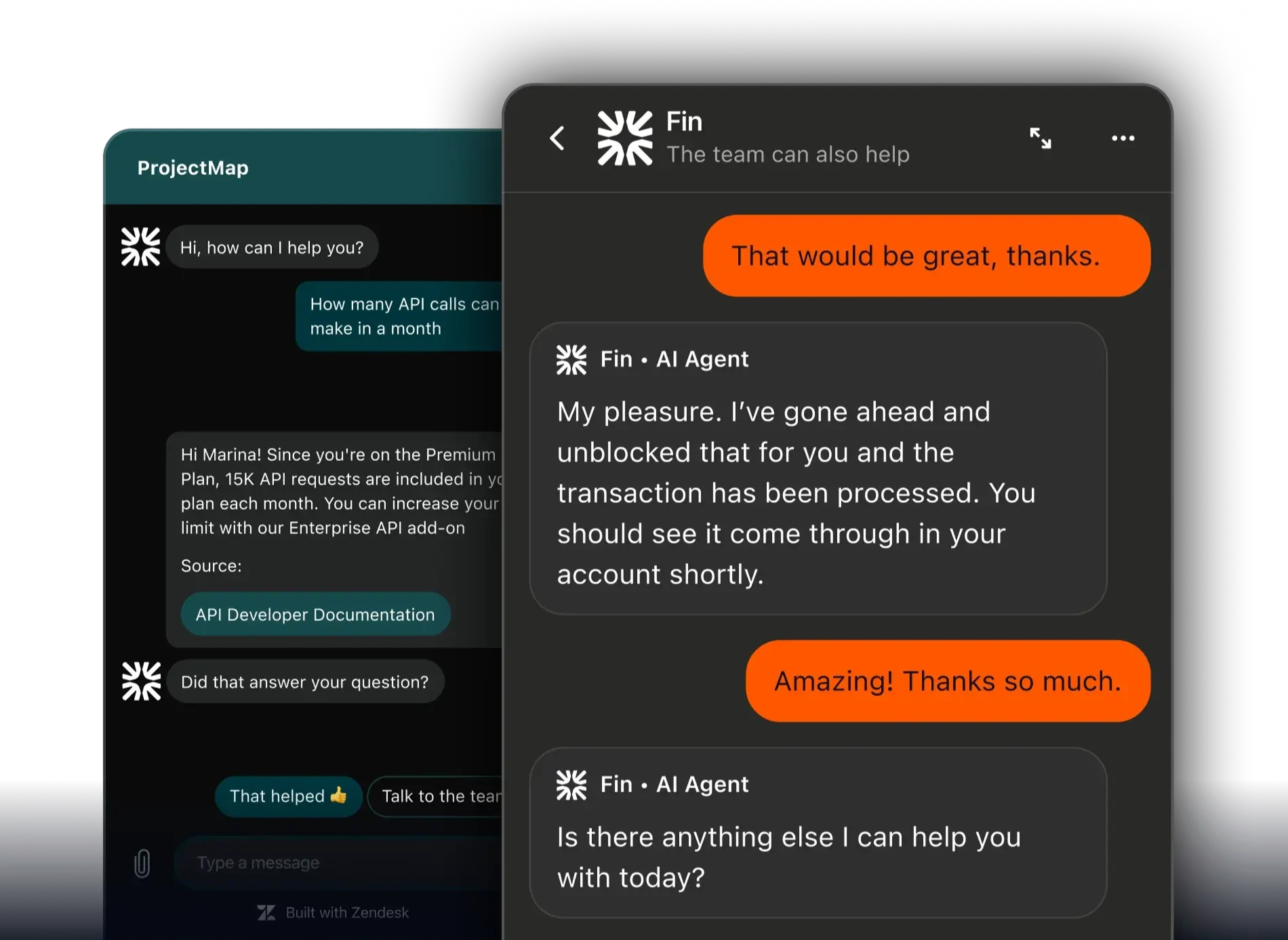
Now in its third generation, Fin is Intercom's AI agent for customer-facing resolution. It's built on a patented AI architecture specifically created for complex customer service queries and has resolved over 40 million conversations, with a reported 67% resolution rate as of late 2025.
Best for: CS teams handling high support volume who want an AI agent that resolves complex customer queries autonomously and hands off to humans with full context.
Agentic Features
What makes it stand out: Fin is an agent with a particular strength in customer support and low-touch Customer Success management.
Is it right for you? If you’re handling high ticket volumes and struggling to separate real customer risk from support noise and need to stay proactive at scale, Fin is worth looking into.
Fin by Intercom pricing: Fin starts at $0.99 per resolved outcome. It can be used with Intercom plans starting at $29 per seat per month when billed annually, or with an existing help desk without additional seat fees, although minimum usage commitments apply.
5. Salesforce Agentforce
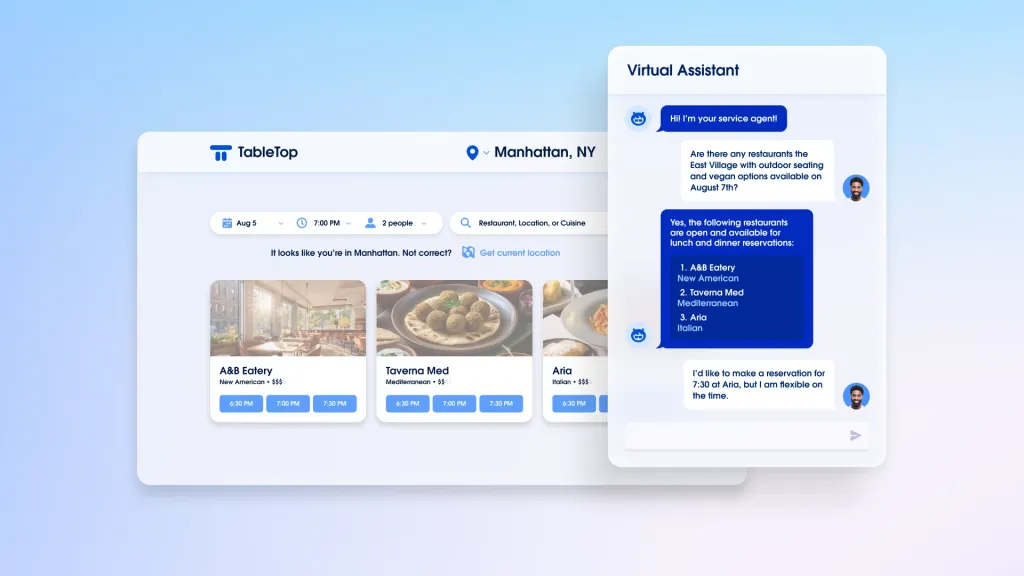
Agentforce is Salesforce's agentic AI platform. For teams already living in Salesforce, Agentforce brings AI agents into every Cloud and workflow without requiring migration or integration work.
For CS specifically, Agentforce handles Tier 1 and Tier 2 support inquiries autonomously, resolves issues, updates CRM records, and spots renewal risks and expansion signals from account data. Service agents can take over routine customer interactions while human CSMs focus on strategic relationships.
Best for: Enterprise CS teams already on Salesforce who want AI agents embedded natively across their CRM, without adding a separate platform.
Agentic Features
What makes it stand out: Agentforce's scale and ecosystem are unmatched. AgentExchange, launched in 2025, is the world's first agent marketplace, giving teams access to pre-built agents from Salesforce's global partner network.
Is it right for you? Agentforce is the right call if your team is already on Salesforce and you want agents embedded across your CRM without adding a separate CS platform. It's overkill for teams not on Salesforce.
Salesforce Agentforce pricing: Agentforce offers several pricing models. Customer-facing agents can be billed at $2 per conversation or through Flex Credits at $500 per 100,000 credits. Salesforce also offers an Agentforce user license for $5 per user per month, which requires Flex Credits.
6. ChurnZero AI Agents
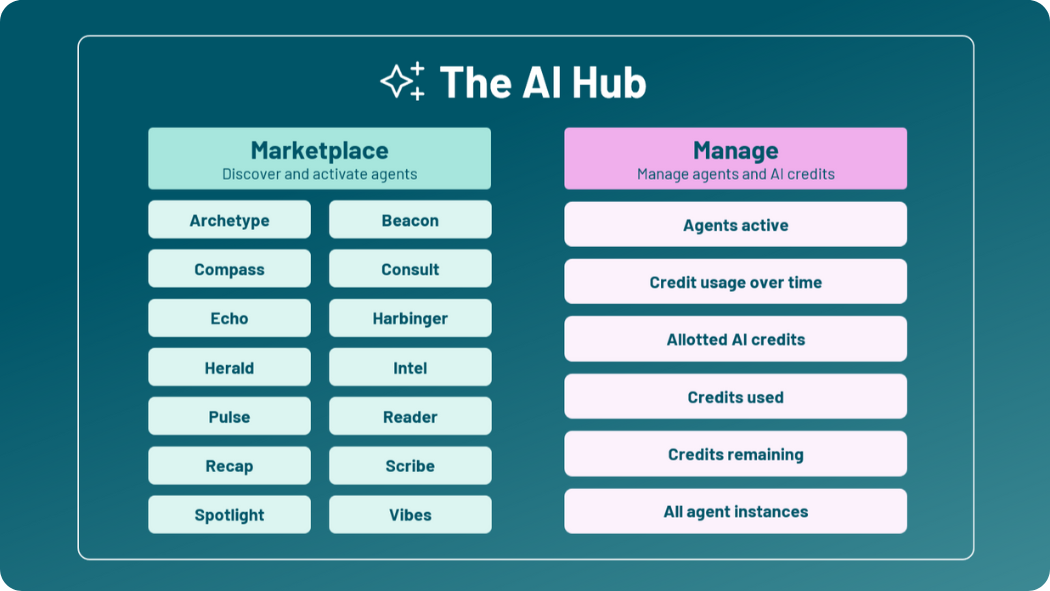
ChurnZero has been a staple of CS tech stacks for years, and in 2025, it made a significant leap into agentic AI with the launch of its AI Marketplace: a self-serve library of 14 named agents, each scoped to a specific CS job.
These agents can be configured to suggest next steps or execute them autonomously, and teams have full control over which accounts each agent monitors and how often it runs.
Best for: Mid-market SaaS CS teams who want modular, purpose-built agents they can activate per account and use case without replacing the platform they already use.
Agentic Features
What makes it stand out: The Marketplace model means CS teams can start with one or two agents and scale usage over time rather than committing to a full agentic platform upfront.
Is it right for you? ChurnZero is a strong fit for mid-market CS teams that want to add agentic AI to an existing platform they already know.
ChurnZero AI Agents pricing: ChurnZero's AI agents are available through a single annual AI subscription with a flat fee and a set allocation of AI credits. The company does not publish the dollar amount, so teams need to request pricing based on their ChurnZero package and expected AI usage.
7. Pylon
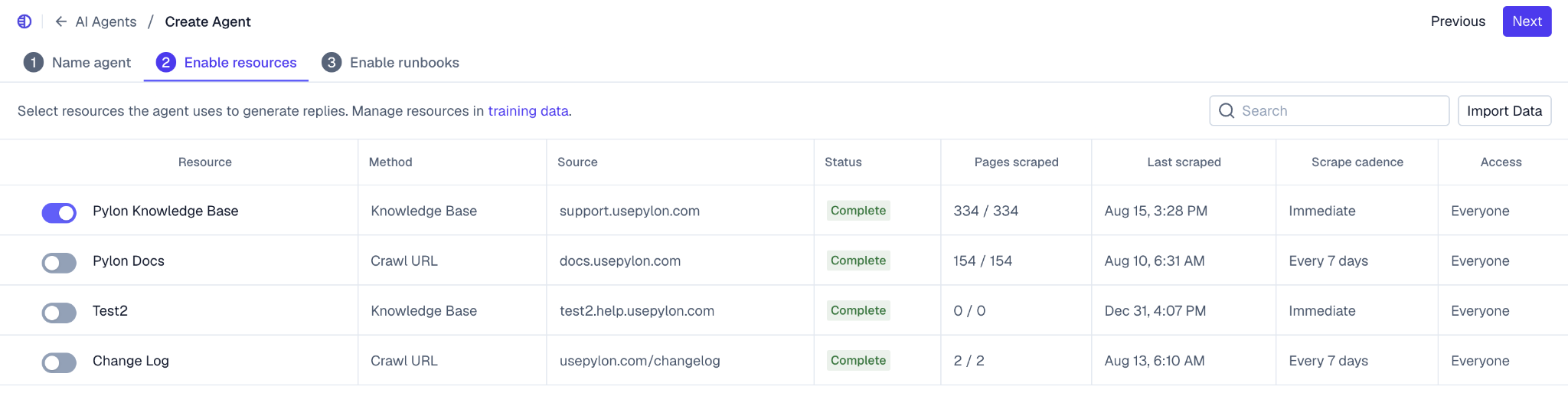
Pylon is a B2B support platform with a built-in intelligence layer. Its AI agents sit on top of every customer conversation across Slack, Teams, email, chat, and in-app, making it particularly strong for companies that manage customer relationships through shared Slack channels.
Best for: B2B SaaS teams where CS and support share the same accounts and need a single platform that surfaces churn signals from both.
Agentic Features
What makes it stand out: Pylon's AI agents are grounded in actual customer conversations, meaning that health scores reflect what customers are saying, not just what the product data shows. For CS teams where sentiment and relationship quality matter as much as usage metrics, that's a meaningful differentiator.
Is it right for you? Pylon is a strong fit for B2B SaaS CS teams that also own the support function. If your CS and support teams are siloed on separate tools, Pylon is worth evaluating as a unification play.
Pylon pricing: Pylon is currently rolling out its new Agentic Support offering, which is in beta. When generally available, pricing will combine platform seats with usage-based AI credits. Under its previous model, AI Assistants cost an additional $50 per seat per month on Professional and higher plans.
8. Oliv AI
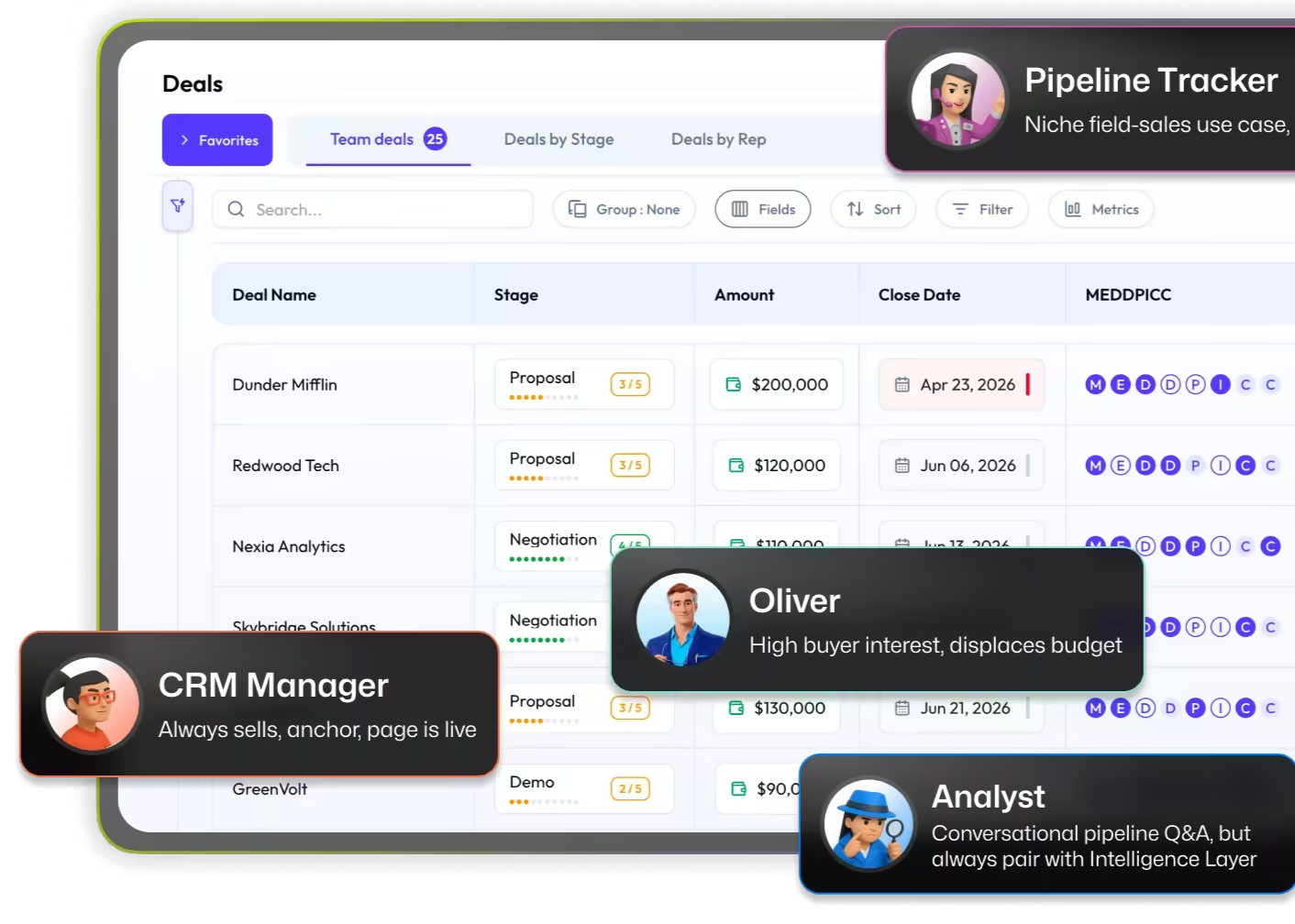
Oliv is a revenue platform, built primarily to align sales and post-sales teams on a shared data layer. Though not a dedicated CS platform, its agents span the full customer lifecycle from sales handoff through onboarding, success, and renewal.
What makes Oliv relevant for CS is the handoff layer. From the moment a deal closes, Oliv carries the account's sales history, the commitments made during the sales cycle, and the benchmarks the customer agreed to hit so that context is available to the CS team without anyone manually transferring notes.
Best for: Revenue teams where CS and sales share accounts and need to operate from the same data, rather than teams looking for a purpose-built CS platform.
Agentic Features
What makes it stand out: The agent marketplace model means teams can build out their stack incrementally rather than committing to one monolithic platform.
Is it right for you? Oliv is best for revenue teams where CS, account management, and sales are closely aligned and share data. If you're looking for a pure CS platform, some of the other tools on this list are a better fit. But if you want CS and sales operating from the same intelligent layer, Oliv is worth a serious look.
Oliv AI pricing: Oliv publishes modular pricing, with its Retain product for post-sales teams priced at $59 per user per month. Other products start at $19 per user per month, allowing teams to combine different parts of the revenue platform depending on their requirements.
9. Coworker AI
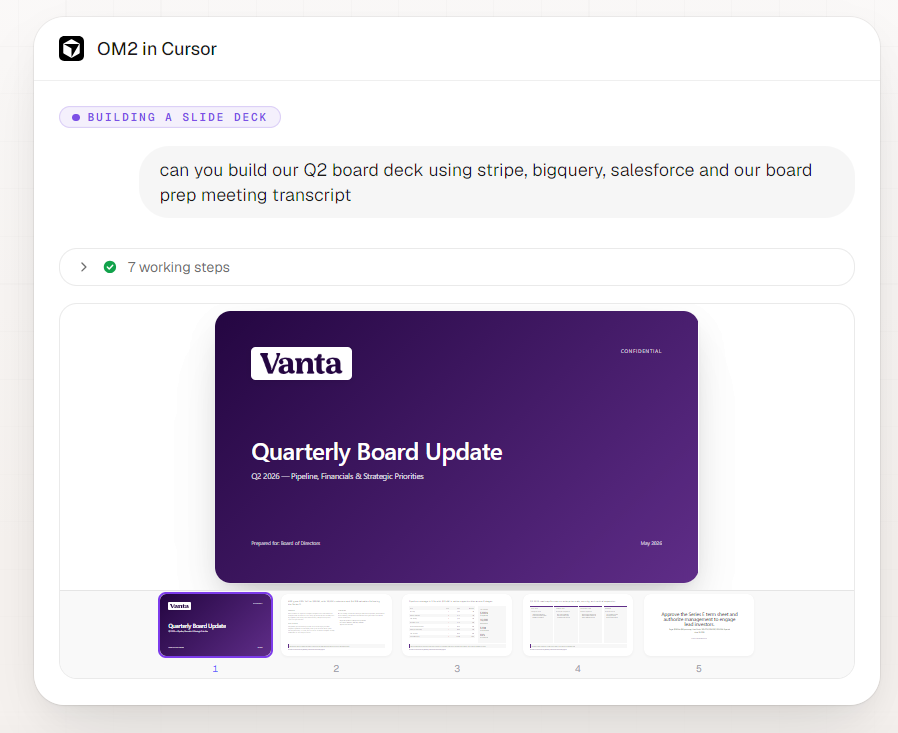
Coworker AI is a general-purpose AI work platform with a dedicated Customer Intelligence layer for Customer Success teams. Rather than replacing the tools already in your stack, it connects data from systems such as Salesforce, HubSpot, Gong, Slack, Zendesk, Stripe, and product data sources to build a unified picture of each customer.
From there, its agents can monitor account health, flag churn and expansion signals, prepare QBRs, update the CRM, draft follow-ups, and trigger actions across connected tools.
Best for: B2B Customer Success teams that want an AI agent layer across their existing tech stack without replacing their CRM or other core systems.
Agentic Features
Coworker also lets teams create their own agents in plain English, with scheduled or event-based triggers and approval gates before actions are executed.
What makes it stand out: Coworker's strength is that it acts as an intelligent layer across the tools a CS team already uses.
Its agents have read and write access across connected systems, so the same workflow can pull context from Slack, update Salesforce, create a Jira ticket, and draft a follow-up without requiring the CSM to move between applications. Its organizational memory also helps maintain context across those systems rather than treating every request as a fresh prompt.
Is it right for you? Coworker is a good fit for teams that already have their core CS data spread across a CRM, support platform, call recorder, product analytics tools, and internal communication systems, and want to add an agentic layer on top.
It is less of a traditional Customer Success system of record, so teams looking for a platform that also owns their success plans, customer portal, health configuration, and wider CS workflows may prefer a dedicated Customer Success Platform.
Coworker AI pricing: Coworker's Pro plan starts at $29.99 per user per month when billed annually, while Max costs $149.99 per user per month. Both include unlimited agents, while the Customer Intelligence capabilities described above are included in its custom-priced Enterprise plan.
10. Planhat Pi
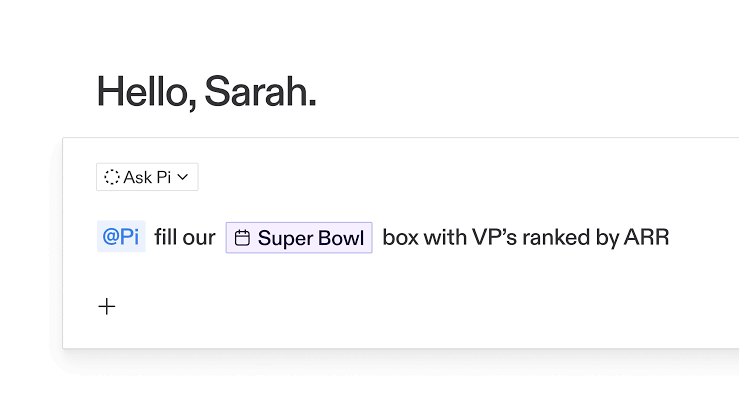
Planhat is a Customer Success Platform that has expanded its AI capabilities around Pi, an agent designed to work across the customer lifecycle. Planhat calls it a ‘multiplayer customer agent’.
Pi has access to customer, deal, activity, conversation, and other commercial data within Planhat, allowing it to answer questions, monitor accounts, and run processes without requiring CSMs to repeatedly assemble the context themselves.
Best for: Customer Success teams that want agentic AI embedded directly into their existing customer data, workflows, health scores, and renewal processes.
Agentic Features
Planhat also lets teams use Pi to build agents and live HTML artifacts directly from their customer data, while its Memory and Skills features give those agents shared context and repeatable instructions.
What makes it stand out: Planhat's strongest differentiator is that its agents sit inside the same platform that already holds customer health, renewals, product usage, conversations, workflows, and commercial data.
Pi can therefore work from persistent customer context rather than relying on a CSM to provide everything again in each prompt.
Is it right for you? Planhat is a strong fit for B2B Customer Success teams that want AI agents tightly integrated with a broader Customer Success Platform. It makes particular sense for existing Planhat customers, while teams looking for a lightweight standalone agent may find adopting the wider platform more than they need.
Planhat pricing: Planhat uses custom pricing and asks customers to enquire for a quote. Its plans include an allowance of AI credits, with each customer instance receiving 10,000 AI credits on a rolling 30-day basis; additional AI capacity and its upgraded AI platform are available separately.
Conclusion
The right AI agent depends on what you want it to accomplish and where your data already is.
For teams already using platforms like Gainsight, Salesforce, or ChurnZero, their native agents can be the most straightforward way to add automation without changing systems.
Hook is better suited to teams looking for a standalone agent focused on churn and retention, while Pylon and Fin are stronger options for support-heavy use cases. Oliv AI is a good fit where Customer Success and sales need to work from the same agent layer.
For teams that want AI agents built directly into a broader Customer Success platform, Velaris, a well-rated software on G2, combines customer intelligence with execution.
Book a demo try out an AI agent that can understand the signals your team is already collecting and reliably turn them into action.
Frequently Asked Questions
What is an AI agent for Customer Success?
An AI agent for Customer Success is a tool that can carry out tasks for Customer Success Managers (CSMs) on its own, not just give recommendations. Depending on the platform, it may monitor account health, flag churn or expansion signals, prepare Quarterly Business Reviews (QBRs), update the Customer Relationship Management (CRM) platform, draft follow-ups, or trigger playbooks automatically.
What is the difference between an AI agent and an AI assistant?
An AI assistant usually responds to prompts by answering questions, summarizing information, or drafting content for a CSM to review. An AI agent can go further by taking action across connected systems, often based on schedules or triggers. Many platforms combine both, letting teams decide which tasks agents handle autonomously and which require human approval.
Can AI agents replace Customer Success Managers?
No. AI agents are best suited to repetitive, high-volume work such as data entry, reporting, monitoring, and routine follow-ups. This gives CSMs more time for the work that depends on human judgment, such as building relationships, handling sensitive conversations, and shaping account strategy.
What should you look for in an AI agent for Customer Success?
Start with where your customer data already lives and what you want the agent to accomplish. Consider how much customer context the agent can access, which tools it can take action in, and how much control you have over approvals and automation. You should also compare integrations, pricing models, and setup effort. The best option is the one that fits your existing workflows without creating more work to manage it.
How are AI agents for Customer Success priced?
It depends on the vendor. Some charge per user, others charge per resolution or conversation, and many use AI credits based on usage. Several platforms only offer custom pricing, so teams often need to request a quote based on their requirements and expected AI usage.

The Velaris Team
A (our) team with years of experience in Customer Success have come together to redefine CS with Velaris. One platform, limitless Success.




Velaris is an AI-native Customer Success Platform built for mid-market and enterprise B2B SaaS teams. From customer health scoring and churn prediction to onboarding automation, renewals, and expansion workflows, Velaris helps recurring revenue teams understand account health, reduce churn, and scale customer success with greater visibility and control.