We look forward to showing you Velaris, but first we'd like to know a little bit about you.


Top 10 AI Customer Success Platforms for 2026
AI Customer Success Platforms centralize post-sales data and use AI to surface risks, recommend next steps, and automate work. We compare 10 of the best platforms for 2026, from enterprise options like Gainsight to lighter tools like Vitally and Custify, covering AI maturity, key features, limitations, and pricing.
The Velaris Team
October 1, 2026
Customer Success teams often have plenty of customer data, but still struggle to turn it into timely action. Signals are scattered across calls, emails, support tickets, product usage, CRM records, and health scores, which makes it easy to miss churn risk, expansion opportunities, or accounts that simply need attention.
AI Customer Success Platforms are built to solve that problem. They centralize post-sales data and workflows, then use AI to interpret customer context, surface risks and opportunities, recommend next steps, and automate work.
In this guide, we compare 10 of the best AI Customer Success Platforms for 2026, focusing on platforms that can support a meaningful part of the Customer Success operation rather than standalone AI tools.
Key takeaways
- AI maturity varies significantly. Some platforms offer copilots, while others use agents that can take action autonomously.
- Gainsight and HubSpot are strongest for teams already inside those ecosystems.
- Velaris, Planhat, and ChurnZero are pushing furthest into agentic AI and autonomous execution.
- Vitally and Custify combine lighter-weight platforms with increasingly capable AI copilots and automation.
- Odie and ZapScale lean more heavily into predictive insights, health, and risk detection.
1. Gainsight
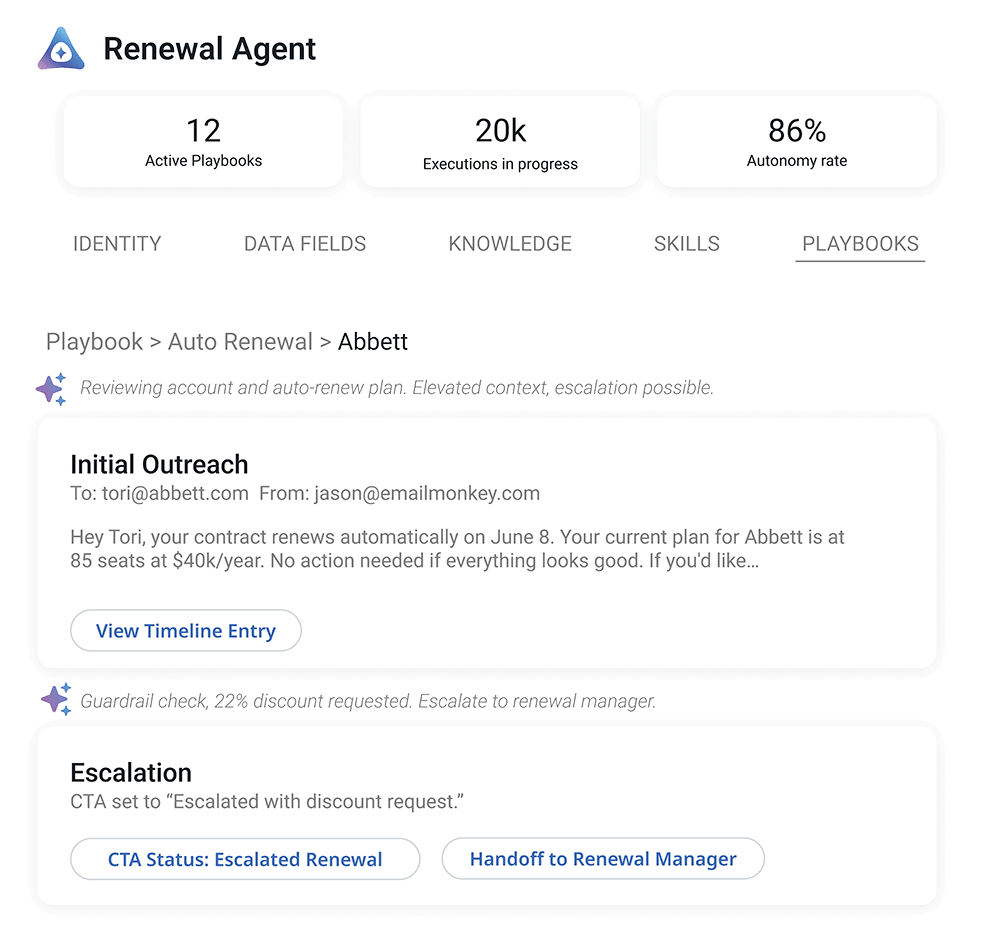
Gainsight is one of the most established enterprise Customer Success Platforms, combining customer health, playbooks, success plans, renewals, adoption data, and reporting in a single system.
Its AI strategy has expanded significantly through Atlas, a suite of AI agents built specifically for post-sales workflows. Atlas agents can monitor customer signals, identify risk, personalize outreach, manage renewals, and handle parts of the customer journey autonomously.
Gainsight has also expanded Atlas into an AI-native services model, where its agents work alongside Gainsight renewal specialists to manage parts of the retention motion on a customer's behalf.
Best for
Large enterprise Customer Success teams that already use Gainsight, or need a highly configurable CS platform with AI agents layered on top of mature customer data and workflows.
What it does well
- Atlas AI Agents: Autonomous agents can handle outreach, personalization, follow-ups, risk management, adoption, and renewal workflows.
- Long-tail customer management: Atlas is particularly focused on helping teams cover lower-touch accounts that CSMs may not have capacity to manage manually.
- Renewal intelligence: AI-powered likelihood scores and forecasts help teams understand renewal risk and prioritize accounts that need intervention.
- Relationship intelligence: Staircase AI analyzes customer touchpoints such as emails, meetings, Slack conversations, support tickets, and product usage to detect sentiment and relationship risk.
- Strong underlying CS infrastructure: Gainsight already includes Customer 360, health scorecards, playbooks, success plans, dashboards, surveys, and digital journeys, giving its AI access to a mature Customer Success data layer.
- MCP support: Gainsight also supports MCP across Gainsight CS and Staircase AI, allowing external AI tools and agents to use Gainsight customer intelligence in retention workflows.
Limitations and considerations
Gainsight is designed for relatively sophisticated Customer Success organizations, so implementation and ongoing administration can be more involved than with lighter-weight platforms.
Its strongest AI proposition also makes the most sense when customer data and workflows are already established inside Gainsight, particularly for teams considering Atlas on top of an existing deployment.
Pricing
Gainsight does not publish fixed prices for its Customer Success Platform. Its Essentials package includes 10 full users and 100 customers per user, while Enterprise includes 20 full users and 200 customers per user. Both include unlimited viewer licenses, with pricing available on request.
Pricing for Atlas AI Agents is also quote-based rather than publicly listed, so teams need to speak with Gainsight to determine the cost of adding agentic capabilities or its newer AI-native renewal services.
2. Velaris
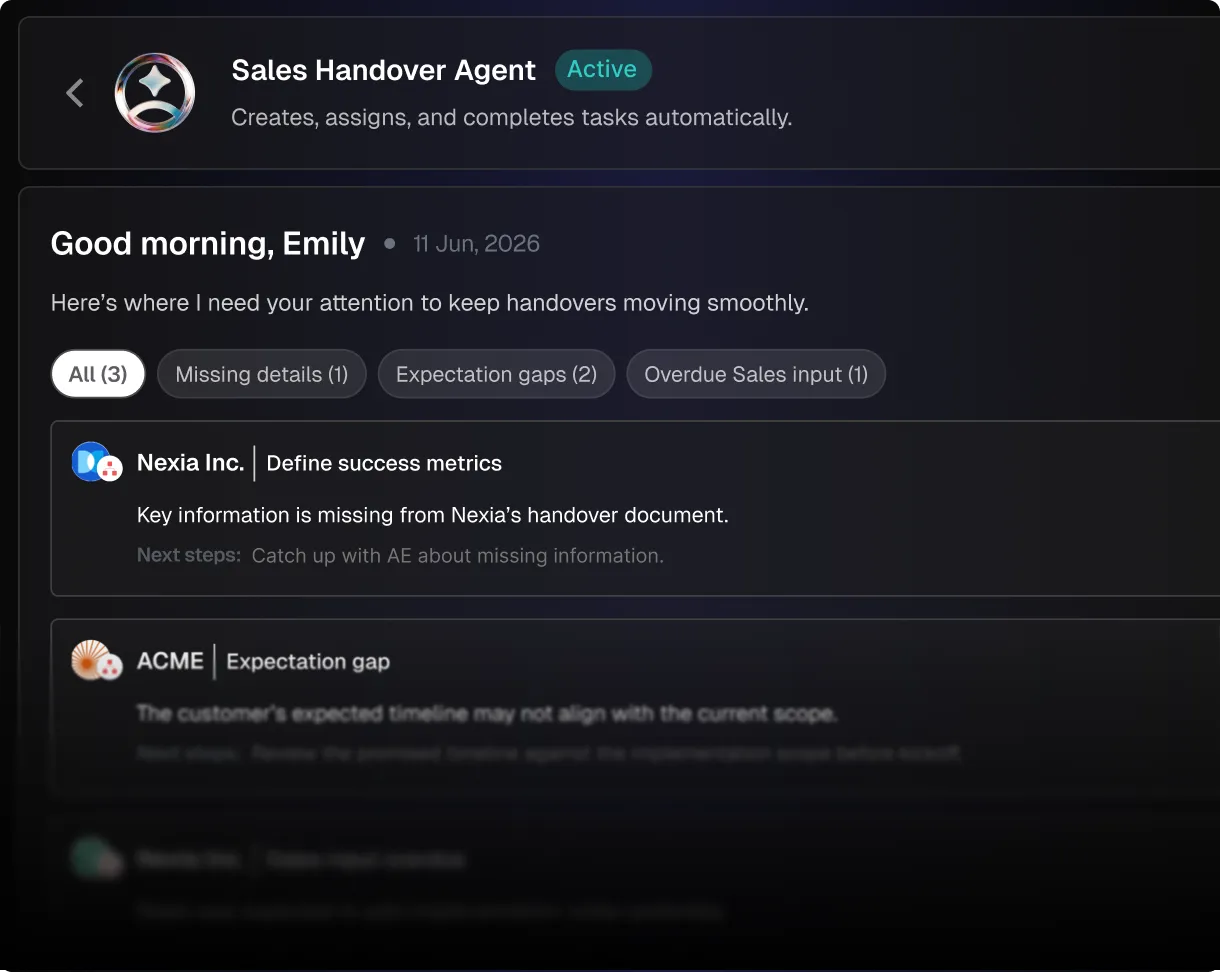
Velaris is an AI-native Customer Success Platform that is well-rated on G2, and built around a shared customer context layer rather than adding AI on top of a traditional CS system.
It combines Customer Success infrastructure such as health scores, playbooks, success plans, reporting, and Customer 360 with AI copilots and agents that can interpret customer signals and take action across the post-sales lifecycle.
At the center of the platform is the Velaris Context Engine, a living map of every customer, event, and process. It connects a multitude of data and signals so that both humans and agents can work from continuously updated customer context.
This gives Velaris Copilot and its AI agents persistent context about each customer rather than forcing CSMs to assemble it manually.
Best for
Mid-market and enterprise B2B SaaS teams that want to scale Customer Success through AI while keeping customer data, workflows, health, reporting, and agent execution in the same platform.
What it does well
- Customer Context Engine: Creates a continuously updated memory of customer activity, conversations, relationships, product usage, tasks, and other signals so agents can make decisions using the same context as the CS team.
- Velaris Copilot: Lets teams ask natural-language questions across individual accounts or the wider portfolio, as well as create account plans, update documents, generate reports, and prepare for meetings.
- Context-aware AI agents: Velaris agents can operate continuously in the background, monitoring accounts for emerging risks and opportunities and helping teams manage more customers without increasing manual workload.
- Custom agent builder: Teams can give an agent their own instructions and prompts, define the steps it should follow, and configure it to run automatically on a schedule or in response to an event such as a health score change.
- AI Pulse: Adds qualitative AI analysis to customer health so teams can account for signals that traditional rule-based health scores may miss.
- CallSense: Analyzes customer calls to surface summaries, actions, sentiment, risks, and recurring topics.
- Trending Topics: Identifies recurring themes and sentiment across customer conversations, helping teams see what customers are talking about at scale.
- AI-powered reporting: Copilot can analyze customer data using natural language and generate charts and dashboards without requiring teams to build every report manually.
- MCP connectivity: Velaris supports MCP so customer context and CS data can also be accessed by external AI tools and agents, rather than keeping intelligence confined to the platform.
Limitations and considerations
Velaris is designed as a broader post-sales platform, so it is better suited to teams looking to centralize Customer Success data and workflows alongside AI than businesses that only need a standalone AI assistant for one specific task.
Its agentic capabilities also become more valuable as more customer data is connected, so teams should consider the integrations and context they want available when setting up the platform.
Pricing
Velaris uses custom annual pricing based primarily on the number of customer accounts being managed, users, data complexity, integrations, and the capabilities required.
The core platform includes an allocation of AI functionality, while additional users, customer volumes, integrations, AI and MCP usage, Custom Agents, and other advanced capabilities can be added as required.
3. Planhat
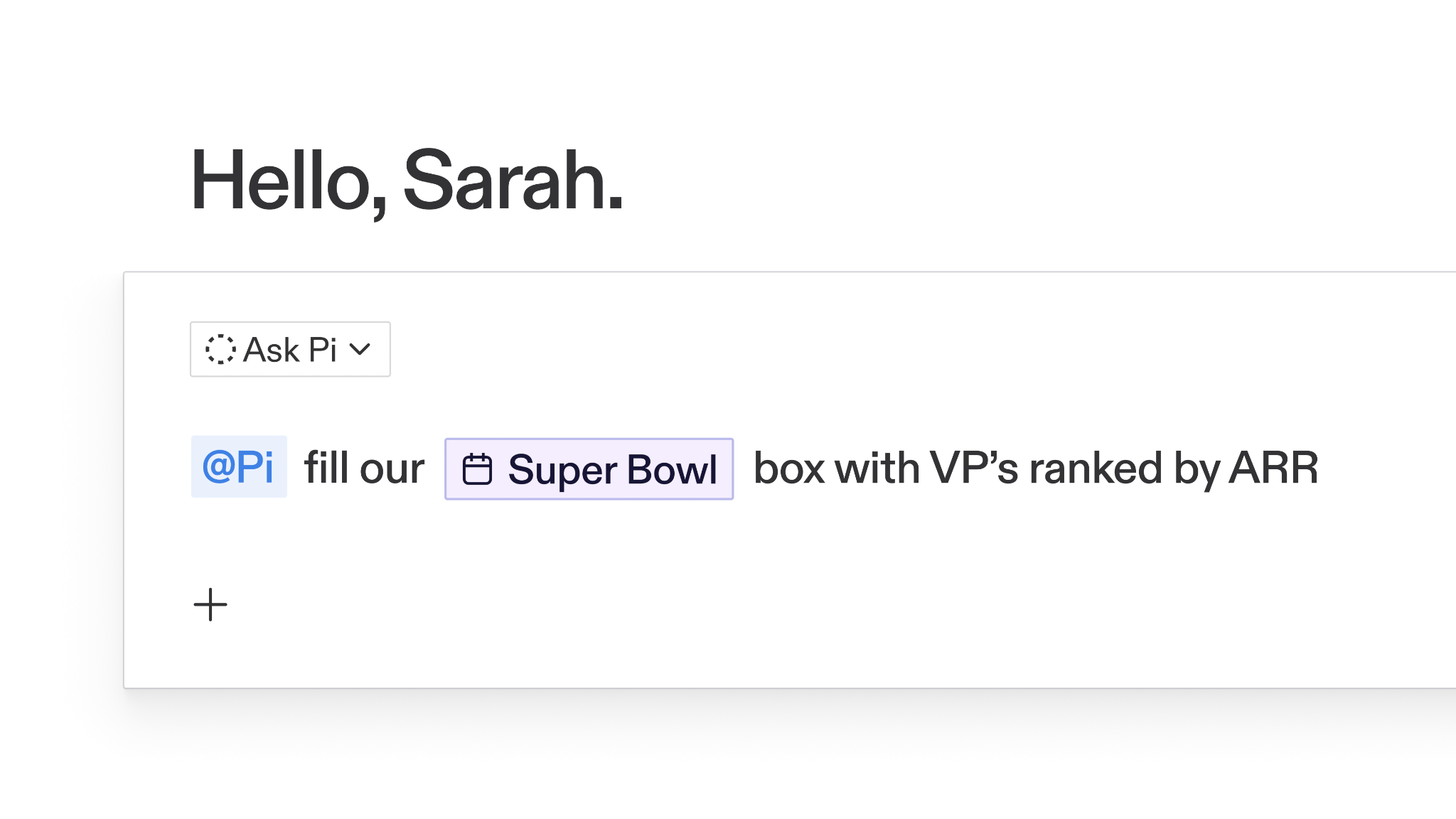
Planhat is a Customer Success Platform that has made AI increasingly central to the product through Pi, its customer agent. Pi is designed to work across Customer Success, renewals, professional services, sales, account management, and support, using the customer and commercial data already stored in Planhat.
Rather than relying only on one-off prompts, Pi builds persistent memory around each customer, including what has happened, what has changed, what was promised, and what matters now.
It can then use that context to surface risks and opportunities, answer questions, automate processes, and support decisions across the customer lifecycle.
Best for
Mid-market and enterprise teams that want AI operating across Customer Success, renewals, professional services, account management, and other commercial functions.
What it does well
- Pi: Acts as an AI agent across the customer lifecycle, helping teams monitor customers, answer questions, and run commercial processes.
- Persistent customer memory: Maintains context about customer history, commitments, changes, and previous interactions over time.
- Risk and opportunity signals: Continuously analyzes customer activity to identify churn risk, adoption issues, and potential expansion opportunities.
- Memory and Skills: Gives agents reusable organizational knowledge and processes rather than treating every interaction as a fresh prompt.
- Agent creation: Teams can build agents and AI-powered workflows around their own customer processes.
- Natural-language querying: Users can ask questions about customer and commercial data without having to manually build reports.
- Cross-functional context: Planhat's data model spans Customer Success, renewals, professional services, sales, and account management, giving its AI a broader view of the customer relationship.
- Conversation intelligence: Emails, support tickets, and call transcripts can be analyzed for sentiment, topics, and other customer signals.
Limitations and considerations
Planhat is designed as a broad commercial platform rather than a lightweight AI tool, so teams primarily looking for a standalone copilot may find it more extensive than they need.
Its newer agentic capabilities are also evolving quickly, with Pi being rolled out progressively across the Planhat customer base. Teams evaluating it specifically for autonomous agents should confirm which Pi capabilities are currently available within their package.
Pricing
Planhat does not publish standard package prices. Its subscriptions generally combine a one-time integration fee, a fixed platform fee, and a variable fee based on the number of customer accounts, with contracts typically billed annually.
All Planhat plans include 10,000 AI credits on a rolling 30-day basis for features such as AI automation steps, conversation summaries, sentiment analysis, and classification. Additional AI credits and advanced AI capabilities can be purchased separately.
4. ChurnZero
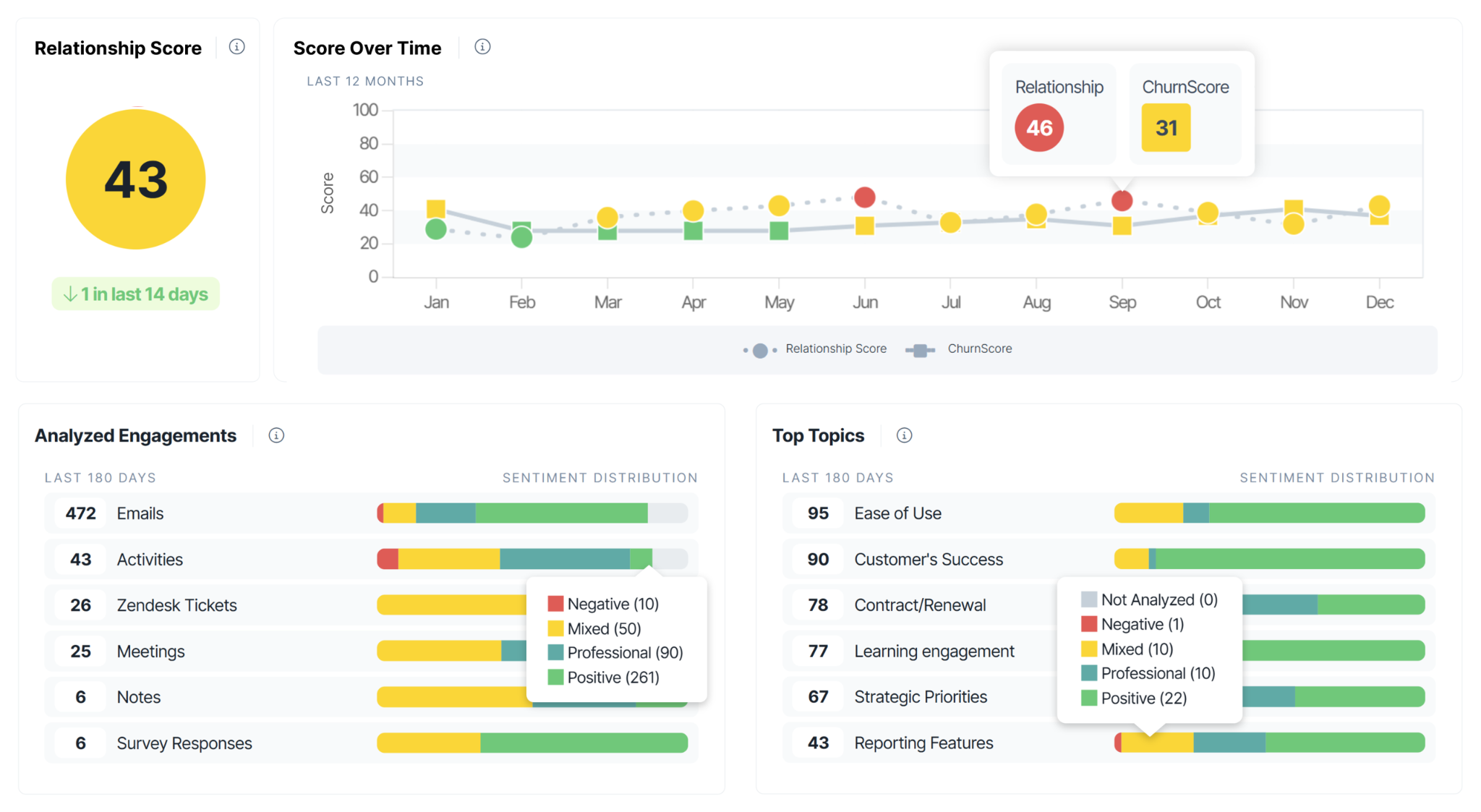
ChurnZero is an established Customer Success Platform that has invested heavily in purpose-built agentic AI. Its Agentic Essentials offering brings together more than 15 AI agents, customer intelligence, business knowledge, and MCP access in one system.
Rather than relying on a single general-purpose assistant, ChurnZero uses specialized agents for different CS jobs. These agents can analyze customer data, identify risk and opportunity, generate communications and success plans, and either recommend or execute next steps.
Best for
Mid-market Customer Success teams that want predefined AI agents for specific CS workflows without replacing the broader platform they already use.
What it does well
- Purpose-built AI agents: ChurnZero offers more than 15 agents designed for specific jobs across onboarding, adoption, renewals, expansion, customer communication, and analysis.
- Customer Intelligence Profile: Gives every agent shared context about the company, including ICPs, segmentation, pricing, success metrics, renewal strategy, and internal processes.
- Knowledge Sources: Connects agents to documentation in tools such as Confluence, Zendesk Guide, SharePoint, and Intercom so their recommendations are grounded in company-specific knowledge.
- ChurnZero Connect: Uses MCP to make live ChurnZero customer data available inside tools such as ChatGPT and Claude.
- Churn and expansion intelligence: AI agents surface changes in customer health, relationship signals, renewal risk, and potential growth opportunities.
- Customer communications: Agents can draft personalized emails, follow-ups, success plans, and other customer-facing content using account and business context.
- Health and lifecycle automation: ChurnZero combines AI with its existing health scores, Plays, segmentation, Success Plans, and lifecycle workflows to move from insight to action.
- Flexible autonomy: Teams can choose whether agents simply recommend next steps or take actions automatically within defined workflows.
Limitations and considerations
ChurnZero's agent model is largely built around predefined agents for specific Customer Success jobs.
That can make it easier to get started, but teams looking to build highly customized autonomous agents around completely bespoke workflows may want to compare how much flexibility they get versus more open-ended agent builders.
Its AI capabilities also sit within the wider ChurnZero platform, so the strongest value comes from having customer data, health scores, lifecycle stages, and workflows already configured there.
Pricing
ChurnZero does not publish standard pricing for its Customer Success Platform, so teams need to request a quote based on their requirements.
Its Agentic Essentials AI package is sold as a separate annual subscription with a flat fee and a set allocation of AI credits. It is currently available with ChurnZero's Professional and Enterprise editions, with additional credits available as usage grows.
5. Vitally
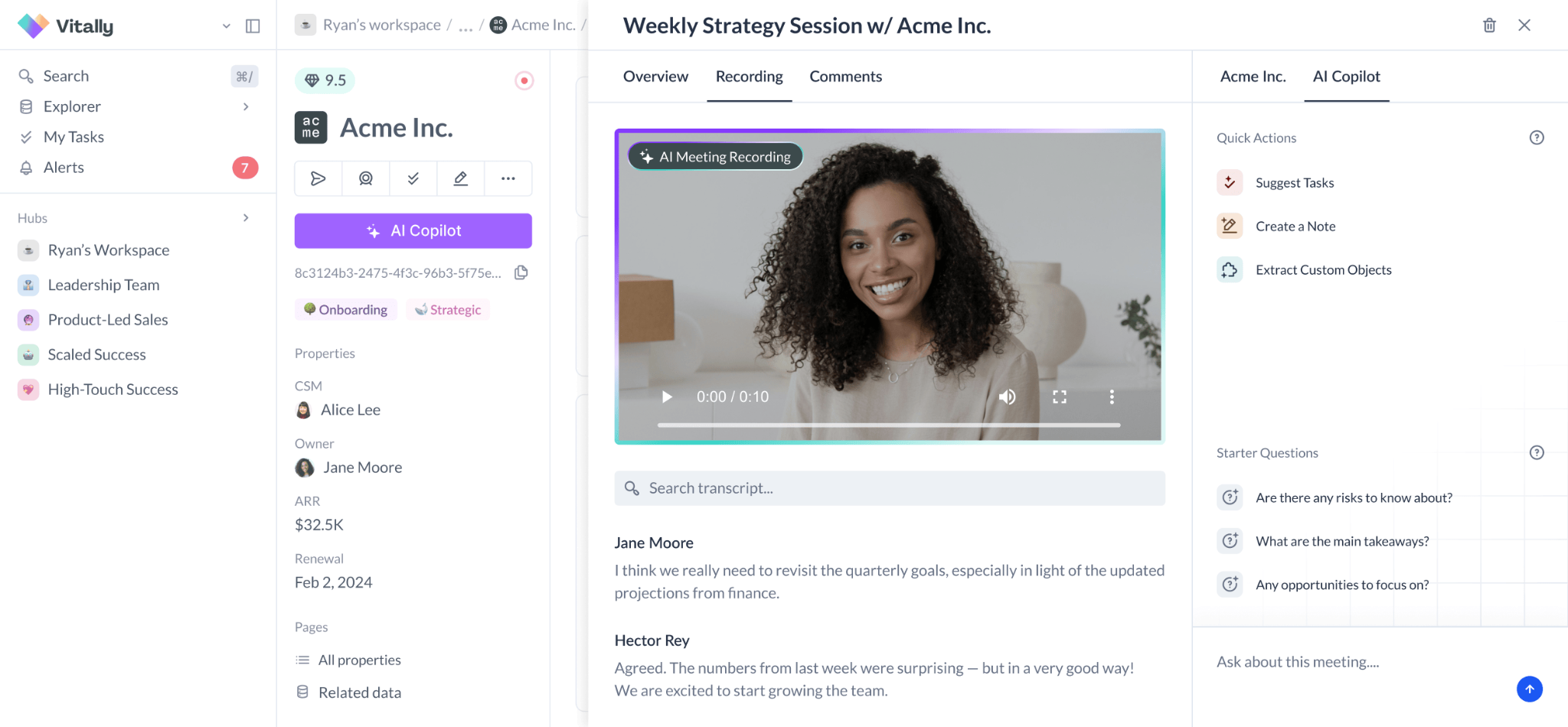
Vitally is a modern Customer Success Platform that combines flexible workflows, customer health, Projects, Docs, automation, and reporting with an embedded AI Copilot.
Its AI is designed primarily to help CSMs understand customers faster and reduce manual work. Copilot can reason across accounts, organizations, meetings, conversations, notes, tasks, and projects, then surface insights or generate follow-up actions from that context.
Best for
Mid-market SaaS teams that want a flexible Customer Success Platform with strong AI assistance, without the configuration requirements of a heavier enterprise platform.
What it does well
- AI Copilot: Provides an embedded assistant for exploring customer context and taking action directly inside Vitally.
- AI account summaries: Generates summaries from conversations, notes, tasks, projects, surveys, meetings, and other customer activity.
- Ask AI: Lets CSMs ask natural-language questions about risks, sentiment, opportunities, next steps, and customer history.
- Suggested next steps: Uses customer context to recommend follow-up tasks and actions.
- AI-generated work: Can draft customer emails, suggest tasks, and extract structured information from meetings, conversations, and notes.
- Meeting intelligence: Vitally AI+ can record, transcribe, and analyze customer meetings alongside the rest of the account context.
- AI Memories: Stores persistent context that Copilot can reuse so teams do not need to repeatedly explain important customer or organizational information.
- MCP access: Connects Vitally data to external AI tools such as ChatGPT, Claude, and Cursor, with support for both querying data and creating records such as tasks and notes.
- Strong CS workspace: AI sits alongside Vitally's existing Projects, Docs, health scores, automations, customer data, and reporting rather than operating as a separate tool.
Limitations and considerations
Vitally's AI currently leans more toward a Copilot model than a large suite of autonomous, purpose-built agents.
It is particularly strong at helping CSMs analyze information, generate work, and take actions faster, but teams looking for agents that independently monitor accounts and own multi-step workflows may want to compare it with more agentic platforms.
Some of its more advanced AI functionality also requires the separate AI+ add-on.
Pricing
Vitally does not publish fixed prices. It offers Tech-Touch, Hybrid-Touch, and High-Touch plans, with pricing available on request. All plans include Vitally's core features, unlimited automations, unlimited observer seats, its full integration library, and unlimited Docs.
The standard AI Copilot is included, covering Ask AI, AI Actions, and account summaries with up to 90 days of historical context. Vitally AI+ is a paid add-on that adds capabilities such as all-time AI context, custom summaries, and the AI Meeting Recorder.
6. Odie (formerly Totango)
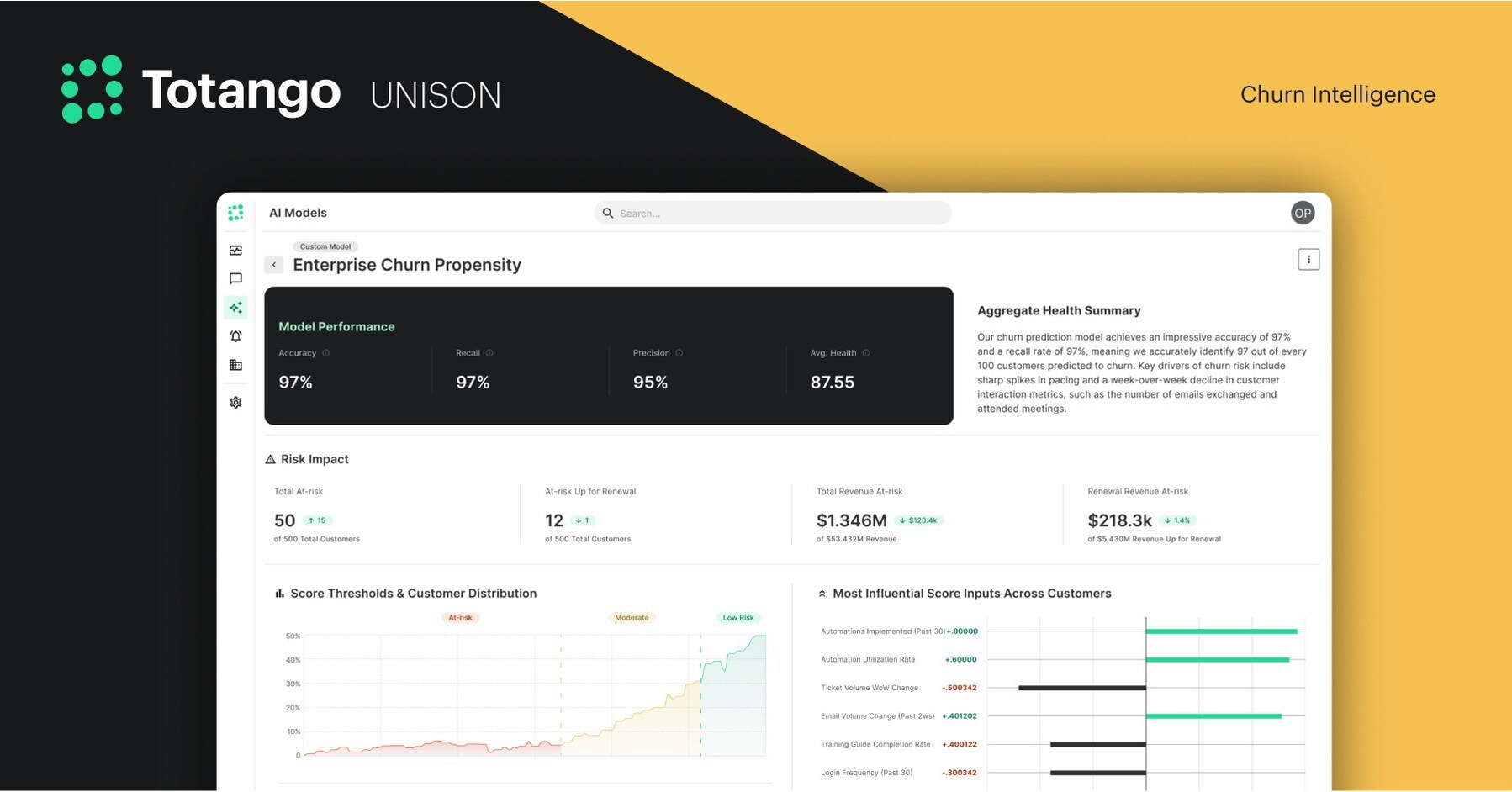
Odie, earlier known as Totango, is an established Customer Success Platform with an AI strategy centered heavily on predictive customer intelligence. Its Unison product uses AI to analyze customer data and identify accounts that are at risk of churn or showing signs of expansion.
Unison can work alongside Odie’s own Customer Success Platform or as a standalone intelligence layer with another CSP.
This makes it particularly useful for teams that want to improve their customer health and churn prediction without necessarily replacing their existing CS system.
Best for
Customer Success and revenue teams that want stronger AI-driven churn prediction, customer health scoring, and expansion intelligence.
What it does well
- Unison: Uses AI to analyze customer engagement data and identify churn risk and growth opportunities.
- AI-driven churn prediction: Analyzes signals from calls, emails, meetings, support tickets, and other interactions to detect risk ahead of renewal.
- Expansion opportunity detection: Looks across customer data for signals that indicate an account may be ready to grow.
- AI-based customer health: Generates health scores using sentiment, engagement, relationship strength, and Voice of the Customer signals.
- Custom predictive models: Enterprise teams can build models using their own historical data to identify the factors most predictive of churn for their business.
- Standard AI models: Teams can deploy prebuilt models more quickly without first developing their own scoring methodology.
- Segmentation and SuccessPlays: Predictive intelligence can sit alongside Odie's existing segmentation, health, workflows, and automated SuccessPlays.
- Cross-platform intelligence: Unison can be used with Odie or connected to another Customer Success Platform.
Limitations and considerations
Odie's AI proposition currently focuses more heavily on prediction and intelligence than autonomous execution.
Unison is particularly strong at helping teams understand which customers are likely to churn and why, but teams looking for AI agents that independently own multi-step Customer Success workflows may find more agentic platforms better suited to that use case.
Unison is also positioned as a separate product from Odie’s main Customer Success Platform, so buyers should consider whether they need the full CSP, the intelligence engine, or both.
Pricing
Odie does not publish fixed prices for its Customer Success Platform. Its Enterprise package includes 10 practitioner seats and up to 2,000 customer accounts, while Premier includes 20 practitioner seats and up to 10,000 customer accounts. Both are priced on request.
Unison is also quote-based and is available with either Standard AI models or Custom AI models.
The Standard package includes risk detection, key-moment tracking, CRM/CSP integration, and alerts, while the Custom package adds a predictive model trained around the organization's own historical customer data.
7. Custify
Custify is a Customer Success Platform designed for SaaS teams that want customer health, lifecycle management, automation, and AI without the complexity of a heavyweight enterprise platform.
Its newer AI capabilities go beyond summaries and recommendations. Custify's agents can learn from a team's existing CS processes, continuously monitor accounts, identify churn and expansion signals, prepare meetings and QBRs, and carry out actions across Customer Success workflows.
Best for
Small and mid-market SaaS teams that want an AI-enabled Customer Success Platform with relatively quick implementation and less administrative overhead.
What it does well
- AI agents: Purpose-built agents monitor customers, investigate signals, recommend next steps, and perform actions across CS workflows.
- AI-driven configuration: Teams can provide Custify with existing CS documentation and processes, which its AI uses to help configure workflows and automation.
- Customer health agents: Continuously monitor account health, sentiment, customer interactions, and other signals to identify emerging risks.
- Meeting preparation: AI agents gather recent account activity, customer signals, and relevant context ahead of meetings.
- QBR preparation: Agents can create QBR agendas, prepare presentation content, suggest talking points, and assign follow-up tasks.
- Sentiment and risk detection: AI analyzes customer interactions alongside other account data to surface churn signals that may otherwise be missed.
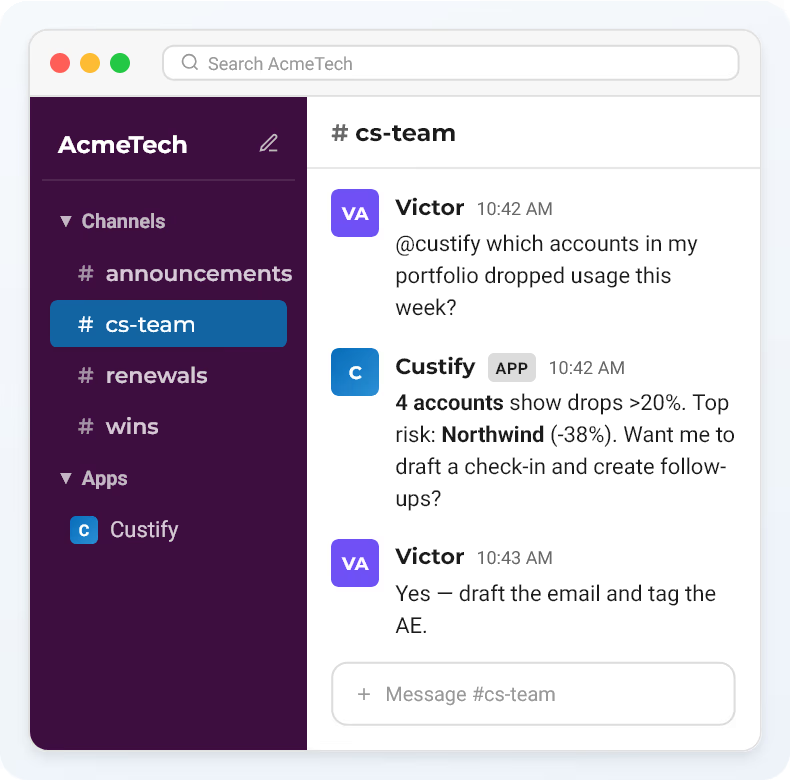
- Slack-based interaction: CSMs can ask agents questions about their portfolio, investigate usage changes, create tasks, take notes, and draft emails directly from Slack.
- Core Customer Success functionality: Custify also includes Customer 360, health scores, segmentation, lifecycle management, playbooks, alerts, task management, and integrations.
Limitations and considerations
Custify is positioned around making AI and Customer Success automation accessible without extensive configuration, which makes it particularly attractive to smaller and mid-market teams.
Larger enterprises with highly complex data models, governance requirements, or deeply customized post-sales processes may want to compare its flexibility with platforms designed more specifically for enterprise environments.
Its agentic offering is also relatively new, so teams evaluating Custify primarily for autonomous AI should confirm which agents and actions are currently available for their specific workflows.
Pricing
Custify does not publish fixed subscription prices and instead provides custom quotes based on each company's requirements.
There are no setup fees, and the subscription includes guided implementation, onboarding, support, and access to Custify's core Customer Success functionality. Teams will need to contact Custify directly to determine how AI capabilities and usage are priced within their package.
8. HubSpot Customer Success
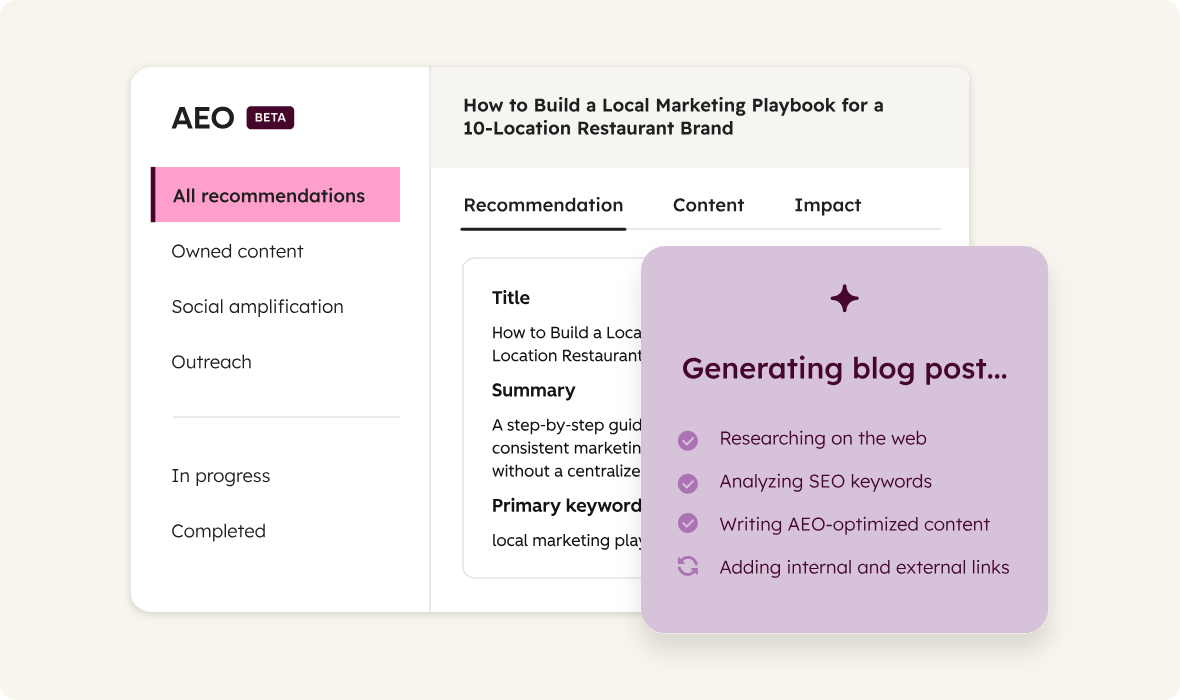
HubSpot brings Customer Success into its wider CRM and Service Hub ecosystem through the Customer Success Workspace. Rather than operating as a standalone CSP, it connects Customer Success with the same customer records already used by sales, marketing, support, and service teams.
Its AI capabilities sit across that broader ecosystem, helping teams summarize conversations, automate service workflows, prepare for meetings, generate follow-ups, and scale routine customer interactions through AI agents.
Best for
SMB and mid-market teams already using HubSpot that want to add structured Customer Success workflows and AI without introducing another major platform.
What it does well
- Customer Success Workspace: Gives CSMs a dedicated area to manage customer portfolios, tasks, projects, revenue, and account activity.
- Health scoring: Lets teams create configurable health scores using customer attributes and behavioral signals to identify risk and opportunity.
- Product activation and usage tracking: Tracks activation events and ongoing feature usage so CSMs can identify adoption trends and declining engagement.
- AI-powered service workflows: HubSpot's AI capabilities can automate routine service work, analyze customer interactions, and support proactive engagement.
- Customer Agent: Handles customer questions autonomously using the company's knowledge and CRM context, helping teams scale lower-touch interactions.
- Conversation intelligence: Analyzes calls and customer conversations to help teams capture context and identify important themes.
- Unified CRM context: Customer Success works from the same account, contact, sales, marketing, and service data used by the rest of the organization.
- AI-generated follow-ups: AI can help summarize interactions, prepare meeting context, and generate customer-facing follow-up content.
- Cross-functional customer data: HubSpot's biggest advantage is the ability to connect Customer Success with the wider customer journey rather than keeping post-sales information in a separate system.
Limitations and considerations
HubSpot's Customer Success offering is strongest for companies that already use HubSpot as their CRM. Teams can add Customer Success without introducing another data layer or integrating a separate platform.
However, its CS functionality is part of the wider Service Hub product rather than a deeply specialized standalone Customer Success Platform.
Teams with highly complex health methodologies, success planning, customer hierarchies, or agentic post-sales workflows may find dedicated CSPs offer more depth.
Pricing
The Customer Success Workspace is available with Service Hub Professional and Enterprise. Professional starts at $90 per seat per month when billed annually, with a $1,500 one-time onboarding fee, while Enterprise starts at $150 per seat per month with a $3,500 onboarding fee.
Professional includes 3,000 HubSpot Credits per month, while Enterprise includes 5,000. Credits are used for some AI capabilities, including Customer Agent, and additional credits can be purchased as usage grows.
9. ClientSuccess
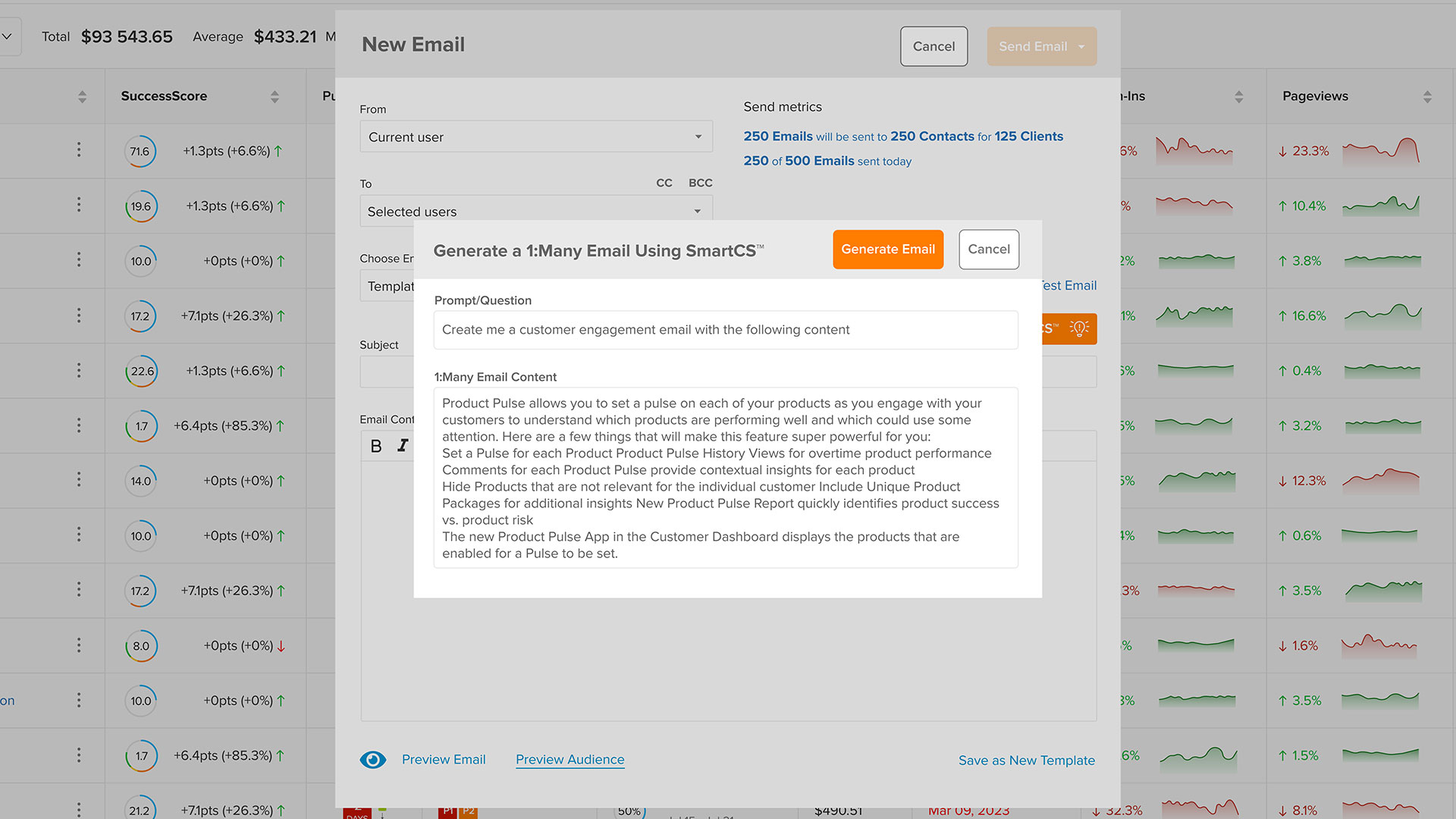
ClientSuccess is a straightforward Customer Success Platform built around customer health, lifecycle management, renewals, playbooks, and automation.
Its AI layer, SmartCS, is designed primarily to help CSMs understand customer activity faster, generate communications, and turn meetings and feedback into usable insights.
Rather than centering the platform around autonomous agents, ClientSuccess uses AI as a copilot within existing CS workflows. SmartCS can summarize customer signals, analyze segments, generate emails, and turn meeting transcripts into summaries, action items, and follow-up tasks.
Best for
Small and mid-market Customer Success teams that prioritize ease of implementation and straightforward CS workflows over highly sophisticated agentic automation.
What it does well
- SmartCS: Provides AI assistance across customer communications, account analysis, feedback, and meeting workflows.
- Customer health insights: Summarizes what is going well across an account and highlights areas that may need attention.
- Customer Segment Analyzer: Lets teams ask questions about groups of customers and identify patterns across their portfolio.
- AI-generated communications: Creates personalized customer emails using prompts and existing customer context.
- Meeting intelligence: Records and transcribes meetings, then generates summaries, action items, and follow-up tasks.
- NPS analysis: Analyzes survey comments to surface common themes and insights without requiring teams to review responses manually.
- Customer health: SuccessScore combines signals such as product usage, sentiment, support, revenue, and engagement into an overall account health view.
- Lifecycle playbooks: SuccessCycles help teams standardize processes across onboarding, adoption, renewals, and other stages of the customer lifecycle.
- MCP access: Customer Success data can also be queried from external AI assistants through ClientSuccess's MCP server.
Limitations and considerations
ClientSuccess's AI is currently more copilot-oriented than agentic. It can summarize, analyze, generate content, and help CSMs determine what to do next, but it does not offer the same breadth of autonomous, multi-step agents as platforms such as Velaris, Gainsight, or ChurnZero.
That can be an advantage for teams that want AI to make their existing workflows faster without significantly changing how their CS organization operates.
Pricing
ClientSuccess does not publish fixed dollar pricing. It offers Startup, Growth, and Enterprise packages, with pricing based on factors such as the number of Customer Success Managers, required modules, integrations, and contract length.
All plans include the core Customer Success Platform, while capabilities such as Automation & AI, Meeting Intelligence, custom reporting, and customer portals may depend on the package or be available as add-ons. ClientSuccess does not charge a separate implementation or setup fee
10. Hook
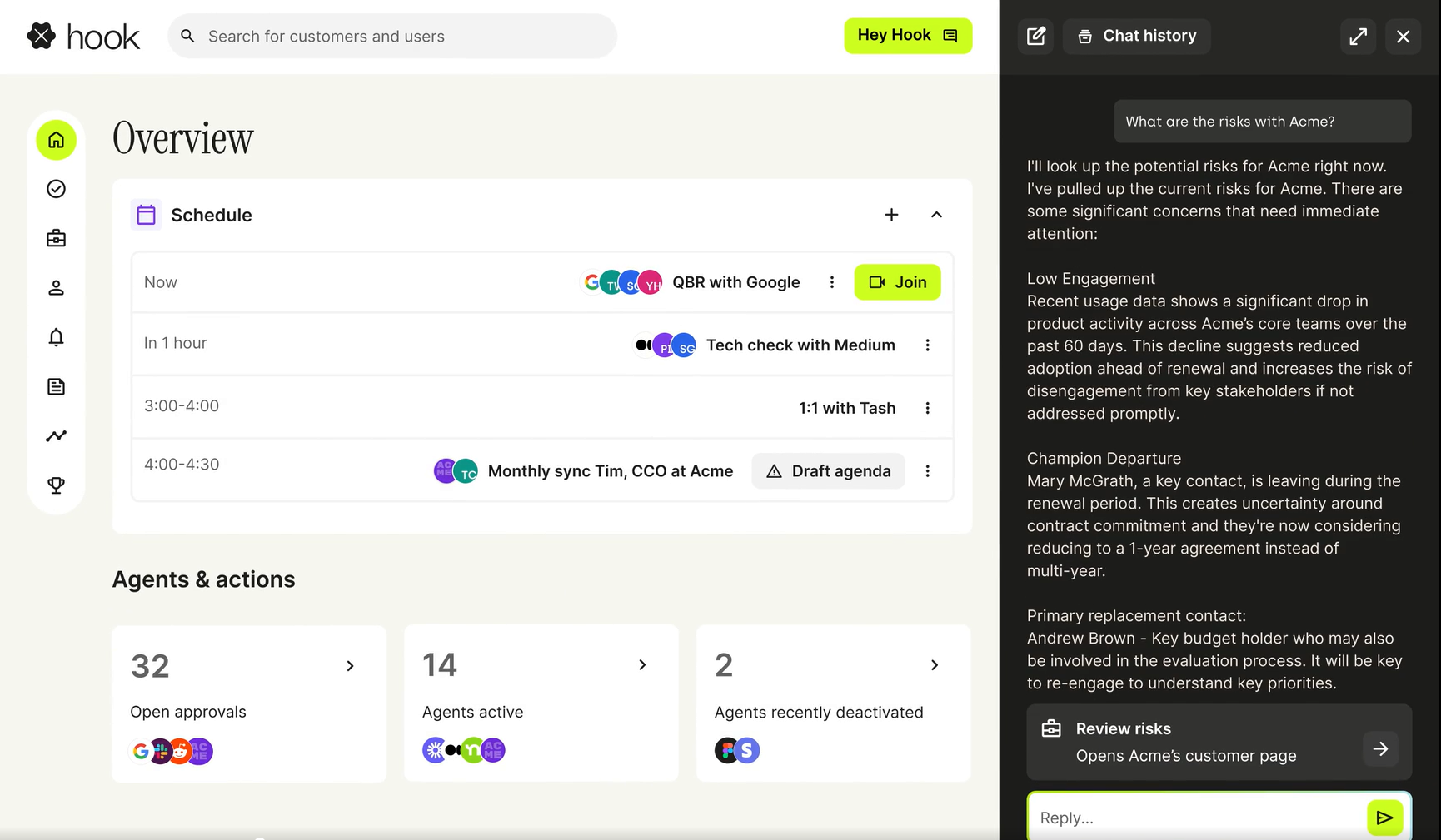
Hook is an AI-powered Customer Success Platform built around predictive customer intelligence and AI agents. Its agents combine product usage, CRM data, customer conversations, support activity, and other signals to identify where CSMs should focus and recommend or execute the next best action.
Its two main agents are Echo, which focuses on churn risk and expansion signals, and Activator, which manages onboarding against customer-specific milestones. Hook also provides predictive engagement scoring, conversational customer intelligence, and MCP access to make its customer context available in external AI tools.
Best for
B2B Customer Success teams that want AI to identify churn risk earlier, automate onboarding, and help CSMs prioritize accounts without having to build their own predictive models or agent infrastructure.
What it does well
- Echo: Monitors emails, meetings, support conversations, product usage, and other signals to identify churn risks and expansion opportunities across the customer base.
- Early churn prediction: Hook says its models can identify customer risk up to 180 days before renewal, giving teams more time to intervene.
- Automated playbooks: When Echo identifies a signal, it can generate a tailored playbook with recommended actions based on the context behind the risk or opportunity.
- Activator: Manages onboarding against defined milestones and creates a different path for each customer based on their goals, product usage, and customer interactions.
- Autonomous onboarding: Activator can queue next steps for CSM approval or execute actions automatically when customers stall or miss important onboarding milestones.
- Predictive health scoring: Hook's Engagement Level uses machine learning to estimate renewal likelihood and categorize accounts by risk.
- Hey Hook: Gives CSMs a conversational interface for asking questions about accounts, renewal blockers, stakeholders, product usage, risks, and expansion opportunities.
- Automated Signals: Combines AI-detected conversation signals with product and customer data to flag emerging risks and opportunities.
- MCP access: Makes Hook's health scores, signals, metrics, notes, and recommended actions available to external AI tools so teams can create QBRs, success plans, and other customer deliverables from the same context.
Limitations and considerations
Hook's AI proposition is particularly concentrated around customer health, churn prediction, onboarding, renewals, and expansion. Teams looking for an all-in-one Customer Success Platform with a broad set of traditional modules may want to compare its wider CS functionality with platforms built around areas such as success plans, customer portals, and highly configurable lifecycle management.
Its predictive models and agents also depend on having sufficient customer, product usage, CRM, and interaction data flowing into Hook, so the quality and availability of those data sources will affect how much value teams get from the platform.
Pricing
Hook does not currently publish standard pricing for its Customer Success Platform or AI agents. Teams need to book a demo and request a custom quote based on their requirements.
The company also does not publicly list separate prices for Echo, Activator, predictive health scoring, or its other AI capabilities, so buyers should confirm which agents and features are included in their proposed package.
Conclusion
The latest generation of CS platforms are increasingly expected to do more: interpret data, identify what matters, and participate in the work itself.
The right platform depends on how far you want AI to go. Gainsight and Planhat are strong options for larger organizations with complex CS operations. Vitally, Custify, and ClientSuccess offer a lighter approach for mid-market teams.
At the other end of the spectrum, platforms such as Velaris, a highly rated software on G2, are pushing further into agentic AI, where the system can continuously monitor customers and take action rather than simply surface insights.
If you want to see what that looks like in practice, book a demo with Velaris to see how an AI-native Customer Success Platform can bring customer context, Copilot, health, workflows, and AI agents into one system.
Frequently Asked Questions
What is an AI Customer Success Platform?
An AI Customer Success Platform is software that combines core Customer Success capabilities, such as health scores, renewals, playbooks, customer data, and workflows, with AI that can interpret customer context, identify risks and opportunities, recommend actions, and automate parts of the post-sales process.
What are the best AI Customer Success Platforms?
Some of the leading AI Customer Success Platforms include Velaris, Gainsight, Planhat, ChurnZero, Vitally, Odie, Custify, HubSpot Customer Success, ClientSuccess, and ZapScale. The best fit depends on factors such as company size, existing tech stack, the level of AI automation required, and whether the team wants predictive insights, copilots, or autonomous agents.
How does AI improve Customer Success?
AI helps Customer Success teams process more customer data, identify risks earlier, surface expansion opportunities, summarize interactions, prepare for meetings, generate follow-ups, and automate repetitive work. More advanced platforms can also monitor accounts continuously and take action without waiting for a CSM to intervene.
What AI features should I look for in a Customer Success Platform?
Look for AI features that are connected to real customer context rather than operating in isolation. Useful capabilities include account summaries, churn prediction, sentiment analysis, natural-language querying, meeting intelligence, health scoring, expansion detection, AI-generated actions, and agents that can execute workflows across the customer lifecycle.
What is the difference between a CRM and a Customer Success Platform?
A CRM is primarily designed to manage sales activity, leads, opportunities, and commercial relationships. A Customer Success Platform is focused on the post-sales journey, including onboarding, adoption, health, renewals, retention, expansion, and ongoing customer engagement.
Can AI Customer Success Platforms predict churn?
Yes. Many AI Customer Success Platforms use signals such as product usage, engagement, sentiment, support activity, renewal history, and customer conversations to identify churn risk. Some rely on predictive models, while more advanced platforms combine those predictions with AI agents that can recommend or trigger follow-up actions.

The Velaris Team
A (our) team with years of experience in Customer Success have come together to redefine CS with Velaris. One platform, limitless Success.




Velaris is an AI-native Customer Success Platform built for mid-market and enterprise B2B SaaS teams. From customer health scoring and churn prediction to onboarding automation, renewals, and expansion workflows, Velaris helps recurring revenue teams understand account health, reduce churn, and scale customer success with greater visibility and control.