We look forward to showing you Velaris, but first we'd like to know a little bit about you.


Top 6 Startdeliver Alternatives For Customer Success Teams (2026)
Looking for Startdeliver alternatives? Explore 6 platforms tailored for Customer Success, with insights into features, pros, cons, and ideal use cases.
The Velaris Team
February 27, 2026
When searching for the right Customer Success platform, one thing becomes clear quickly—it’s not easy to find a solution that ticks all the boxes.
Whether you're prioritizing intuitive dashboards, seamless integrations, or a pricing model that fits your budget, the sheer variety of options can feel overwhelming.
For Customer Success teams, the stakes are high. You need a platform that empowers you to drive customer retention, improve onboarding, and manage customer health without breaking your workflow or budget.
In this guide, we’ll look at six standout alternatives to Startdeliver, highlighting their strengths, weaknesses, and ideal use cases. From platforms focused on analytics to those excelling at automation, there’s a variety of tools to consider. Let’s dive into the options and explore which one might work best for you.
For those who feel Startdeliver might not be the best fit for their needs, exploring alternatives can open up opportunities to find a solution better suited to your specific goals.
Whether you’re a small startup or a large enterprise, understanding what other platforms have to offer will help you make an informed decision.
Planhat
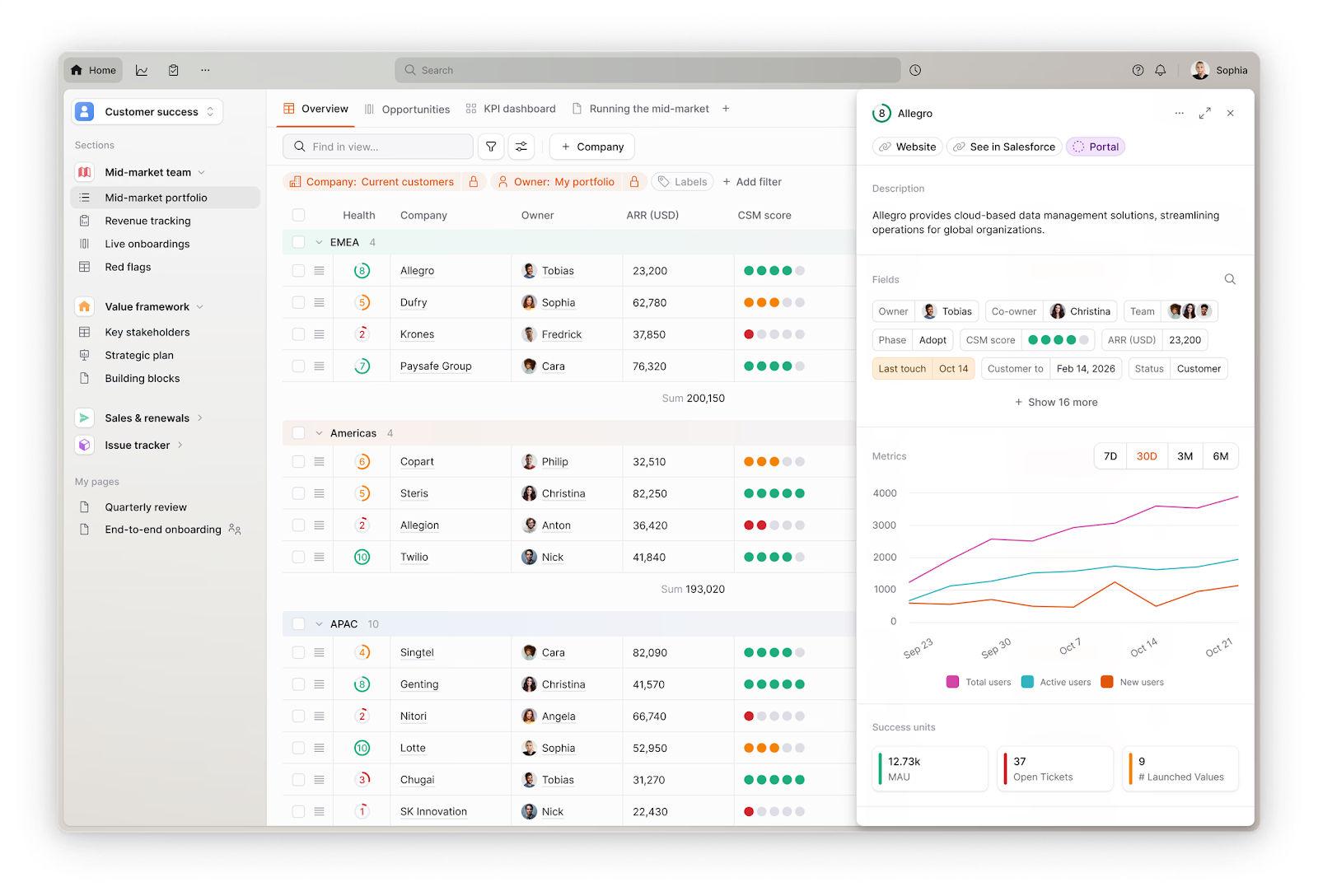
Planhat is a Customer Success platform designed to unify sales, Customer Success, and professional services operations into one solution. It offers tools for managing customer relationships, tracking key metrics, and improving retention. While Planhat provides flexibility across teams, it may not be the best fit for Customer Success teams that heavily rely on automation or advanced account planning.
Strengths
- Unified workflows: Planhat combines sales, Customer Success, and professional services into a single platform to support cross-functional teams.
- Versatile functionality: Its broad features allow teams to manage multiple operations efficiently within one solution.
- Automation templates: Planhat offers pre-built automation templates based on industry best practices, helping teams standardize workflows and save time.
- Basic integrations: Integrates with essential tools to consolidate customer data and streamline operations.
Weaknesses
- Limited customization: Predefined data structures may not meet the needs of teams with complex workflows or unique requirements.
- Simplistic automation: Lacks the flexibility to automate more advanced or intricate workflows effectively.
- Limitations with account plans: Account plans do not automatically track customer KPIs, making it harder to measure impact and prove ROI.
- Limitations with customer portal: The separate login for the customer portal can reduce adoption and limit collaboration with customers.
Pricing
Planhat does not publish standard pricing and uses a quote-based model. Pricing typically includes a fixed subscription fee, a variable fee based on the number of customer accounts, and a one-off integration fee, with advanced capabilities available as add-ons.
Third-party purchasing data from Vendr suggests that Planhat contracts commonly fall between $15,000 and $60,000 per year, with a median of around $41,000 annually, although enterprise deployments can cost significantly more.
Best for
Planhat is ideal for organizations looking for a unified platform to combine sales, Customer Success, and professional services workflows. It’s best suited for teams that don’t rely heavily on automation or detailed account and success plans.
Planhat provides a versatile option for teams balancing multiple functions, but for dedicated Customer Success workflows, other platforms may offer more tailored features and support.
ChurnZero
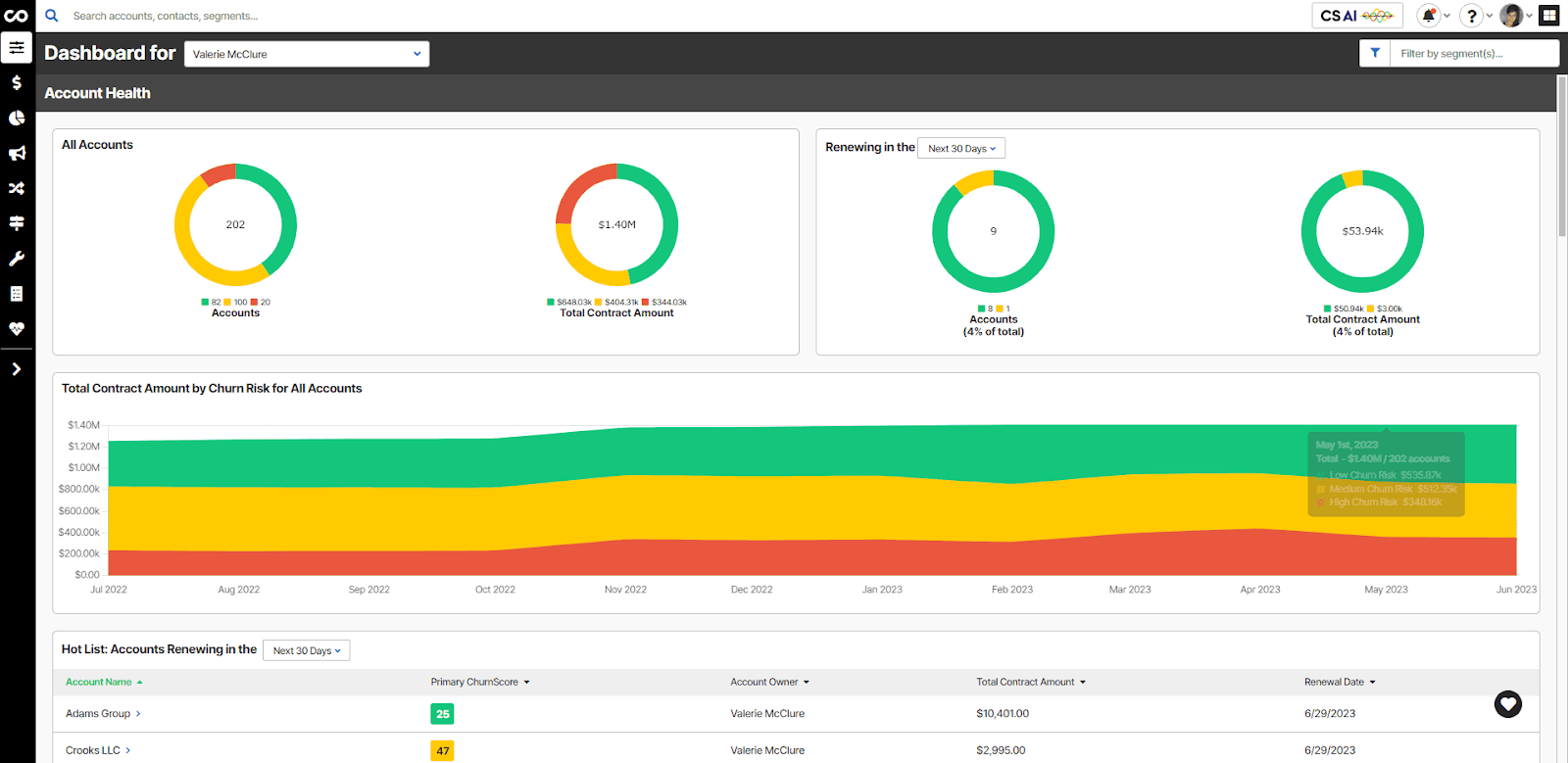
ChurnZero is a Customer Success platform focused on helping teams identify and mitigate churn risks effectively. It offers a wide array of tools designed to improve engagement, track customer health, and automate workflows. While ChurnZero excels in providing functionality for churn management, some teams may find its interface and setup less intuitive compared to other platforms.
Strengths
- Churn management focus: ChurnZero is specifically designed to help teams identify at-risk accounts and take proactive steps to retain customers.
- Customer engagement tools: Features like in-app messaging and email capabilities allow teams to interact with customers directly, keeping engagement high throughout the customer lifecycle.
- Reporting and analytics: ChurnZero provides detailed analytics and health scores to give teams insight into customer behavior and engagement trends.
- Integrations: It integrates with many tools, allowing for better visibility and consolidation of customer data.
Weaknesses
- Limited flexibility for complex data hierarchies: ChurnZero primarily supports user and account-level views, which may not suit organizations with more complex customer relationships or data structures.
- Customer portal adoption: The separate login required for ChurnZero’s customer portal can discourage adoption, limiting its usefulness for collaboration with customers.
- Complex automation setup: While automations are available, they can be challenging to configure, which may deter smaller teams or those without dedicated technical support.
- Learning curve: Like other feature-rich platforms, ChurnZero can be difficult for new users to navigate without additional training.
Pricing
ChurnZero does not publish standard pricing and provides custom quotes based on factors such as the number of customer accounts, feature requirements, and contract length.
According to Vendr, the median annual contract value is approximately $44,700, with observed contracts ranging from around $18,700 to $131,500+ per year. Smaller deployments may start around $15,000–$30,000 annually, while larger enterprise implementations can exceed $100,000.
ChurnZero’s newer AI capabilities are offered through Agentic Essentials, a separate annual subscription with a flat fee and a set allocation of AI credits for Professional and Enterprise customers.
Best for
ChurnZero is well-suited for organizations that are heavily focused on reducing churn and improving customer retention. If you’re a team that needs churn-specific tools and are willing to invest time in learning its system, it may be a good option for you.
Velaris
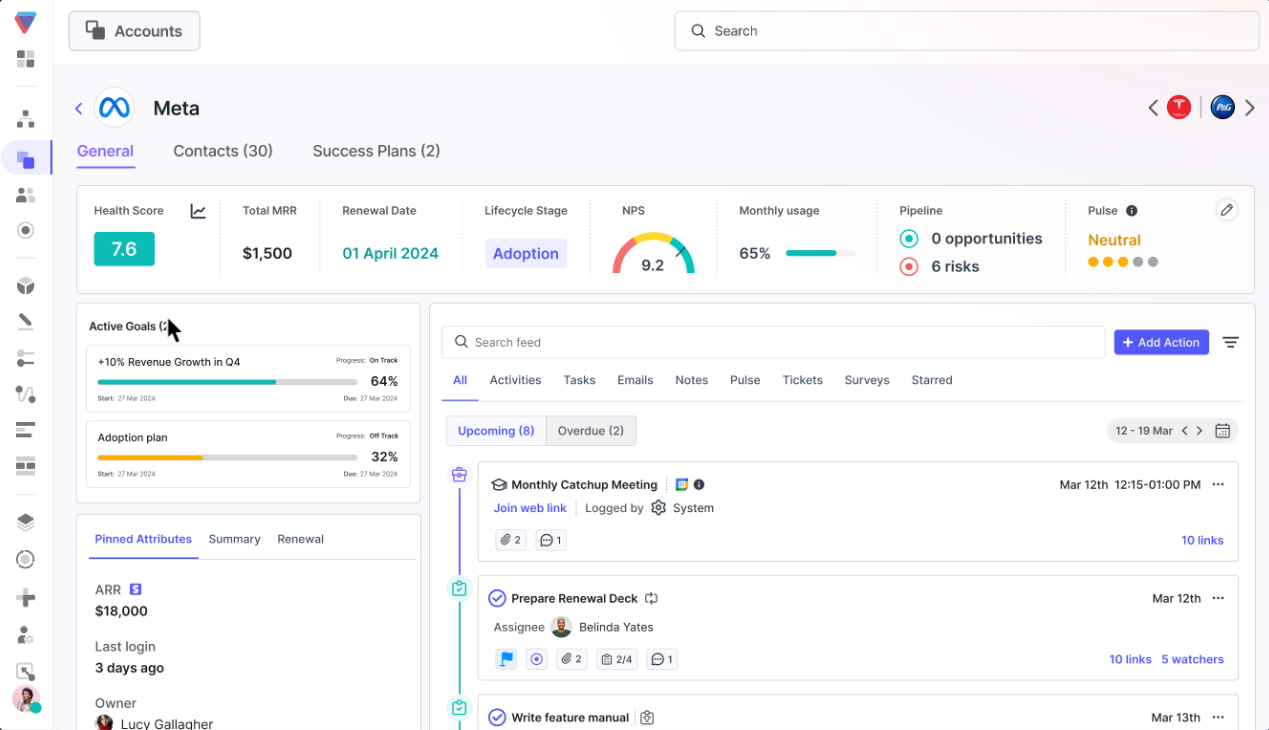
Velaris, which is highly rated on G2, is a flexible Customer Success platform that is a powerful alternative for those looking to scale their Customer Success operations with minimal hassle. It stands out for its ability to fit unique workflows and provide a high level of service, with a dedicated services team handling the technical details so you don’t have to.
Key features
- Data and visibility: Velaris offers a customizable data structure, letting you manage contacts, accounts, organizations, partnerships, and more. It enables tracking of key metrics like customer health, NRR, product usage, and expansion revenues to keep your team on top of customer trends.
- Efficiency and automation: Its visual drag-and-drop automation builder makes it easy to create workflows. You can send automated emails for tech-touch engagement, trigger playbooks to streamline repetitive tasks and set up automatic data entry flows.
- Project management and collaboration: Velaris includes an embeddable customer portal for direct collaboration with customers. Its Success Plans feature tracks key metrics automatically, keeping your team aligned with customer goals.
- AI-powered analytics: Velaris’ AI tools monitor customer sentiment, analyze communications, identify trending topics, and generate actionable predictions to help your team stay proactive.
- AI Agents: Velaris offers purpose-built AI agents for workflows like risk detection, opportunity identification, onboarding, renewals, handoffs, and custom use cases, helping teams continuously monitor accounts and act on what matters.
- MCP: Velaris MCP gives external AI tools secure access to connected customer context, so teams can work with Velaris data from tools like ChatGPT and Claude.
Strengths
- Advanced analytics: The platform provides AI-powered insights to help identify patterns, predict customer behavior, and highlight potential risks. These features give teams more clarity and confidence in decision-making, especially when managing a growing customer base.
- Fast implementation: Most teams are up and running within four weeks, thanks to Velaris’ hands-on implementation approach. The team takes care of integrations and setup, which can save you time and reduce onboarding headaches.
- Automation and efficiency: With features like the drag-and-drop automation builder and pre-designed playbooks, Velaris helps teams reduce manual work. This means you can focus more on strategic initiatives and less on repetitive admin tasks.
- Comprehensive integration services: Velaris handles all integrations for you, including custom ones, ensuring seamless connectivity with your existing tools and tech stack without requiring additional resources from your team.
- Personalized support: Velaris doesn’t just hand over the tools and leave you to figure it out. The team supports you throughout the setup process, handles integrations, and even creates custom solutions if needed. It’s a practical approach that minimizes disruptions and ensures the platform works for your specific needs.
Weaknesses
- Learning curve: While Velaris is flexible and packed with features, it can take some time for teams to become fully comfortable with its interface and functionality. This may require additional training, especially for teams transitioning from simpler tools.
- Pricing: Velaris falls into the mid-to-upper pricing range, which might not work for small businesses with limited budgets. It’s worth evaluating whether the features justify the investment based on your specific needs.
- Limited self-service reporting: While Velaris provides custom dashboards during implementation, teams can’t directly modify these reports themselves. Any updates or changes need to be requested from Velaris’ team, though they are typically responsive and deliver updates within a few hours.
- Complexity for smaller teams: For organizations with straightforward workflows or smaller customer bases, some of Velaris’ more advanced features might feel unnecessary or underutilized.
Pricing
Velaris uses a custom, quote-based pricing model based on factors such as the number of users, customer accounts, integrations, and required capabilities.
Pricing is tailored to the complexity of each Customer Success operation, with plans designed for mid-market and enterprise teams. Implementation, integrations, AI capabilities, automation, and advanced functionality can be scoped as part of the overall package.
Best suited for
Velaris is a strong fit for SaaS companies with complex, fast-growing customer bases that need a solution implemented quickly and customized to their workflows.
Velaris sets the stage for efficient scaling, making it a great choice for teams that prioritize speed, flexibility and collaboration.
Gainsight
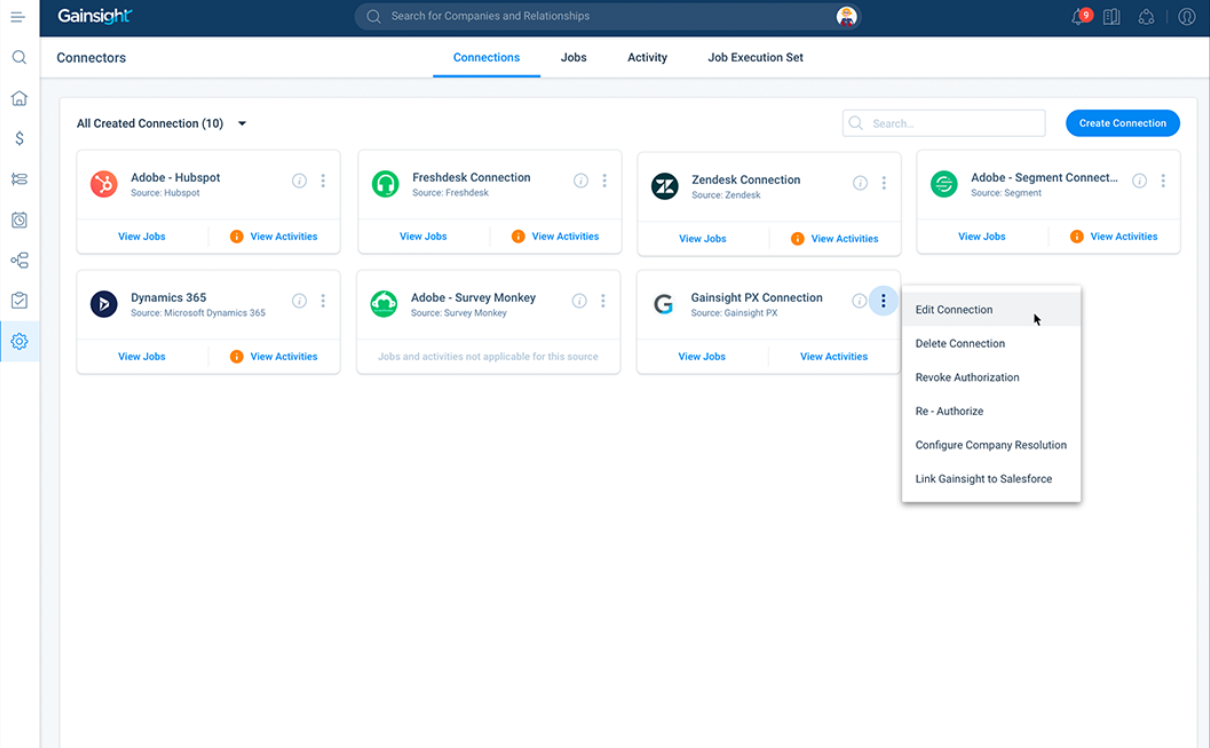
Gainsight is a well-known Customer Success platform designed for larger teams and enterprises that need a robust solution for managing customer health, automating workflows, and driving retention. Its extensive feature set makes it a popular choice for organizations that prioritize robust feature sets and customizability. However, its complexity and implementation process can be challenging for leaner teams or those looking for quicker adoption.
Strengths
- Comprehensive feature set: Gainsight provides a wide array of tools, from health score tracking to success plans to customer communities, that cover nearly all aspects of Customer Success management.
- Enterprise-ready: It’s well-suited for large organizations with dedicated resources to manage its setup and maintenance, offering scalability and flexibility at an enterprise level.
- Wide variety of integrations: Gainsight integrates with many systems, making it easier to consolidate customer data from various tools.
- Established reputation: As one of the leaders in the Customer Success space, Gainsight is often the benchmark for comprehensive CS solutions.
Weaknesses
- Cost considerations: Gainsight’s pricing structure may be prohibitive for mid-market companies and small businesses with limited budgets.
- Complex setup and maintenance: Gainsight’s implementation process is lengthy and resource-intensive, often requiring months before teams can go live. Maintenance typically requires a dedicated CS operations resource.
- Steep learning curve: Due to its complexity, Gainsight can be difficult to navigate for teams without prior experience with similar platforms.
- Automation limitations: Some Customer Success teams have found its automation features less intuitive and harder to set up compared to alternatives.
Pricing
Gainsight does not publish fixed pricing for its Customer Success platform. It offers Essentials and Enterprise plans, with pricing provided on request and varying based on factors such as customer volume, number of users, selected products, and implementation requirements.
According to Vendr, the median annual contract value is around $50,000, with observed contracts ranging from approximately $13,900 to $185,500+ per year.
Mid-market CS deployments commonly fall in the $60,000–$120,000 annual range, while larger enterprise deployments and bundles that include products such as Gainsight PX can exceed $100,000–$200,000 per year.
Implementation and professional services may also be priced separately, increasing the total first-year cost.
Best for
Gainsight is best suited for large enterprises with the resources to manage its complexity and a need for a comprehensive, all-in-one Customer Success solution. It’s particularly valuable for organizations that prioritize deep reporting capabilities and extensive integrations to align cross-functional teams.
While Gainsight offers a robust suite of tools, its complexity and resource requirements might not be ideal for everyone.
Totango
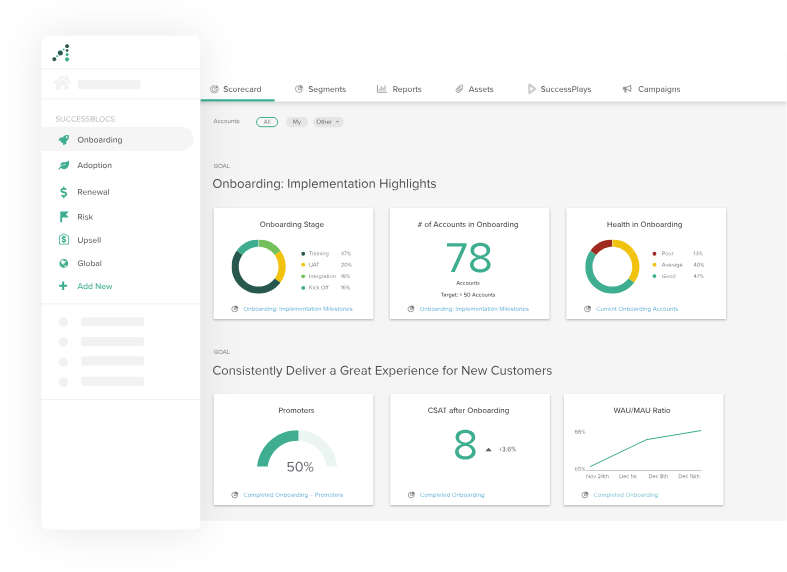
Totango is a Customer Success platform that provides a broad range of tools to help businesses manage their customer relationships, drive retention, and achieve growth. Its features focus on customer health, workflow automation, and performance tracking, making it a robust choice for teams looking to scale their operations. However, some organizations may find the platform’s setup and usability challenging, particularly for complex workflows or integrations.
Strengths
- Comprehensive feature set: Totango offers a suite of tools for tracking customer health, automating workflows, and creating success plans, providing a solid foundation for Customer Success management.
- Scalability: The platform supports growing teams with features tailored to scaling businesses, including its modular approach, which allows teams to start small and expand functionality over time.
- Customer health tracking: Totango’s health score system provides a clear view of customer status, helping teams focus on at-risk accounts and opportunities for growth.
- Integrations: The platform integrates with multiple tools, enabling teams to centralize data and improve cross-functional collaboration.
Weaknesses
- Lengthy implementation: Totango’s setup process can be time-consuming and resource-heavy, often requiring months to go live and see value.
- Usability challenges: Some teams have reported difficulties using Totango’s automation builder, particularly for complex workflows.
- Limited custom data hierarchy: Totango’s structure is primarily focused on users and accounts, which may not provide sufficient visibility for organizations with more intricate customer relationships.
- Modular pricing complexity: Totango’s modular pricing structure can become complex and lead to ballooning costs, with certain key functionalities requiring additional purchases, potentially limiting access for budget-conscious teams.
Pricing
Totango does not publish fixed pricing for its Customer Success platform. Its Enterprise and Premier plans are priced on request, with costs varying based on factors such as the number of customer accounts, practitioner seats, teams, integrations, and service requirements.
According to Vendr, the median annual contract value is around $66,150, with observed contracts ranging from approximately $11,760 to $126,000+ per year. Mid-market deployments commonly fall between $35,000 and $75,000 annually, depending on account volume, plan, add-ons, and contract length.
Implementation, premium integrations, support, and professional services may also be charged separately, increasing the overall cost of deployment.
Best for
Totango is best suited for mid-sized to large organizations that prioritize customer retention and are looking for a platform with scalable capabilities. It’s particularly effective for teams that are willing to invest time in implementation and prefer a modular approach to expanding their Customer Success operations.
Totango provides a robust platform for managing Customer Success, but its complexity and setup requirements might not be ideal for teams seeking quicker adoption or greater flexibility.
Hubspot
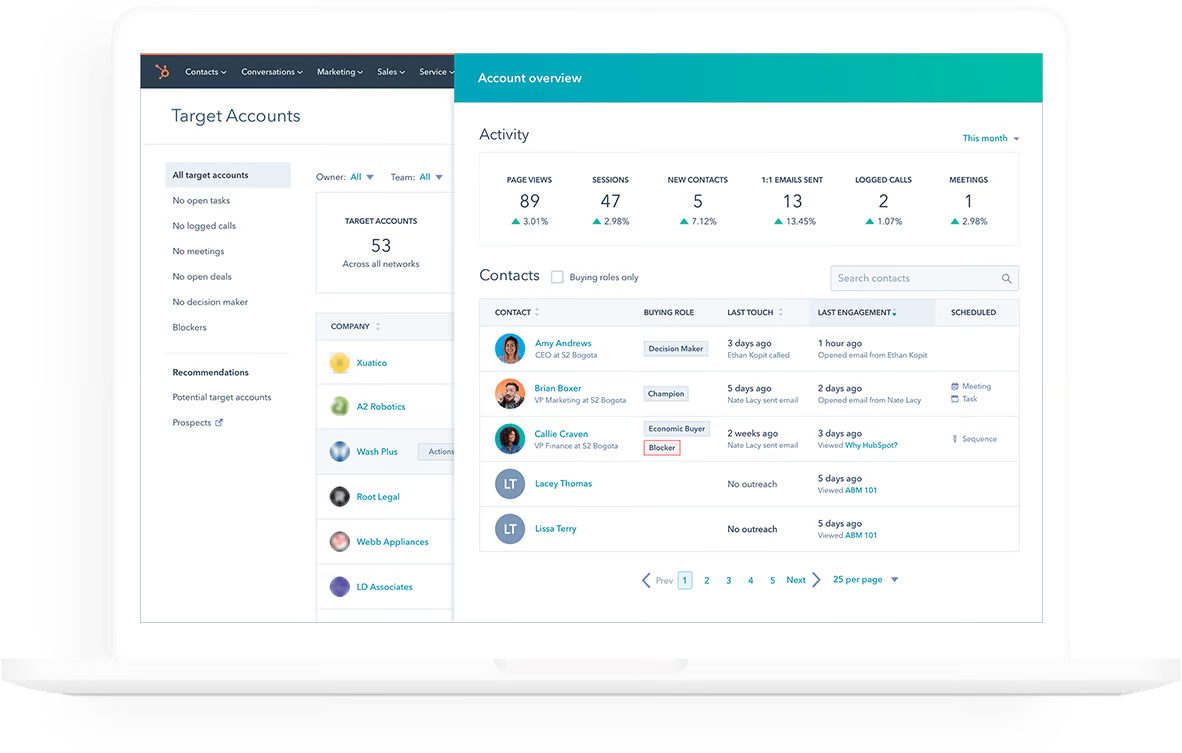
HubSpot is widely recognized as a powerful CRM platform designed primarily for sales and marketing teams. Recently, it has begun introducing Customer Success features, making it an affordable and accessible option for businesses looking to extend their use of HubSpot into post-sales workflows. While it’s easy to use and integrates seamlessly with sales data, its Customer Success functionality is still in development, which might limit its appeal for teams with more complex needs.
Strengths
- Affordable option: HubSpot offers budget-friendly pricing, making it accessible for smaller businesses or those just getting started with Customer Success.
- Sales data integration: Because HubSpot is built as a CRM, it easily connects customer success efforts with sales data, creating an easy handoff process between CS and Sales.
- Simplicity: HubSpot’s intuitive interface makes it simple to use, and the addition of basic health scores soon will enhance its utility for Customer Success teams.
- DIY reporting: Teams can create reports easily, allowing for quick insights without relying on external support.
Weaknesses
- Sales-focused design: As a CRM built for sales, HubSpot is not optimized for post-sales workflows, which can limit its usefulness for dedicated Customer Success teams.
- Limited data for decision-making: The platform may lack the depth of data and analytics needed to make informed decisions about customer retention or growth.
- Incomplete Customer Success features: Many features specific to Customer Success are still under development, making it less robust compared to platforms designed specifically for post-sales teams.
Pricing
HubSpot Service Hub offers several pricing tiers, from free tools to enterprise plans. Starter begins at $7 per seat/month when billed annually, while Professional starts at $90 per seat/month and Enterprise at $150 per seat/month.
For Customer Success teams, Professional is typically the relevant starting point, as this tier includes HubSpot’s Customer Success Workspace alongside its broader help desk and service functionality. Professional also requires a $1,500 one-time onboarding fee, while Enterprise carries a $3,500 onboarding fee.
Some AI functionality is usage-based through HubSpot Credits. Paid plans include an allocation of credits, with additional credits available from $9 per 1,000 credits when purchased annually.
Best for
HubSpot is best suited for companies just starting their Customer Success function and needing a simple, affordable solution that integrates well with sales data. It’s ideal for teams looking for basic functionality to get started without the need for a more specialized platform.
While HubSpot offers an affordable entry point for Customer Success, its limitations in post-sales workflows and advanced features might make it less appealing for teams looking to scale or manage complex customer relationships.
Conclusion
Choosing the right Customer Success platform depends on your team’s specific needs, workflows, and growth plans. Each of the platforms discussed offers distinct advantages and trade-offs, making them suitable for different scenarios:
- Velaris, which is highly rated on G2, stands out for its flexibility, AI-powered insights, and dedicated support, making it ideal for scaling SaaS teams with complex data needs and fast implementation timelines. To see how well it aligns with your goals, be sure to request a demo and experience the platform firsthand.
- Planhat is a versatile platform that combines Customer Success, sales, and professional services workflows, but its limited customization and basic automation may not suit teams with advanced requirements.
- ChurnZero excels at churn prevention and engagement but may fall short for teams needing more flexibility or simpler automation setups.
- Gainsight offers a robust, enterprise-ready solution with a comprehensive feature set, but its complexity and higher resource requirements may not work for smaller or leaner teams.
- Totango provides scalable capabilities and a wide range of features but has a lengthy implementation process and limitations in customization.
- HubSpot is an affordable and simple choice for companies just starting their Customer Success function, but its CS features remain in development, limiting its appeal for more mature teams.
Ultimately, the best Startdeliver alternative for your business will depend on your priorities whether you value ease of use, advanced analytics, scalability, or affordability. Take the time to evaluate these platforms based on your team’s goals.
Frequently Asked Questions
Why should Customer Success teams explore alternatives to Startdeliver?
Because every team has different workflows, budgets, and growth goals. Evaluating alternatives ensures you find a platform that matches your priorities, whether that’s faster onboarding, stronger retention, or clearer customer health insights.
What makes Velaris stand out among alternatives?
Velaris is highly rated on G2 for its flexibility, AI‑powered insights, and dedicated support. It’s especially valuable for scaling SaaS teams that need quick implementation and advanced data handling.
How can I decide which platform fits my team best?
Start by mapping your goals: do you need advanced analytics, simple automation, or enterprise‑level scalability? Then compare how each option addresses those needs. Requesting demos is the most effective way to see fit in action.
Are these platforms suitable for smaller teams too?
Some tools are designed for lean teams with limited resources, while others are better suited for large enterprises. Velaris, for example, offers flexibility that works across different team sizes.
What pain points do these alternatives solve?
They address challenges like limited customization, slow onboarding, integration gaps, and high costs. The right choice should reduce workflow friction while improving retention and customer health tracking.

The Velaris Team
A (our) team with years of experience in Customer Success have come together to redefine CS with Velaris. One platform, limitless Success.




Velaris is an AI-native Customer Success Platform built for mid-market and enterprise B2B SaaS teams. From customer health scoring and churn prediction to onboarding automation, renewals, and expansion workflows, Velaris helps recurring revenue teams understand account health, reduce churn, and scale customer success with greater visibility and control.