We look forward to showing you Velaris, but first we'd like to know a little bit about you.


Top 7 AI Renewal Management Software 2026
Learn about the renewal management software that help CSMs automate renewals, track customer health, and enhance engagement to improve retention.
The Velaris Team
December 3, 2026
Renewal management software is a category of Customer Success tools that centralize contract data, health signals, and automation to help teams retain and grow existing revenue. It’s built for CS leaders, CSMs, and RevOps teams managing 50+ customers where manual tracking breaks down and churn risk becomes harder to spot. You use it when renewals start slipping through spreadsheets, customer signals live in disconnected tools, and your team needs proactive risk detection, automated workflows, and a single source of truth to scale renewals without scaling headcount.
Key Takeaways
- Velaris. AI-native CS platform with automated risk detection, embedded customer engagement, and fast, white-glove implementation.
- Gainsight. Enterprise-grade CS suite with deep customization, robust renewal tracking, and heavy CS Ops requirements.
- Vitally. Salesforce-first CS platform offering modular features, flexible dashboards, and DIY configuration.
- Planhat. All-in-one Sales and CS platform with strong European compliance and cross-team functionality.
- ChurnZero. Automation-focused CS platform known for in-app messaging and engagement-driven renewal workflows.
- Totango. Template-driven CS platform with pre-built playbooks and scalable renewal automation.
- Custify. Lightweight, affordable CS tool for small teams needing simple renewal tracking and basic automation.
Why CSMs Need Dedicated Renewal Management Tools
Renewal management software is a category of Customer Success platforms designed to track contract end dates, automate renewal workflows, and surface early warning signs of churn risk. These tools centralize customer health data, usage metrics, and engagement signals to help CS teams prioritize accounts and take action before it's too late.
These platforms also let you automate the repetitive parts of renewal workflows like sending QBR invites, triggering check-in emails, and logging activities, so CSMs can focus on the conversations that actually move the needle. When renewal season hits, you're not scrambling, but executing a pre-determined system.
1. Velaris
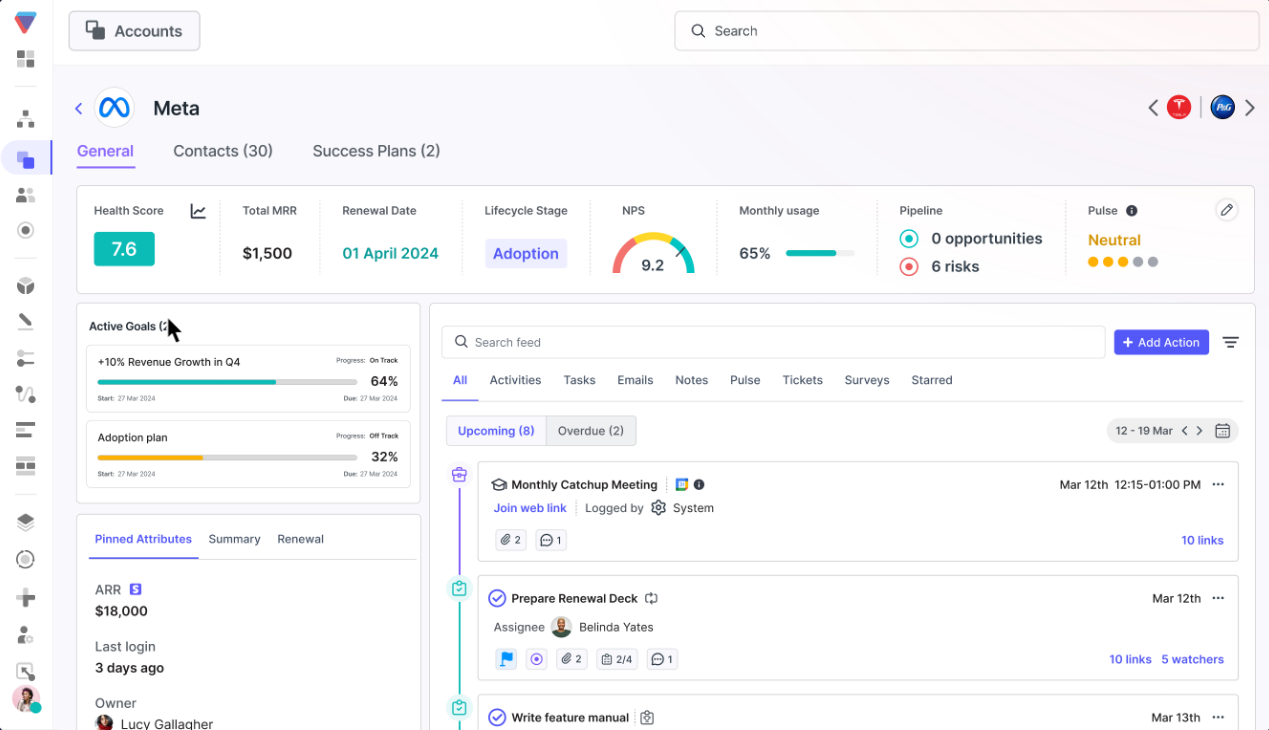
Velaris is an AI-native Customer Success Platform built for teams who need to move fast and scale intelligently. With a 4.7-star rating on G2, Velaris has earned a reputation for exceptional product quality and customer service, ease of use, responsive support, and AI features that feel like a natural extension of the platform rather than bolted-on additions.
Unlike legacy platforms that bolt on AI as an afterthought, Velaris was designed from the ground up to help CSMs manage renewals with automated insights, embedded customer engagement, and workflows that actually drive action.
Key Features
Velaris is built for modern CS teams who need speed, AI-powered insights, and hands-on support to manage renewals effectively. The platform combines automation, health monitoring, and embedded customer engagement in one place.
AI-Powered Risk Detection: Velaris AI continuously analyzes customer interactions like emails, calls, and tickets to surface risk signals before they become churn. The Headlines feature summarizes account activity across all touchpoints, giving CSMs instant context on what's happening in each renewal conversation. CallSense turns meeting transcripts into action items and sentiment scores, so you know exactly where each account stands.
AI Agents: Velaris offers purpose-built AI agents for workflows like risk detection, opportunity identification, onboarding, renewals, handoffs, and custom use cases, helping teams continuously monitor accounts and act on what matters.
MCP: Velaris MCP gives external AI tools secure access to connected customer context, so teams can work with Velaris data from tools like ChatGPT and Claude.
Opportunities Pipeline: Unlike platforms that only track renewals, Velaris includes a built-in pipeline for tracking upsell and expansion opportunities. This means you're not just managing renewals, but also identifying growth potential in real time and triggering automated workflows to capture it.
Automated Renewal Workflows: Velaris lets you build drag-and-drop automation scenarios that handle renewal outreach, health checks, and follow-ups without manual work. You can set triggers based on contract dates, health score changes, or engagement drops, ensuring no renewal falls through the cracks.
Success Plans: Map out renewal milestones, track progress, and align with customers on expected outcomes. Success Plans keep everyone—CSMs, customers, and stakeholders—on the same page throughout the renewal cycle.
Customer Portal (Velaris Connect): Instead of asking customers to log into a separate platform, Velaris embeds directly into your product with a no-code widget. Customers can view their health, access resources, and engage with your team without leaving your app, reducing friction and increasing adoption during critical renewal periods.
Canvas for Collaboration: Create shared workspaces for complex renewals or escalations. Canvas lets you bring together account plans, tasks, files, and live data in one document, making it easy to coordinate across teams and keep a clean record of what happened.
Deep Integrations: Velaris pulls data from your entire tech stack using both native integrations and custom-built connectors through Velaris Bridge. This means your renewal data is always accurate and up to date.
Pricing
Velaris offers flexible pricing that scales with your team. All core features like AI tools, automation, Success Plans, surveys, and the Opportunities Pipeline are included in the base platform. No add-ons, no nickel-and-diming.
Contact Velaris for custom pricing based on your team size and integration needs.
Best For
Velaris is ideal for midmarket and enterprise SaaS companies who want to move fast, scale intelligently, and get white-glove support throughout implementation and beyond. It's particularly strong for teams managing complex customer hierarchies, multi-product relationships, or high-velocity renewals where AI-driven insights can save hours of manual work.
Pros and Cons
Pros:
- Fast implementation: 4-5 weeks for SMBs, 8-10 weeks for midmarket teams
- Every customer gets a dedicated CSM, implementation engineer, and Slack channel.
- AI features (sentiment analysis, risk detection, action item extraction, call summaries) are built in, not sold separately
- Embedded customer portal reduces friction and increases engagement during renewals
- Flexible data model with custom objects, perfect for tracking complex renewal structures
- Modern, intuitive UI that drives adoption across CS teams
Cons:
- Newer brand compared to legacy enterprise platforms
- May require internal change management for teams transitioning from manual renewal tracking
2. Gainsight
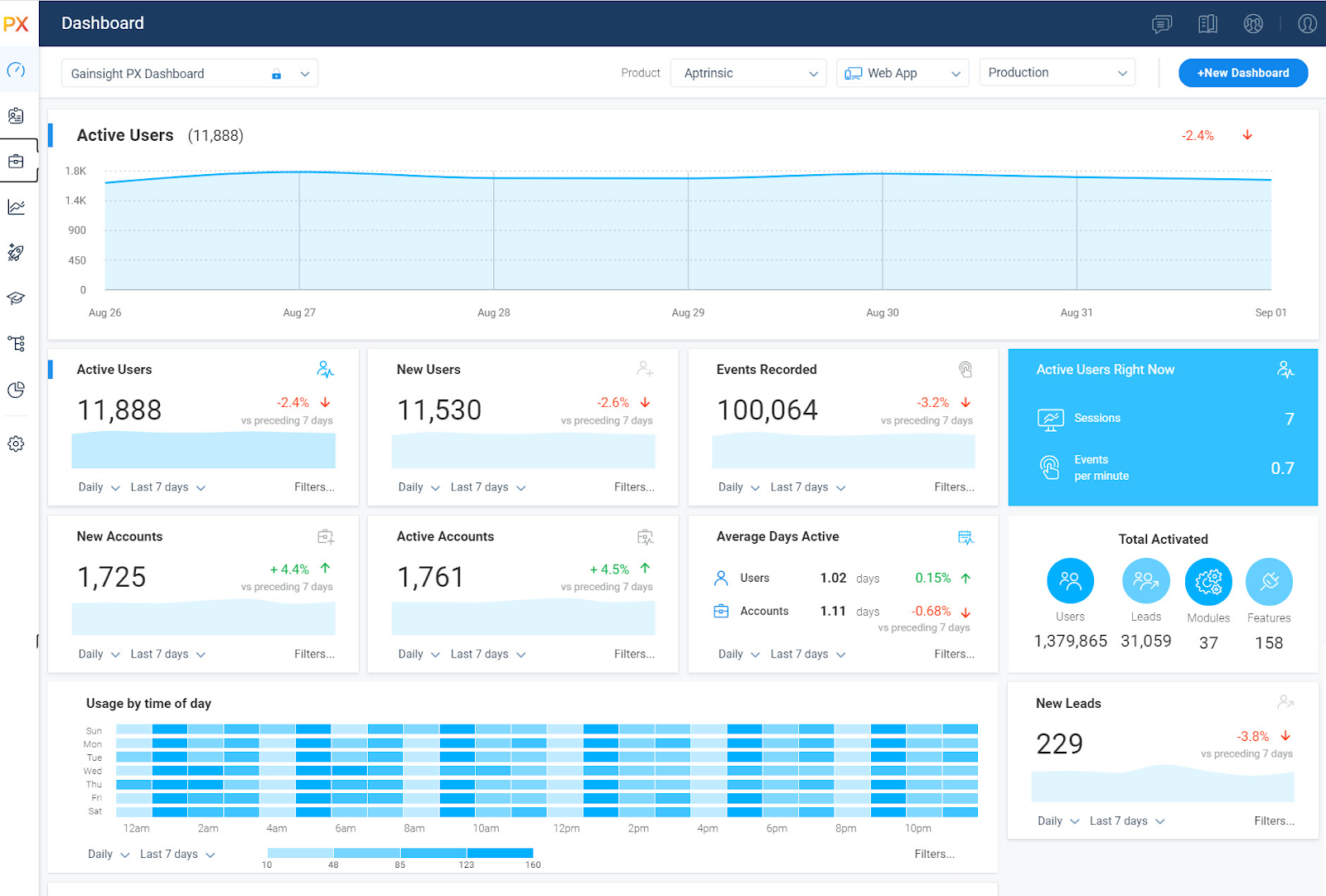
Gainsight is an enterprise Customer Success Platform with deep roots in the market and a comprehensive feature set. Built for large organizations managing thousands of renewals, it offers extensive customization options and robust integrations with major enterprise systems. The platform is feature-rich but requires significant implementation time and ongoing CS Ops resources to maintain.
Key Features
Gainsight is the incumbent enterprise platform with a comprehensive feature set for managing renewals at scale. It offers health scoring, renewal forecasting, journey orchestration, and success planning capabilities.
Health Scores and Risk Tracking: Gainsight lets you build custom health scores using product usage, engagement, and support data to identify at-risk renewals. You can set thresholds and trigger alerts when accounts dip into the red zone.
Renewal Center: A centralized dashboard that tracks all upcoming renewals, showing contract value, renewal likelihood, and historical trends. CSMs can filter by risk level, ARR, or renewal date to prioritize outreach.
Journey Orchestrator: Automate renewal workflows with multi-step email sequences, task assignments, and calls-to-action based on customer behavior or contract milestones.
Success Plans: Document goals, milestones, and outcomes for each customer. Success Plans help align renewal conversations around value delivered rather than just contract terms.
Surveys and NPS: Capture customer sentiment before renewal conversations start, giving you early warning signs of dissatisfaction or churn risk.
Pricing
Gainsight pricing is typically positioned for enterprise buyers and varies based on user count, feature tier, and add-ons. AI capabilities are sold separately and can add significant cost.
Best For
Gainsight works well for large enterprises with dedicated CS Ops teams who can handle the setup and ongoing maintenance. It's built for companies managing thousands of accounts and complex renewal processes across multiple products or business units.
Pros and Cons
Pros:
- Deep feature set with tools for every stage of the customer lifecycle
- Strong brand recognition and established market presence
- Robust integrations with major CRMs and data platforms
- Comprehensive reporting and analytics capabilities
Cons:
- Long implementation timelines (often 4+ months) with heavy internal lift required
- Requires a full-time CS Ops admin to manage setup, maintenance, and ongoing changes
- Complex interface that can reduce day-to-day adoption among CSMs
- AI tools are sold separately and come at a premium price
- Automation setup can be difficult and inflexible for some teams
3. Vitally
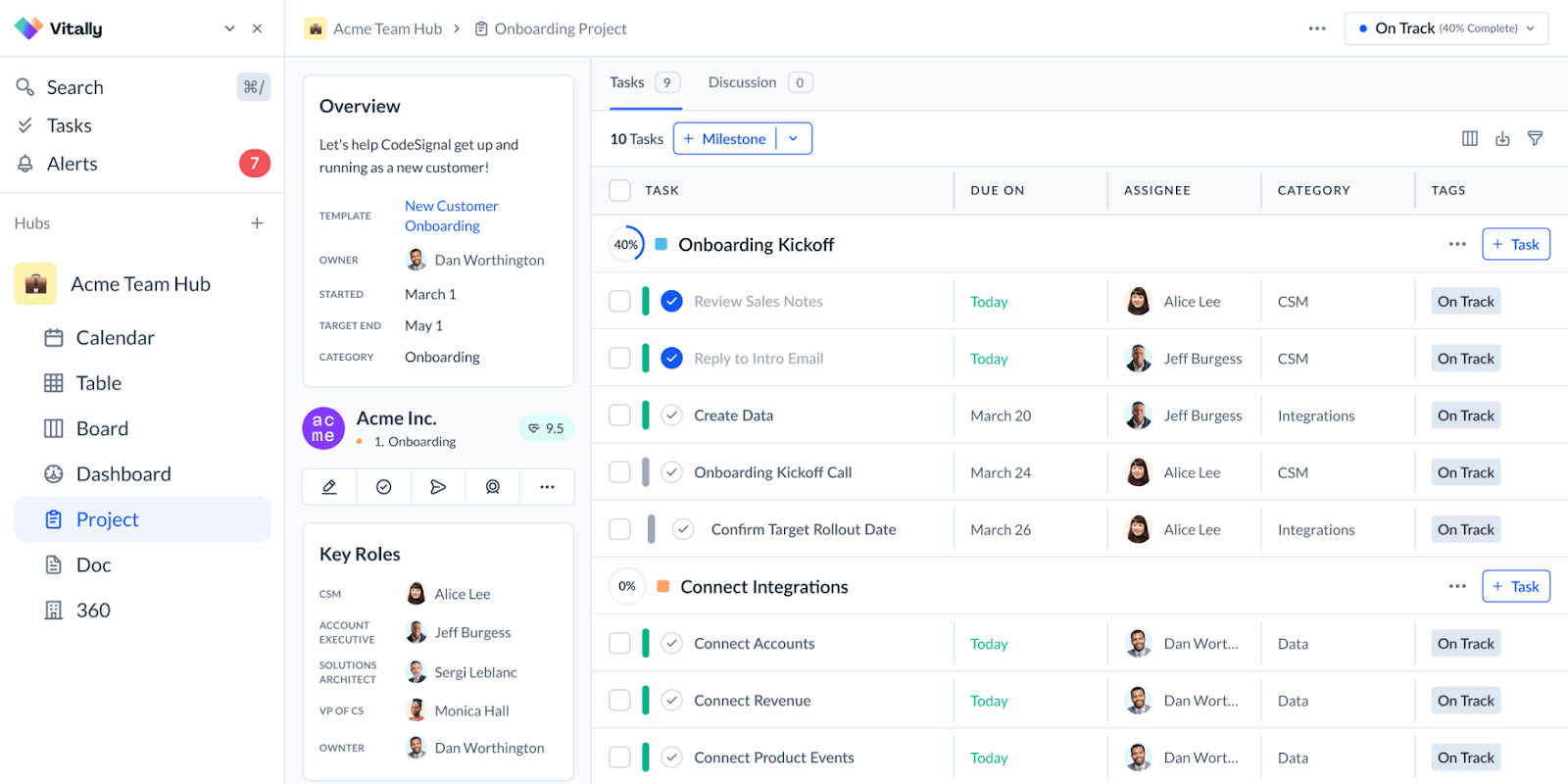
Vitally positions itself as a flexible, Salesforce-first Customer Success platform with modular pricing that lets you pay for only the features you need. The platform is designed for teams who want their CS tool to sync tightly with their CRM and prefer a DIY approach to setup. While it offers clean dashboards and customizable workflows, it relies heavily on Salesforce data quality and doesn't currently include built-in AI capabilities.
Key Features
Vitally positions itself as a flexible platform with strong Salesforce integration and modular pricing. It offers health scoring, playbooks, and customer tracking with a focus on customization.
Health Scores: Build custom health scores based on product usage, engagement metrics, and CRM data. Set thresholds to trigger alerts for at-risk renewals.
Playbooks: Create automated workflows that trigger renewal outreach, task assignments, or internal notifications based on contract dates or health changes.
Customer Hubs: Internal workspaces for organizing account information, notes, and collaboration across the CS team.
Salesforce Integration: Vitally relies heavily on Salesforce as the source of truth, syncing renewal data, contract details, and customer health back to your CRM.
Dashboards and Reporting: Flexible dashboards let you visualize renewal pipelines, track health trends, and monitor team performance.
Pricing
Vitally uses a modular pricing model where features like Goals+, Surveys, and Meetings are paid add-ons. Base pricing varies by team size.
Best For
Vitally works best for teams already heavily invested in Salesforce who want a CS platform that syncs seamlessly with their CRM. It's suited for small to mid-sized teams comfortable with a DIY setup process.
Pros and Cons
Pros:
- Strong Salesforce integration for teams using SFDC as their primary system
- Modular pricing lets you pay only for features you need
- Clean, fast UI for small teams
- Flexible dashboards and custom reporting
Cons:
- DIY setup can be time-consuming and resource-heavy depending on integration complexity
- Depends heavily on Salesforce quality; if your CRM data is messy, Vitally will be too
- Limited visibility into expansion opportunities without additional configuration
- Complex, and has a steep learning curve
- Support varies by plan tier
4. Planhat
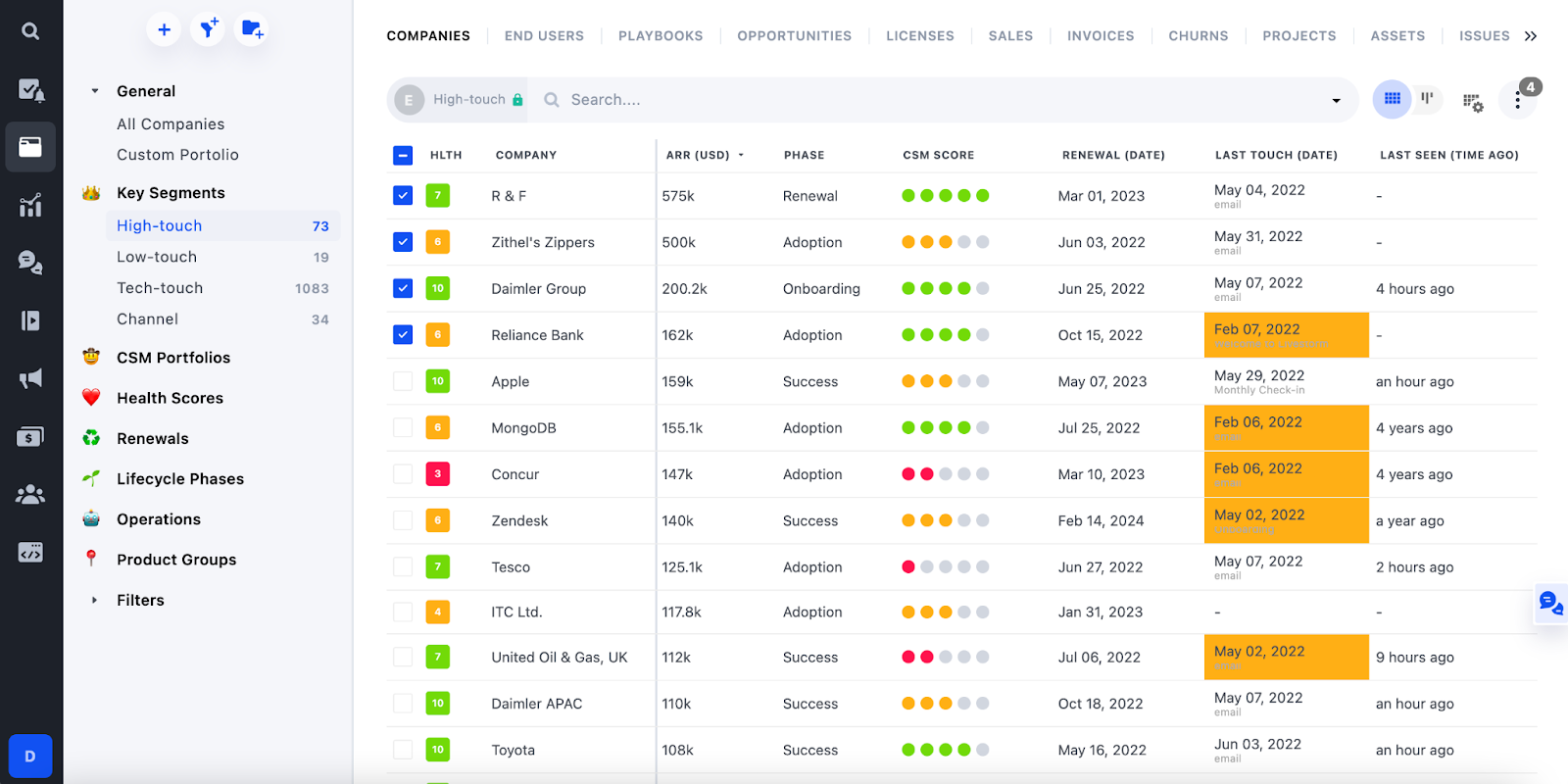
Planhat markets itself as an all-in-one platform that spans Sales, Customer Success, and Services teams. With a strong presence in Europe and GDPR compliance built in, it appeals to companies who want a single system across multiple post-sales functions. However, customers frequently report challenging implementations, a steep learning curve, and prioritization issues for midmarket accounts.
Key Features
Planhat markets itself as an all-in-one platform for Sales, CS, and Services teams. It includes renewal tracking, automation, and customer health monitoring with a focus on European compliance.
Health Scoring and Renewals Dashboard: Track customer health and upcoming renewals in a centralized view. Filter by risk level, contract value, or renewal date.
Sequences: Automate renewal outreach with email sequences triggered by contract milestones or health score changes.
Customer Portal: Planhat offers a customer-facing portal, though it requires customers to log into a separate workspace rather than embedding in your product.
Canvas and Widgets: Customizable dashboards let you visualize renewal data and build views for different team members.
European Compliance: GDPR-compliant with EU hosting options, making it a strong choice for European SaaS companies.
Pricing
Planhat pricing varies by team size and feature tier. Lower tiers have restrictions on automation capabilities.
Best For
Planhat is positioned for companies that want a platform spanning Sales, CS, and Services. It's particularly strong for European companies prioritizing GDPR compliance and local data hosting.
Pros and Cons
Pros:
- All-in-one platform covering multiple post-sales functions
- Responsive and supportive customer support team of Planhat
- European market presence and compliance focus
- Extensive customization
Cons:
- Difficult implementation with reports of failed onboarding attempts and months-long delays
- Unintuitive, complex user experience with a steep learning curve
- Automation gaps: no recurring tasks, limited branching logic, restricted actions in lower pricing tiers
- Rigid data modeling makes it hard to track unique renewal scenarios or custom workflows
- Customer portal requires separate login, creating friction
- Midmarket customers report being deprioritized for support
- Missing features, notably an email builder and automated activity registration
5. ChurnZero
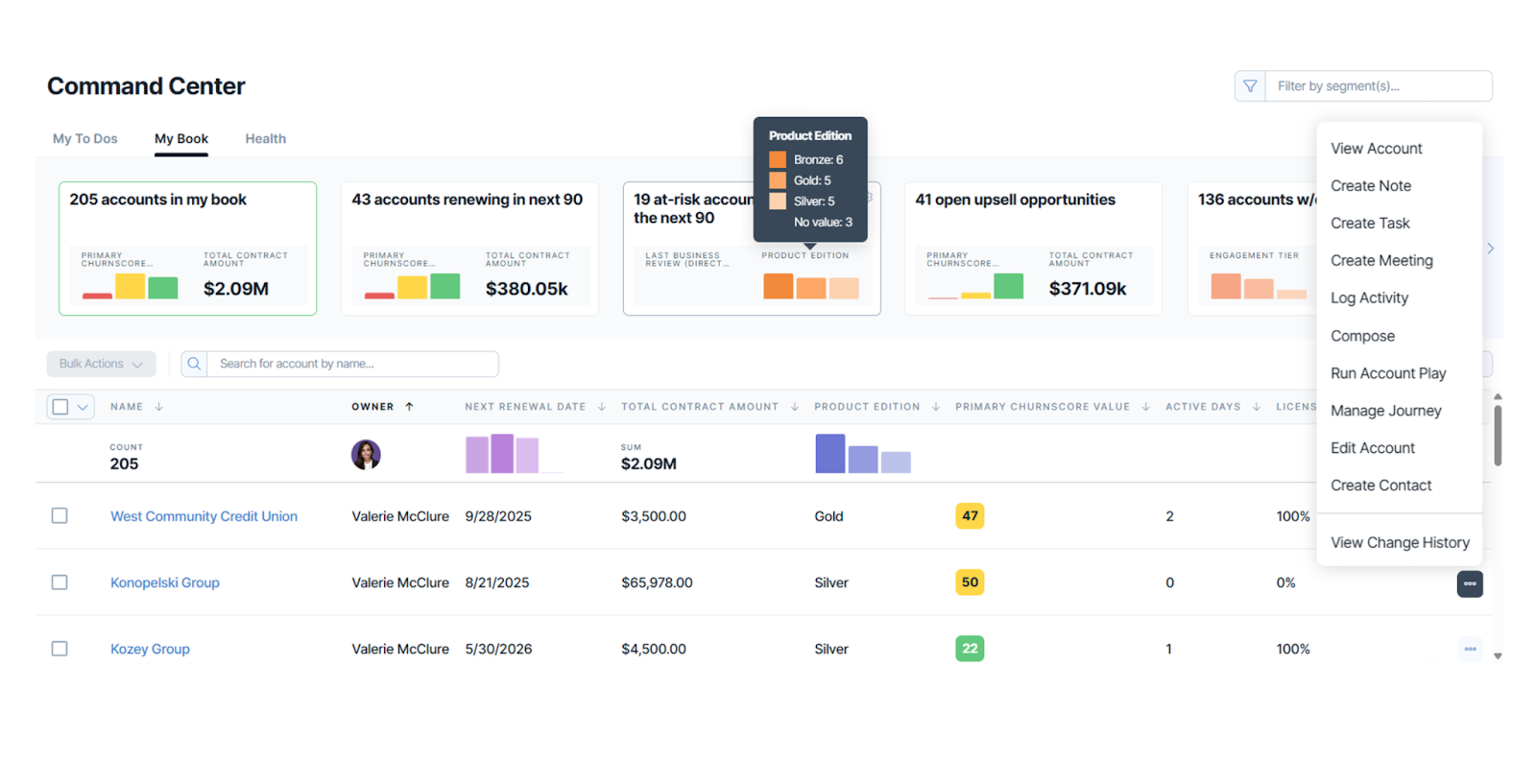
ChurnZero is a well-established Customer Success platform known for its automation capabilities and in-app messaging features. The platform has built a strong reputation among enterprise SaaS companies for its ability to engage customers directly inside their products. However, long implementation timelines and a dated interface have become pain points for teams looking for faster time-to-value.
Key Features
ChurnZero is a well-known platform focused on reducing churn and managing renewals through automation and customer engagement tools.
Renewal Tracking: Monitor upcoming renewals with risk scoring based on engagement, health, and usage data. Filter accounts by renewal date or likelihood to renew.
Journeys (Automation): Build automated workflows that trigger renewal outreach, health checks, or escalations based on customer behavior or contract dates.
Health Scores: Create custom health scores using product usage, support tickets, and engagement metrics to identify at-risk renewals early.
In-App Messaging: Reach customers directly inside your product with renewal reminders, feature announcements, or engagement prompts.
Customer Success Dashboard: Centralized view of customer health, renewal pipeline, and team activity.
Pricing
ChurnZero pricing varies by team size and feature requirements.
Best For
ChurnZero works well for enterprise and mid-market SaaS companies with established renewal processes who need strong automation and in-app engagement capabilities.
Pros and Cons
Pros:
- Strong automation capabilities for renewal workflows
- Large set of native integrations
- In-app messaging to engage customers during renewal periods
- Well-known brand with enterprise customer base
Cons:
- Long implementation timelines (typically 12+ weeks) with significant internal lift required
- Midmarket clients report lack of personalized service and support
- Complex automation setup that requires training and CS Ops support
- Poor reporting experience compared to newer platforms
- Customer portal requires separate login, creating friction
- Unintuitive searching experiences
6. Totango
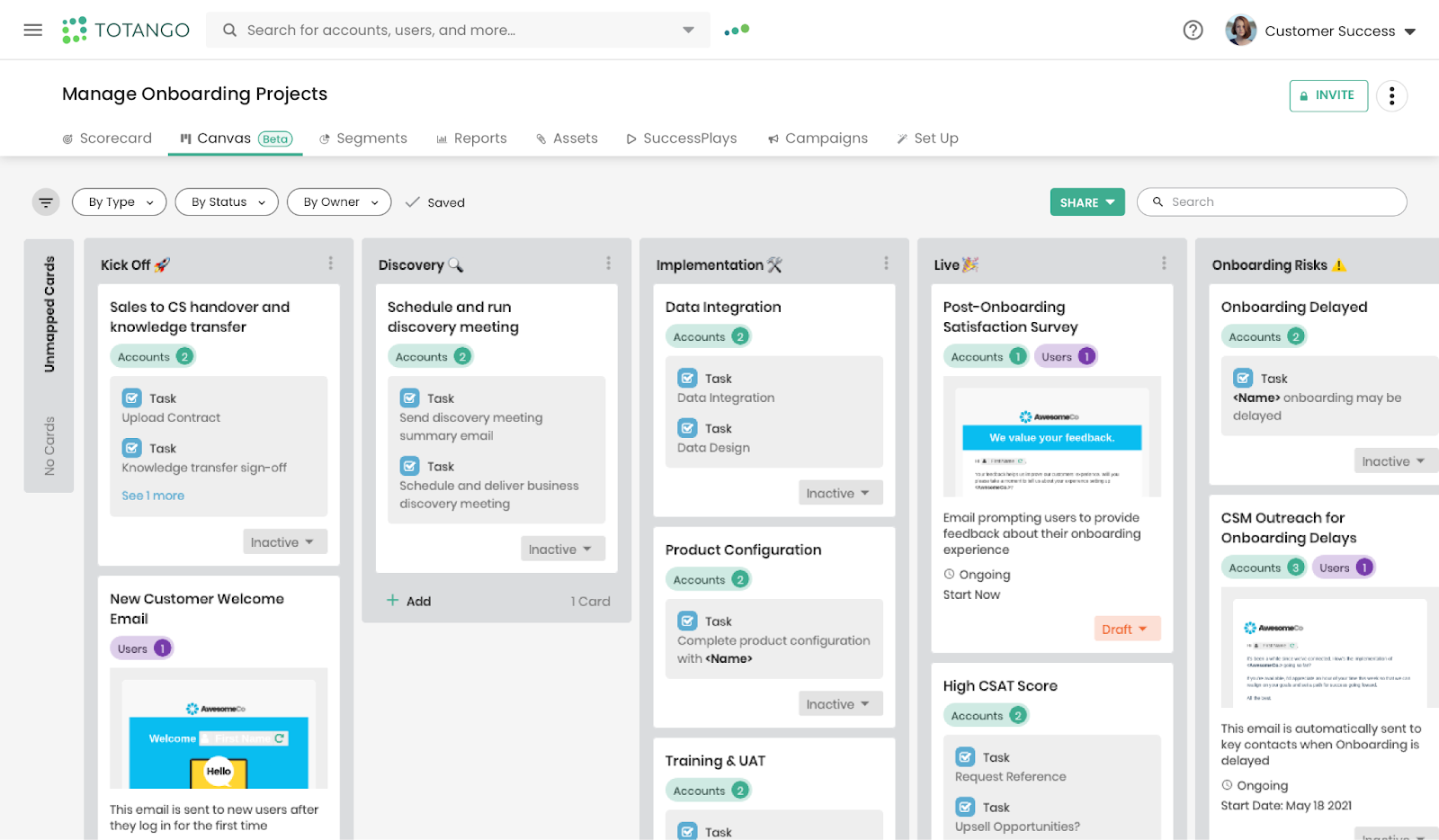
Totango offers a template-driven approach to Customer Success with pre-built playbooks and workflows designed to help teams scale renewal processes quickly. The platform markets itself as enterprise-ready with AI-powered churn prediction and a broad integration ecosystem. However, tiered support models mean smaller customers often experience significantly different service levels than enterprise accounts.
Key Features
Totango offers renewal management, health scoring, and customer journey orchestration with templates for common CS workflows.
Renewal Dashboard: Track upcoming renewals with risk scoring, contract value, and historical renewal rates. Filter by segment, risk level, or renewal date.
SuccessBLOCs (Automation): Pre-built and custom automation workflows for renewal outreach, health monitoring, and task assignment.
Health Scores: Build custom health scores based on usage, engagement, and support data to identify renewal risk.
Success Plans: Document customer goals, milestones, and outcomes to align renewal conversations around value delivered.
Templates: Pre-built playbooks and success plan templates to accelerate renewal workflows.
Pricing
Totango uses tiered pricing with support levels varying by plan. Smaller ARR clients may receive lower-priority support.
Best For
Totango is positioned for mid-market and enterprise teams who want pre-built templates and workflows to scale renewals quickly.
Pros and Cons
Pros:
- Enterprise-ready platform with robust feature set
- Templates for playbooks and success plans accelerate implementation
- AI tools for churn prediction and content generation
- 30+ native integrations
Cons:
- Tiered support model means smaller customers often receive lower-priority service
- Difficult implementation with reports of failed onboarding and months-long delays
- Clunky, unintuitive UI with steep learning curve
- Manual and tedious integrations
- Limited customization
7. Custify
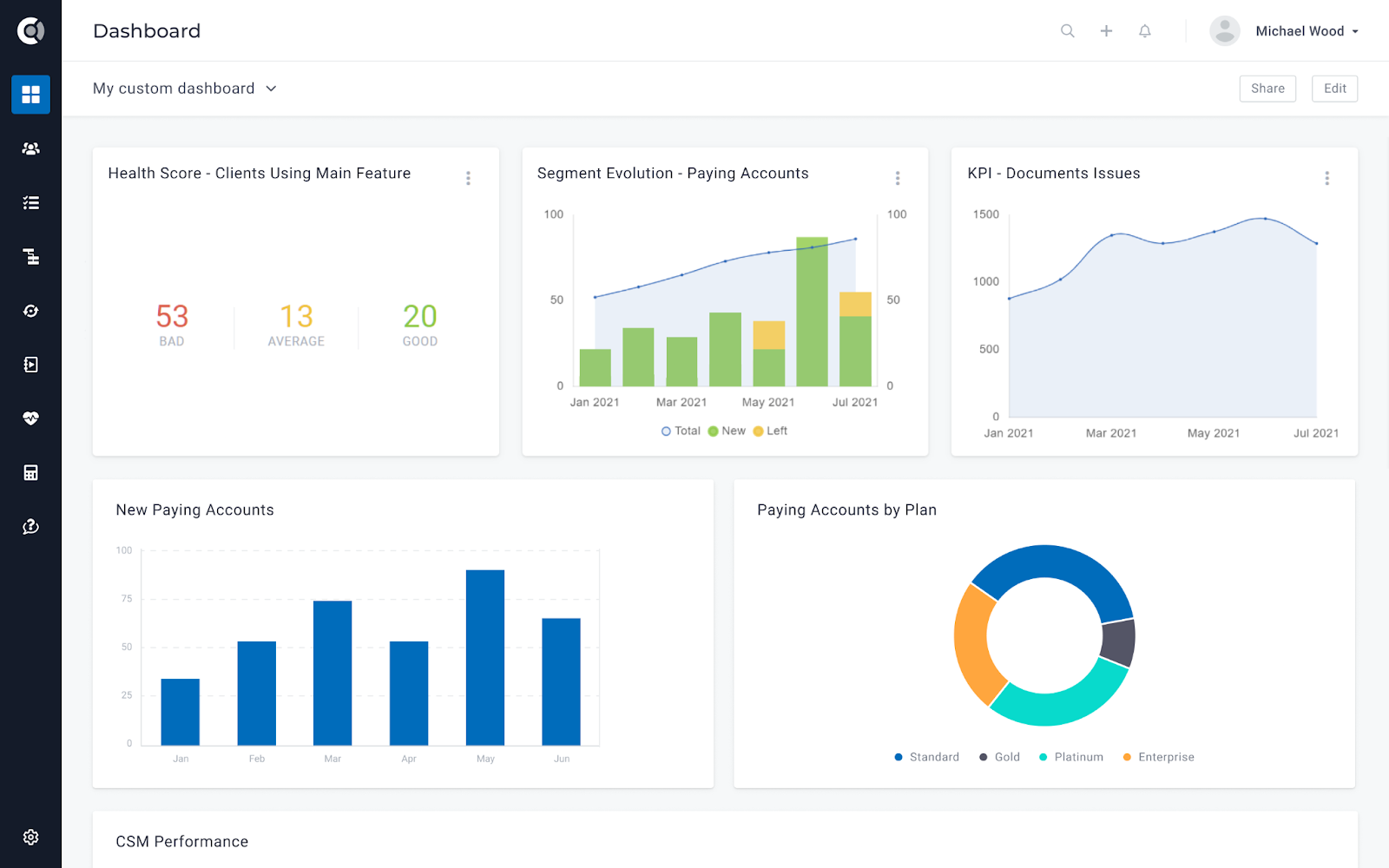
Custify is a lightweight Customer Success platform designed for small to mid-sized teams who want simple renewal tracking without enterprise complexity or pricing. The platform offers an affordable entry point with basic automation and health scoring capabilities. While it's easy to adopt initially, growing teams often find themselves constrained by limited data modeling and basic feature sets.
Key Features
Custify is a lightweight platform designed for small to mid-sized CS teams who need basic renewal tracking and automation without enterprise complexity.
Renewal Tracking: Monitor upcoming renewals with basic health scoring and contract date tracking.
Automation: Simple automation workflows for renewal outreach and task assignment based on contract milestones.
Dashboards: Basic dashboards for visualizing renewal pipeline and customer health.
Account Health Scores: Build health scores using engagement and usage data to flag at-risk renewals.
AI Summaries: Account-level AI summaries provide quick overviews of customer activity.
Pricing
Custify is priced affordably for small teams, with pricing that scales as you add users.
Best For
Custify works well for small CS teams (5-15 people) who need simple renewal tracking without the complexity or cost of enterprise platforms.
Pros and Cons
Pros:
- Affordable pricing for small teams
- Lightweight, simple UI that's easy to adopt, with quick onboarding
- Basic AI summaries for account overviews
Cons:
- Limited data model supports only basic 2-level hierarchy (contacts + accounts), making it difficult to track complex renewal structures
- Weak dashboards and reporting with few visualization options
- Minimal automation flexibility with fewer triggers and limited workflow complexity
- Customer portal requires separate login and offers document-based UX rather than embedded experience
- Small teams can outgrow the platform quickly as renewal complexity increases
How to Choose the Right Renewal Management Software for Your Team
Choosing renewal management software comes down to three core factors: the complexity of your renewals, the maturity of your CS team, and how much hands-on support you need to get value fast.
If you're managing complex, multi-product renewals across subsidiaries or regions: Look for platforms with flexible data models that support custom objects and hierarchies. Velaris and Gainsight offer this capability with full custom object support. Planhat provides some flexibility but customers report rigid data modeling. ChurnZero and Custify are limited to basic user/account structures.
If you need AI to surface risk and opportunities automatically: Prioritize platforms with built-in AI features rather than roadmap promises. Velaris delivers AI-powered sentiment analysis, risk detection, and action item extraction out of the box. Gainsight and Totango offer AI tools non-natively, and Planhat and Custify offer limited AI beyond basic summaries.
If fast implementation matters: Implementation timelines vary dramatically. Velaris goes live in 4-10 weeks with white-glove onboarding. ChurnZero, Totango, Planhat, and Gainsight often take 12+ weeks (sometimes 4-6 months for Gainsight) with significant internal lift. Vitally's DIY setup timeline depends on your integration complexity. Custify offers faster setup for basic needs.
If you want embedded customer engagement: Most platforms offer separate customer portals that require additional logins, including Planhat, ChurnZero, Totango, and Custify. Velaris Connect embeds directly into your product with a no-code widget, reducing friction and increasing renewal engagement.
If support quality is critical: Support models vary significantly by platform and customer size. Totango uses a tiered support model where smaller accounts receive lower-priority service. Planhat's midmarket customers report being deprioritized. Vitally's support varies by plan. Gainsight, ChurnZero, and Custify offer standard enterprise support structures.
If you're heavily invested in Salesforce: Vitally offers deep SFDC integration but depends heavily on Salesforce data quality, meaning if your CRM is messy, Vitally will be too. Velaris uses a hub-and-spoke model, pulling from all systems independently and enriching your CRM rather than relying on it. Gainsight also integrates tightly with Salesforce. Planhat's Salesforce integration is limited to 10 fields.
The best renewal management software isn't the one with the longest feature list. It's the one that fits your team's workflow, scales with your complexity, and helps you actually use the data you're already collecting.
Conclusion
Renewal management software transforms how CS teams retain and grow revenue. The right platform gives you visibility into every renewal, automates the repetitive work, and surfaces the risks and opportunities that matter most.
Velaris, rated 4.7/5 on G2 stands out for teams who want AI-powered insights, fast implementation, and hands-on support without the complexity of legacy enterprise platforms. Gainsight remains the choice for large enterprises with dedicated CS Ops teams. Vitally works for Salesforce-heavy organizations. Planhat fits European compliance needs. ChurnZero and Totango serve established enterprise teams. Custify offers an entry point for small teams.
The common thread? Every successful CS team eventually moves beyond spreadsheets and calendar alerts. The question isn't whether you need renewal management software, but which platform will help you scale renewals without scaling headcount.
If you're ready to see how AI-native renewal management works in practice, book a demo with Velaris and let’s take you live in weeks, not months.
Frequently Asked Questions
How much does renewal management software typically cost?
Pricing varies widely by company size. Entry-level platforms start around $500-1,000/month for small teams, mid-market solutions range from $2,000-5,000/month, and enterprise platforms often exceed $10,000/month with custom pricing. Most vendors don't publish transparent pricing, so expect sales conversations to get accurate quotes based on your user count and needs.
What's the difference between renewal management software and a CRM?
CRMs track sales opportunities and basic customer data, while renewal management software monitors post-sale health signals like product usage, support tickets, and engagement patterns. These platforms predict churn risk and automate CS workflows, whereas CRMs focus on pipeline and closing deals. Many teams use both together, with renewal software enriching the CRM with health scores.
Can I build my own renewal tracking system instead of buying software?
You can start with spreadsheets or tools like Airtable, and many early-stage companies do. However, homegrown systems break down past 50-100 customers because they lack automated health scoring and real-time data aggregation. The hidden cost is CS team productivity: hours spent updating trackers instead of talking to customers means lost revenue opportunities.
How long does it take to see ROI from renewal management software?
Most teams see measurable impact within 3-6 months through improved retention rates and reduced admin work. The fastest ROI comes from preventing one or two unexpected churns your previous system would have missed. However, platforms taking 6+ months to implement delay value realization, while faster implementations (4-10 weeks) capture at-risk renewals almost immediately.
Do I need a dedicated CS Ops person to manage this software?
It depends on the platform. Legacy enterprise tools typically require a full-time CS Ops admin for configuration and maintenance. Modern platforms with intuitive interfaces often allow CSMs or leaders to manage the system themselves. If you're under 20 people without ops resources, prioritize platforms known for ease of use and strong vendor support.
What happens to our data if we switch platforms later?
Most platforms allow data exports via CSV or API, though completeness varies. The bigger challenge is recreating workflows, health scores, and automation logic in the new system. Before committing, ask vendors about data portability, export formats, and historical data migration capabilities. Some contracts include data retention clauses specifying how long they keep your information after cancellation.

The Velaris Team
A (our) team with years of experience in Customer Success have come together to redefine CS with Velaris. One platform, limitless Success.




Velaris is an AI-native Customer Success Platform built for mid-market and enterprise B2B SaaS teams. From customer health scoring and churn prediction to onboarding automation, renewals, and expansion workflows, Velaris helps recurring revenue teams understand account health, reduce churn, and scale customer success with greater visibility and control.