We look forward to showing you Velaris, but first we'd like to know a little bit about you.


Top 10 AI Churn Prediction Software for SaaS Teams (2026)
Churn prediction software helps SaaS teams identify at-risk customers before they leave. This guide compares the top 10 tools for this year. We break down key features, strengths, and which types of teams each tool is best suited for, so you can find the right fit for your retention strategy.
The Velaris Team
April 3, 2026
Churn prediction software helps businesses identify customers at risk of leaving by analyzing product usage, engagement, and behavioral data. Instead of reacting to churn after it happens, these tools allow teams to act early and prevent it.
The best churn prediction tools go beyond simple reporting. They combine predictive analytics, automation, and customer insights to surface risks, prioritize accounts, and guide teams on what to do next.
In this guide, we compare the top churn prediction software for SaaS teams, breaking down their key features and what types of organizations they’re best suited for.
Key takeaways:
- Context matters as much as prediction. Tools like Velaris combine usage, sentiment, and communication data to explain why churn risk exists, in addition to predicting it.
- Some tools are built for action, others for analysis. Platforms like Gainsight, ChurnZero, and Totango help teams operationalize churn signals, while tools like Pecan AI and Akkio focus more on prediction layers
- Not all churn signals come from product usage. Tools like Qualtrics and Zendesk highlight how feedback and support interactions can be early indicators of churn risk
- Flexibility vs structure is a key tradeoff. Platforms like Planhat and Vitally offer more customization, while others provide more predefined frameworks and workflows
Comparison of Customer Success tools
1. Velaris
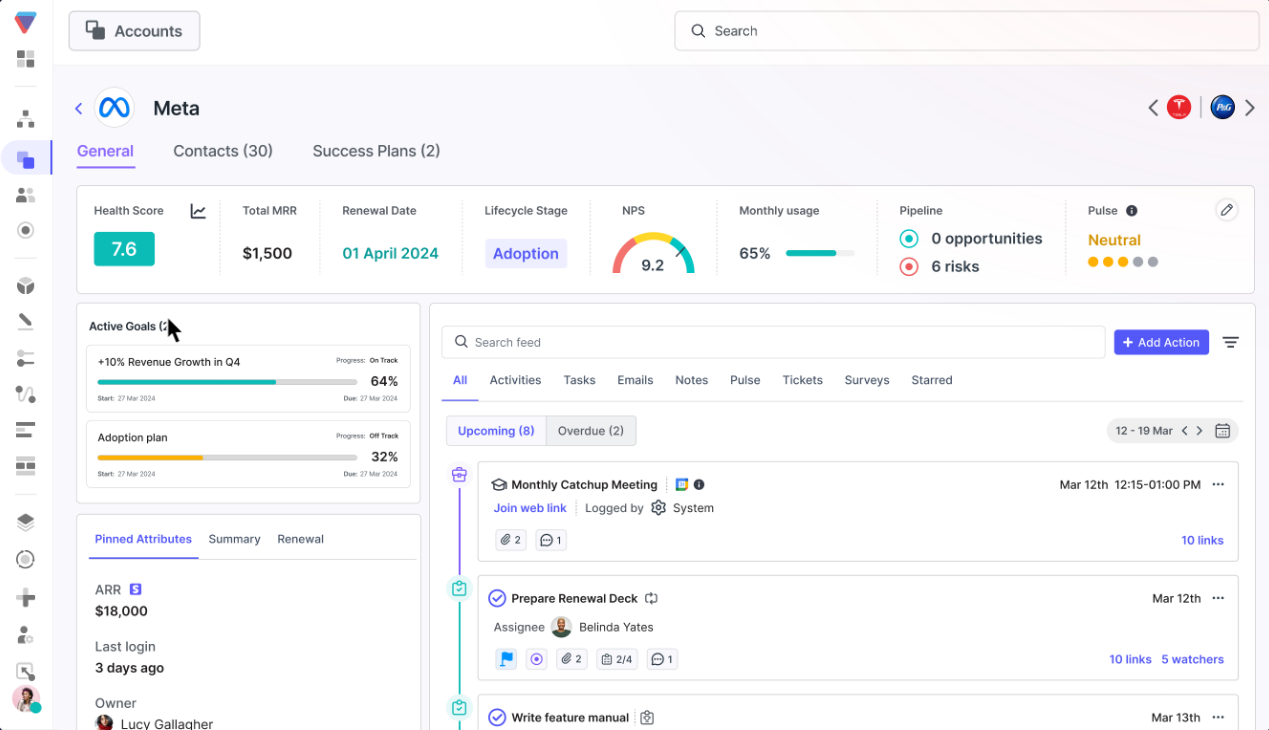
Velaris, a highly rated software on G2, is an AI-native Customer Success platform built to help teams not just identify churn risk, but understand why it’s happening and what to do about it.
Unlike traditional tools that rely heavily on static health scores, Velaris analyzes customer interactions, product usage, and engagement signals in real time to surface meaningful churn risks. This gives teams deeper context and allows them to act earlier with more confidence.
Key features:
- AI-powered churn signals (Headlines, CallSense, AI Topics): Automatically analyzes emails, calls, and customer interactions to detect risk signals and sentiment shifts
- AI Agents: Velaris offers purpose-built AI agents for workflows like risk detection, opportunity identification, onboarding, renewals, handoffs, and custom use cases, helping teams continuously monitor accounts and act on what matters.
- MCP: Velaris MCP gives external AI tools secure access to connected customer context, so teams can work with Velaris data from tools like ChatGPT and Claude.
- Unified customer data across systems: Combines product usage, CRM data, support tickets, and communication into a single view for accurate churn analysis
- Predictive health scoring and risk detection: Identifies at-risk accounts based on behavioral patterns, not just manual inputs
- Automated workflows via Bridge: Triggers alerts and actions when churn signals are detected, helping teams respond quickly
- Copilot for recommended actions: Suggests next steps based on account context, making it easier to move from insight to action
Best for:
Mid-market and enterprise teams looking for an AI-native platform with deep context and automation to both predict and prevent churn
2. Gainsight
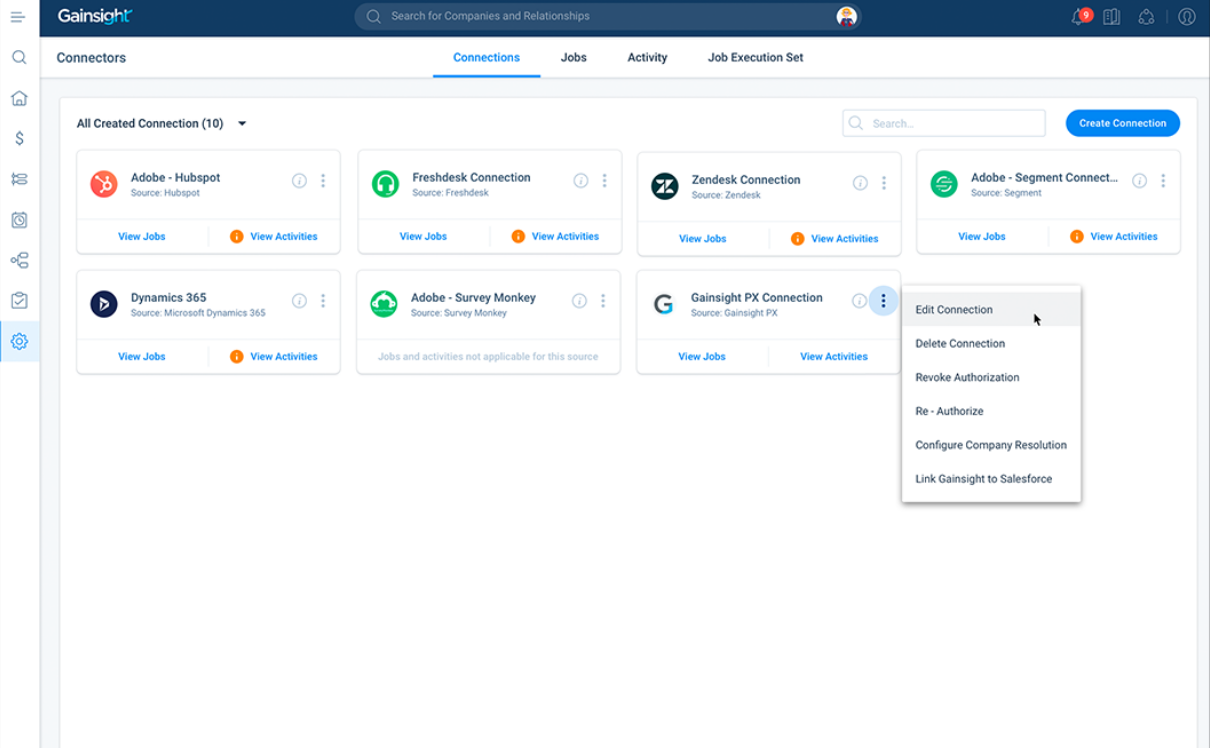
Gainsight is an established Customer Success platform, known for its robust approach to churn prediction through structured health scoring and predictive modeling.
It combines multiple customer signals such as usage, engagement, and lifecycle data to identify at-risk accounts. While it requires significant setup, it offers strong capabilities for teams that need detailed visibility and control over churn risk.
Key features:
- Advanced health scoring: Combines multiple data points to create customizable health scores that indicate churn risk
- Predictive churn modeling: Uses historical data and trends to forecast which customers are likely to churn
- Customer journey orchestration: Tracks lifecycle stages and identifies risk points across the customer journey
- Reporting and dashboards: Provides detailed insights into churn trends, risk segments, and performance metrics
- Extensive integrations: Connects with CRM, product analytics, and support tools to enrich churn analysis
Best for:
Large enterprise teams with complex Customer Success operations that need deep customization and detailed churn analysis
3. ChurnZero
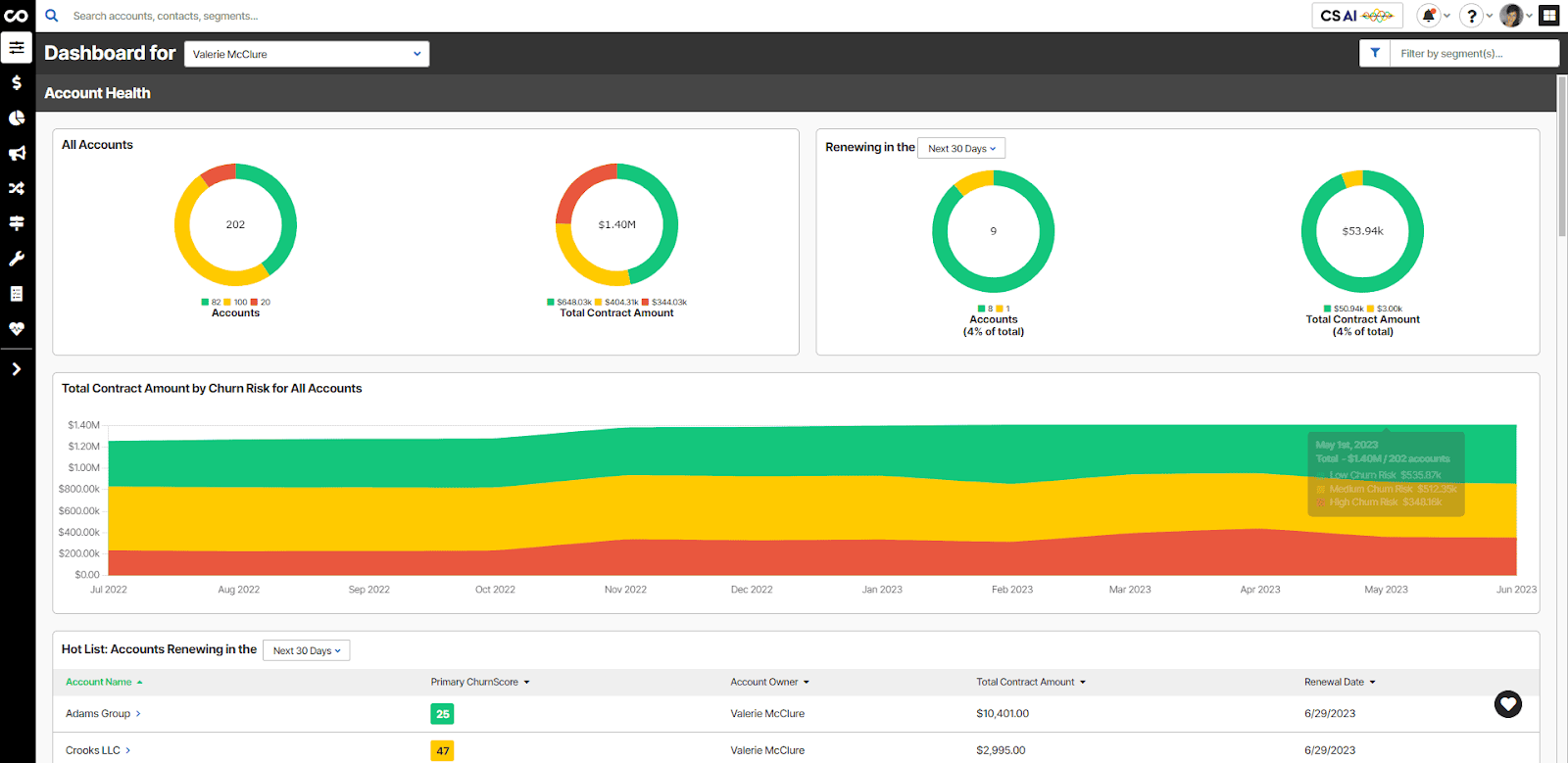
ChurnZero focuses on real-time customer data and engagement signals to help teams identify and reduce churn risk.
Rather than relying only on periodic analysis, it continuously tracks customer behavior and interaction patterns. This allows teams to spot changes in engagement early and take action before issues escalate into churn.
Key features:
- Real-time health scoring: Continuously updates customer health based on usage and engagement signals
- Customer engagement tracking: Monitors product usage and interaction patterns to identify declining activity
- Automated playbooks: Triggers predefined actions when churn risk signals are detected
- In-app messaging: Enables targeted communication to re-engage at-risk users directly within the product
- Reporting tools: Provides visibility into churn trends, risk segments, and engagement metrics
Best for:
Mid-market and enterprise teams focused on using engagement data and proactive outreach to reduce churn
4. Totango
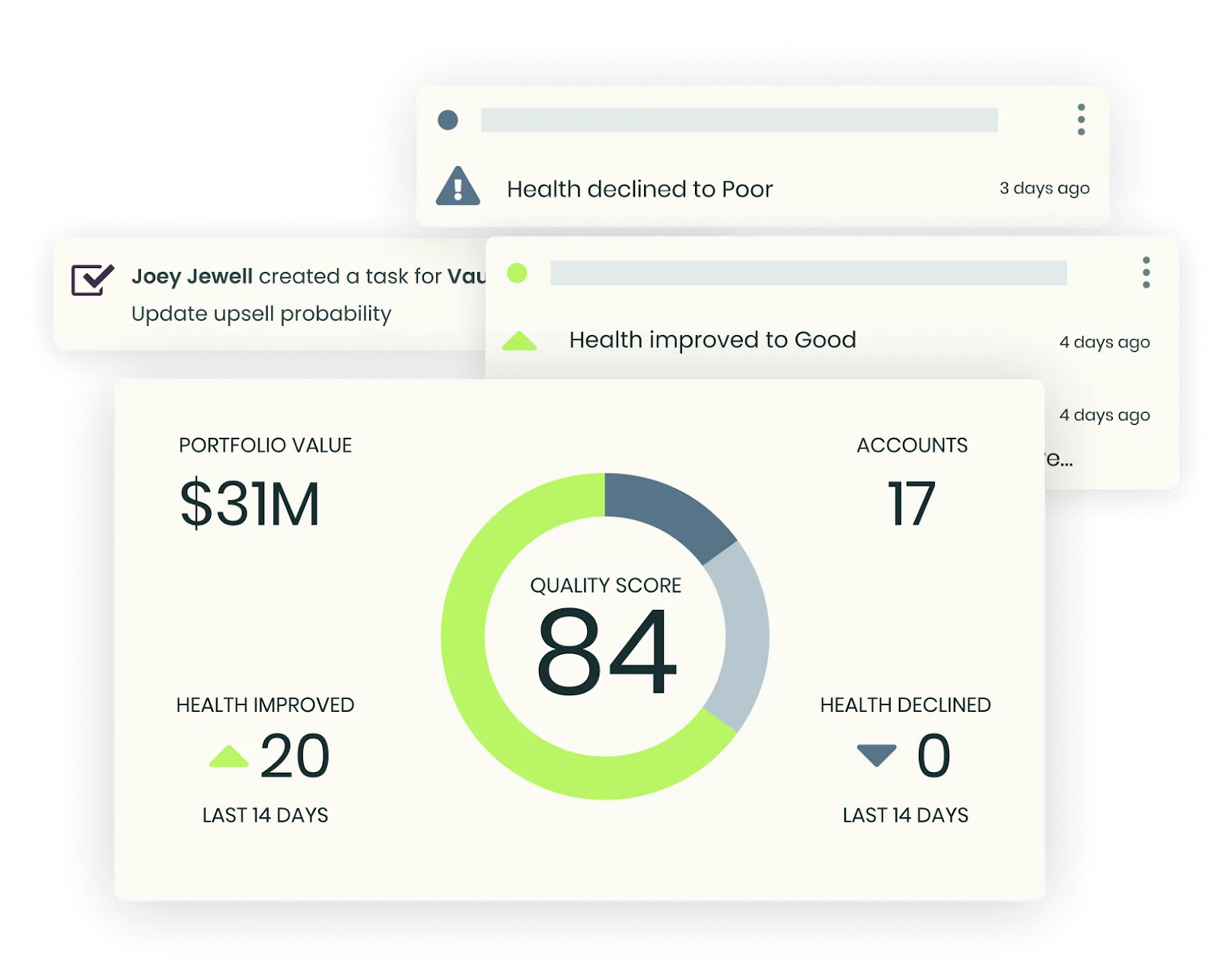
Totango takes a modular approach to churn prediction, allowing teams to build and customize how they track and respond to customer risk.
It helps teams segment customers, monitor health, and identify churn signals across different stages of the customer journey. Its structure makes it easier to scale churn management processes without overcomplicating setup.
Key features:
- Modular success blocks: Pre-built components that help teams track and manage churn risk across different use cases
- Health scoring and segmentation: Identifies at-risk customers based on behavior, engagement, and lifecycle stage
- Customer journey tracking: Maps customer progression and highlights points where churn risk increases
- Automation workflows: Triggers actions when risk signals are detected, enabling faster response
- Pre-built templates: Provides ready-to-use frameworks for managing churn and customer health
Best for:
Teams looking for a scalable, modular Customer Success platform with flexible pricing and customizable churn workflows
5. Pecan AI
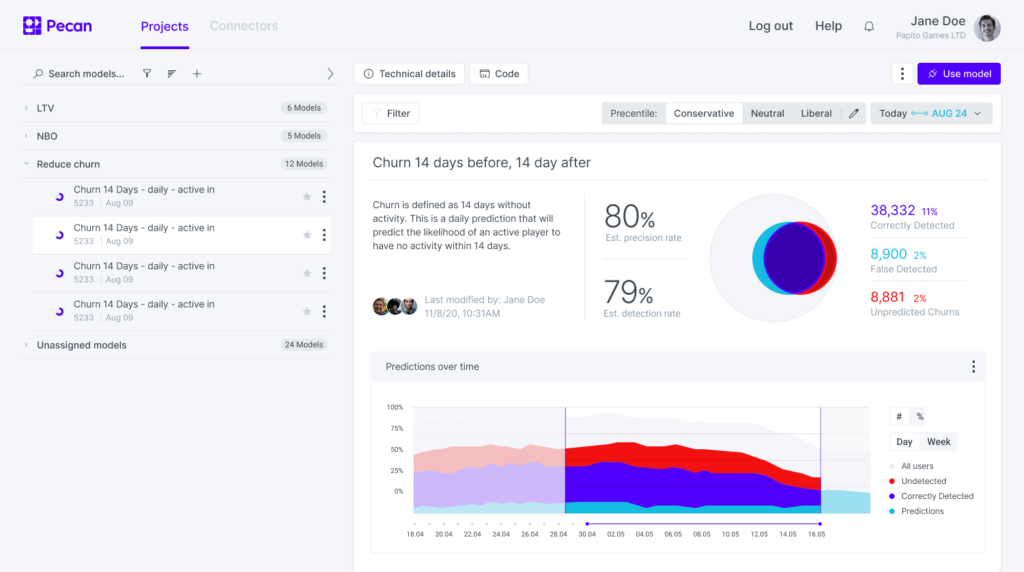
Pecan AI is a predictive analytics platform that focuses on building machine learning models to identify churn risk.
Unlike Customer Success platforms, it operates primarily at the data and modeling layer. It analyzes historical customer data to surface patterns associated with churn, helping teams identify which accounts may be at risk.
Key features:
- Predictive churn modeling: Uses machine learning to identify customers that may be at risk based on historical data
- Automated data preparation: Helps structure and clean data for model building
- No-code model building: Allows non-technical users to create churn prediction models
- Continuous model updates: Refreshes predictions as new data becomes available
- Churn risk scoring: Assigns likelihood scores to help prioritize accounts
Best for:
Teams with strong data foundations that want to add predictive modeling to their churn analysis alongside existing tools
6. Akkio
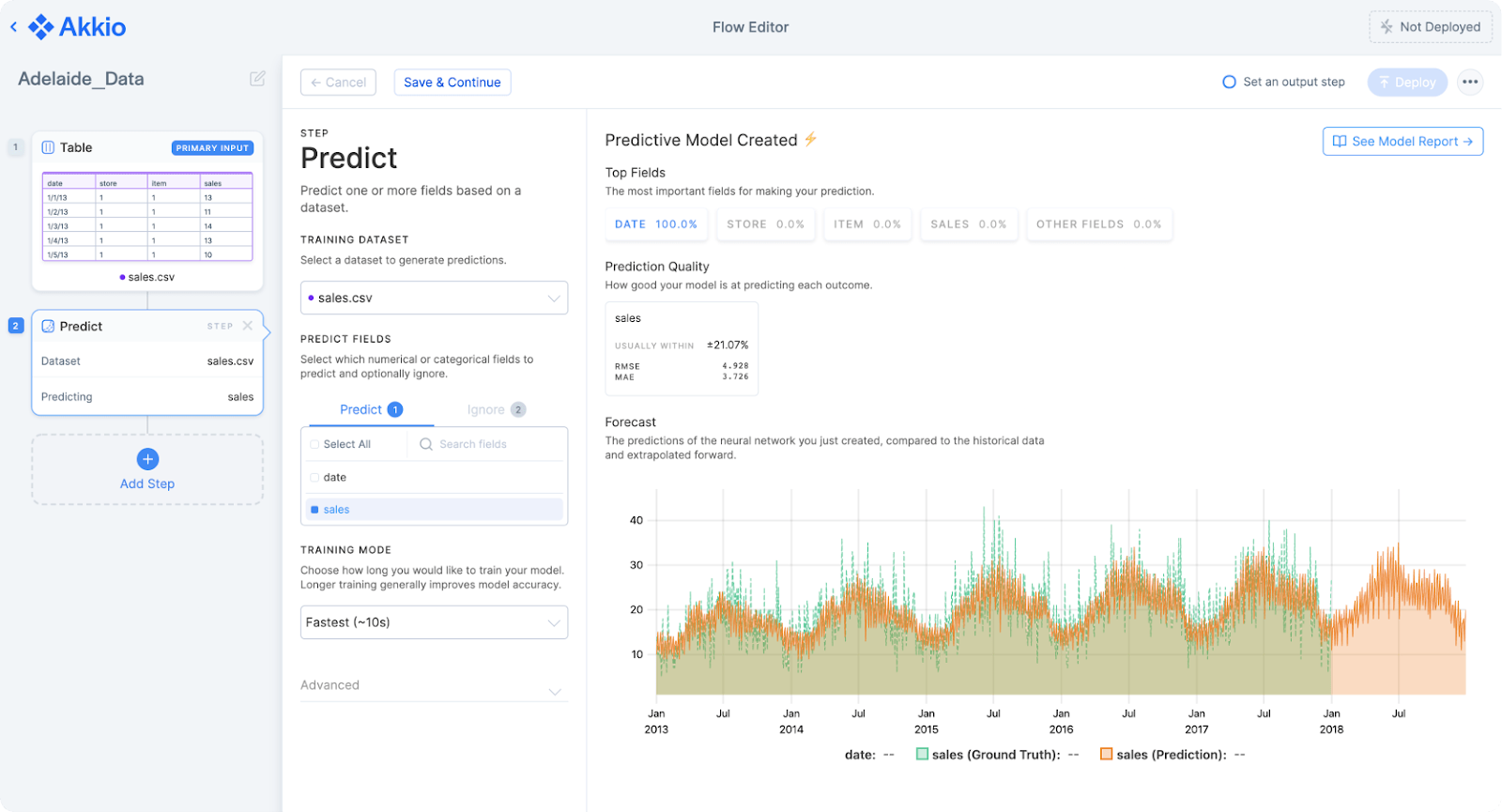
Akkio is a no-code AI platform that enables teams to build predictive models, including churn prediction, without requiring technical expertise.
It is designed to make machine learning more accessible, allowing business teams to analyze customer data and generate predictions that can be used to identify potential churn risks.
Key features:
- No-code predictive modeling: Build churn prediction models without coding
- Data integration: Connects to various data sources to analyze customer behavior
- Real-time predictions: Updates churn predictions as new data is introduced
- Simple deployment: Allows teams to quickly apply models to live data
- Churn scoring: Identifies customers that may be at risk based on patterns in the data
Best for:
Teams looking for an accessible way to experiment with churn prediction models without heavy technical investment
7. Qualtrics XM
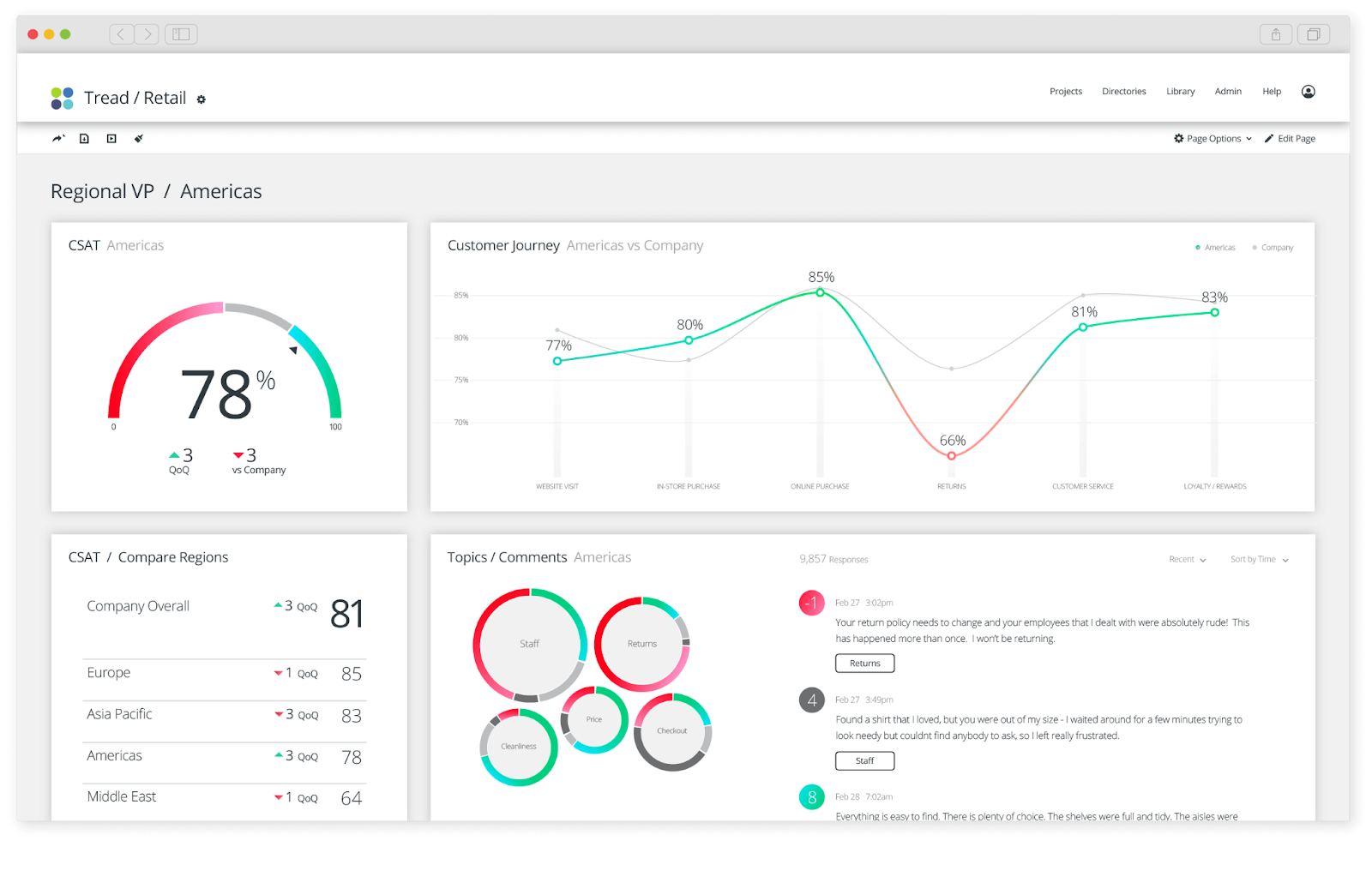
Qualtrics XM is an experience management platform that helps organizations track customer sentiment and identify churn risk through feedback and behavioral signals.
Rather than focusing purely on product usage data, Qualtrics XM emphasizes experience data such as surveys, NPS, and customer feedback to highlight early warning signs of churn.
Key features:
- Experience-based churn signals: Uses NPS, CSAT, and survey data to identify dissatisfaction and churn risk
- Predictive analytics: Applies AI to detect patterns in customer feedback that may indicate churn
- Feedback collection: Gathers insights across multiple channels including surveys and touchpoints
- Sentiment analysis: Analyzes qualitative feedback to uncover underlying issues
- Dashboards and reporting: Visualizes trends in customer experience and potential risk areas
Best for:
Teams that rely heavily on customer feedback and sentiment data to identify churn risk and improve overall experience
8. Zendesk
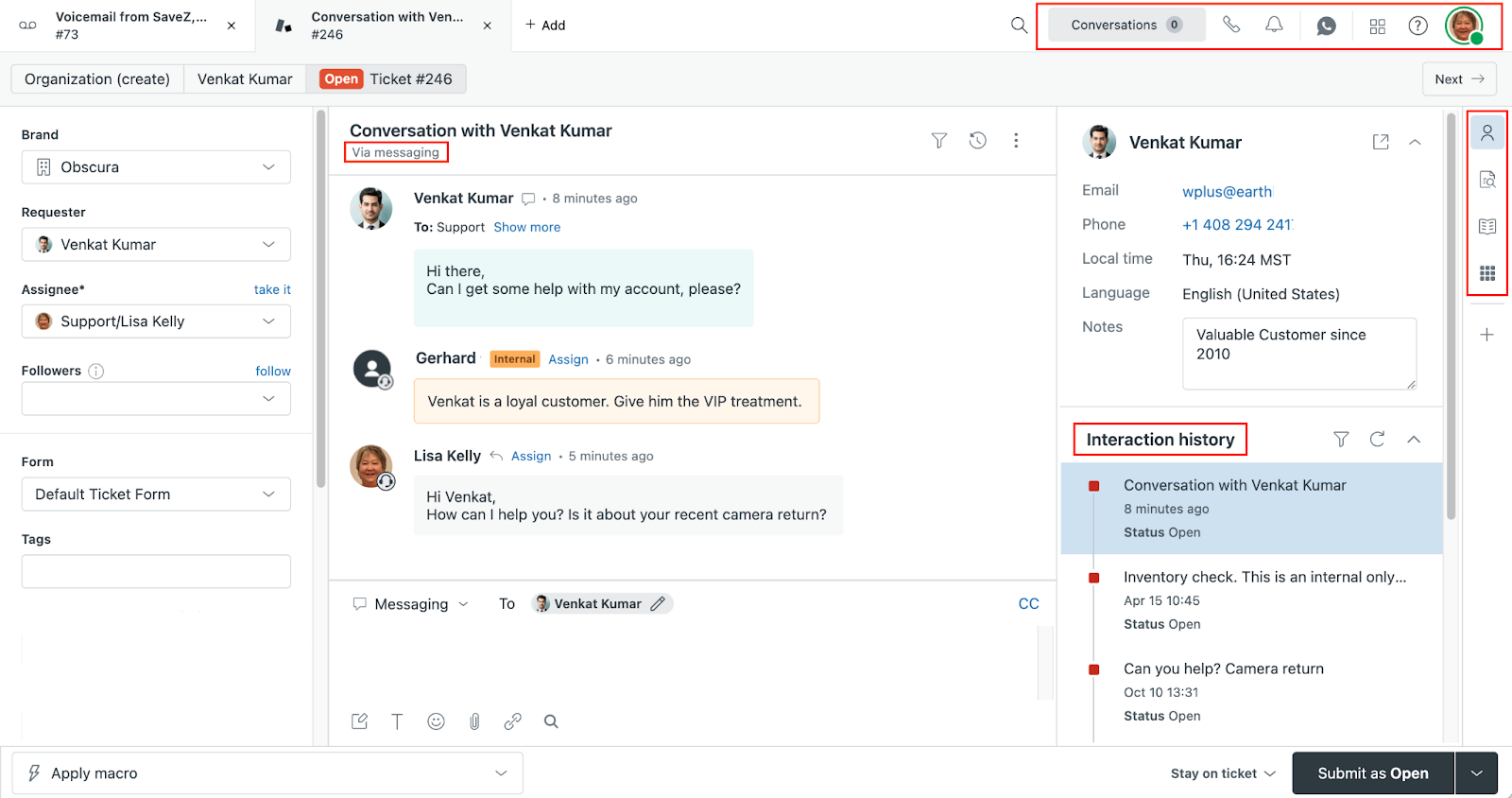
Zendesk is a customer service platform that can be used to identify churn risk through support interactions and customer engagement data.
While not a dedicated churn prediction tool, it provides visibility into customer issues, ticket trends, and response patterns that can act as early indicators of dissatisfaction and potential churn.
Key features:
- Support-driven churn signals: Identifies risk through ticket volume, unresolved issues, and response times
- Customer interaction tracking: Centralizes support conversations across channels
- Ticket analytics and reporting: Highlights trends that may indicate friction or dissatisfaction
- Customer satisfaction tracking: Captures CSAT scores to monitor experience quality
Best for:
Teams that want to use support data and customer interactions as part of their churn detection strategy
9. Planhat
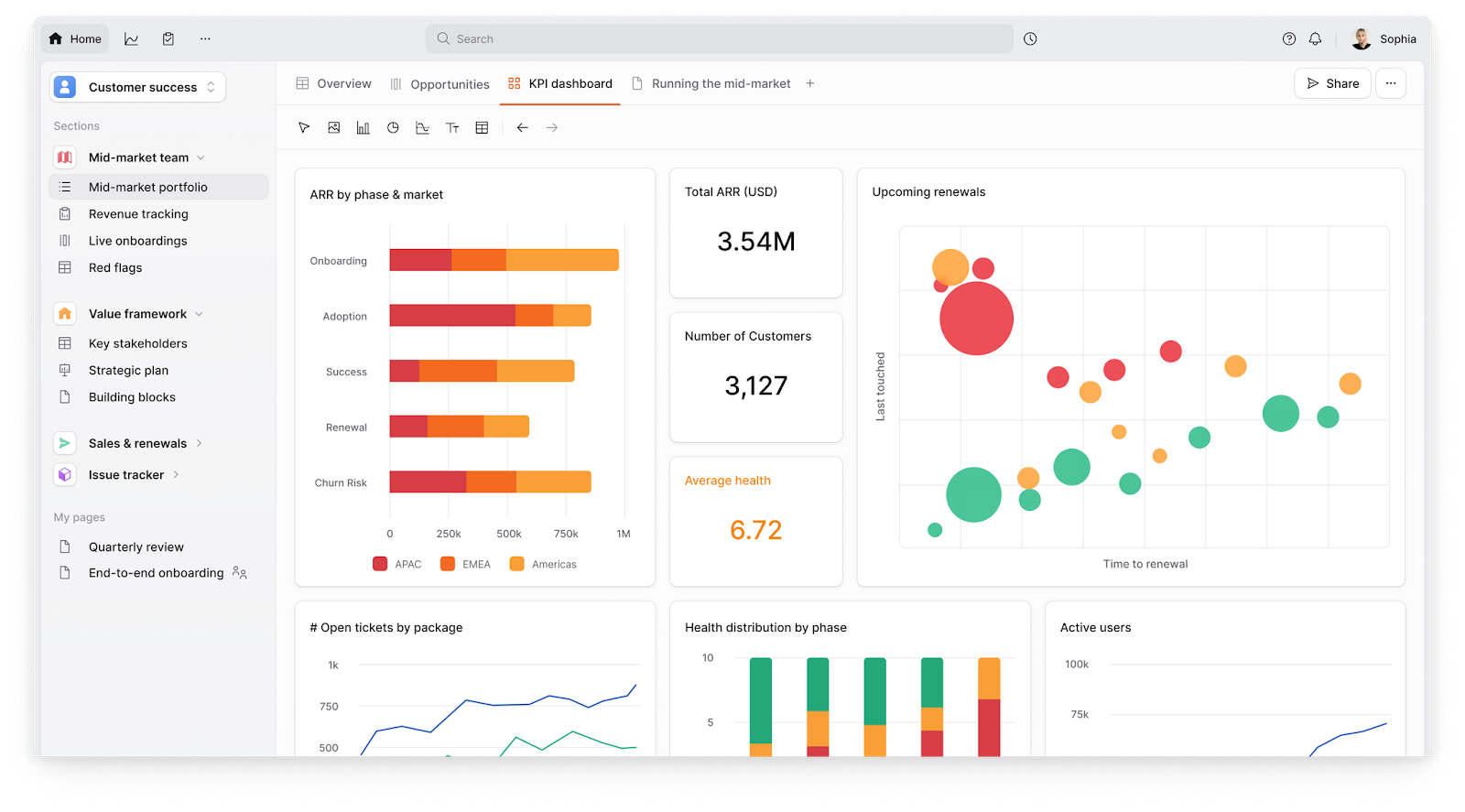
Planhat is a flexible Customer Success platform that helps teams monitor customer health and identify churn risk through usage, engagement, and lifecycle data.
Rather than relying on fixed schemas, Planhat allows teams to build custom data models and calculated metrics. This makes it useful for identifying churn risk across different products, segments, or customer hierarchies, especially in more complex SaaS setups.
Key features:
- Customer health scoring: Combines usage and engagement data to indicate potential churn risk
- Dedicated churn tracking model: Captures churn events and reasons (including primary and secondary drivers) to analyze patterns over time
- Segmentation and filtering: Helps teams identify at-risk accounts based on defined criteria
- Playbooks and automation: Enables teams to take action on churn signals
- Reporting and dashboards: Provides visibility into customer trends and risk patterns
Best for:
Customer Success teams looking for a modern UI and a structured way to monitor customer health and identify churn risk within a CS platform
10. Vitally
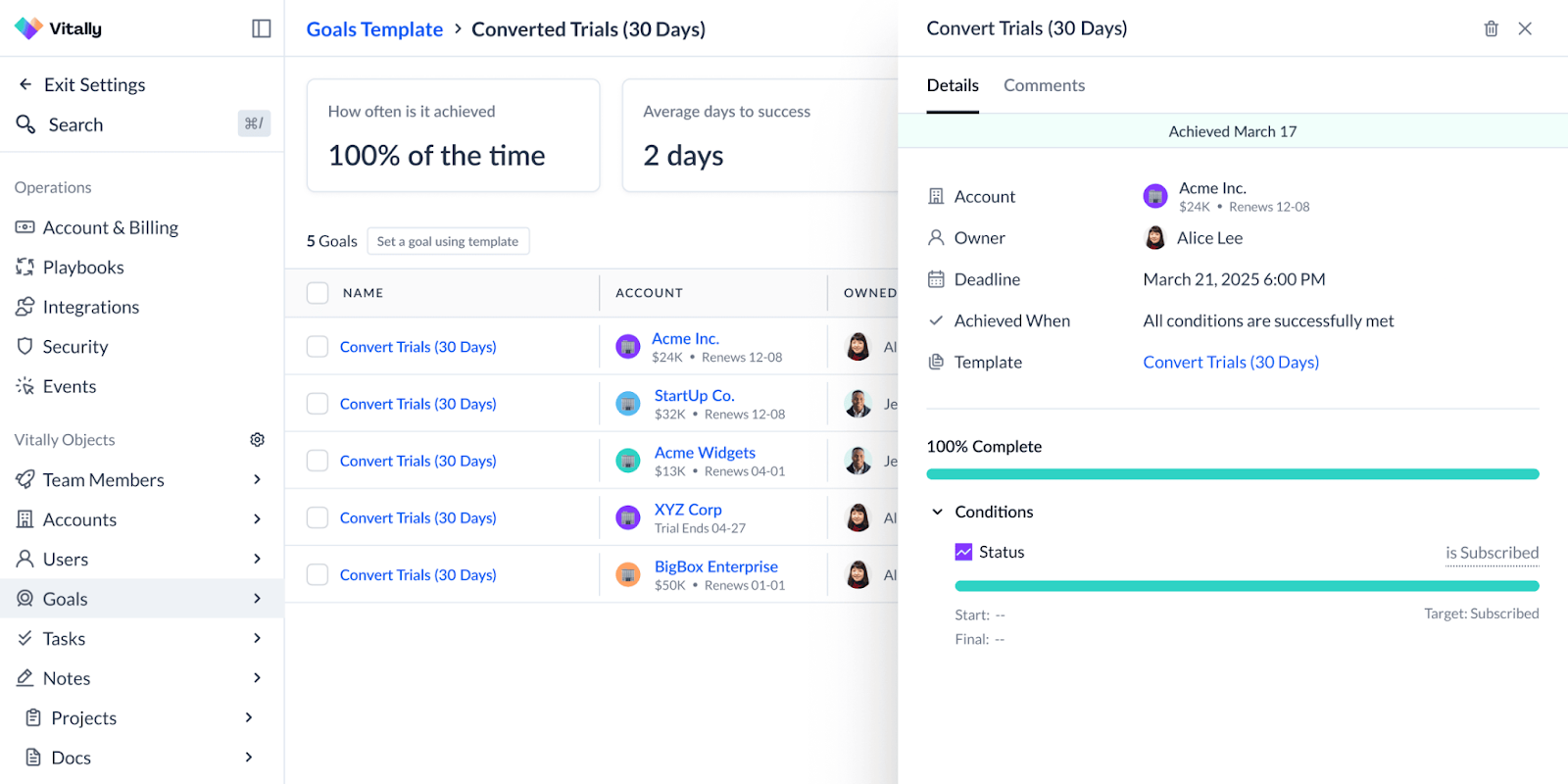
Vitally is a Customer Success platform that focuses on giving teams flexibility in how they track customer health and identify churn risk.
It is designed to be lightweight and customizable, allowing teams to define their own health scores, metrics, and workflows based on their specific churn indicators rather than relying on rigid structures.
Key features:
- Custom health scoring: Build tailored health scores using usage, engagement, and account data
- Flexible data modeling: Define custom objects and metrics to track churn signals relevant to your business
- Customer 360 view: Centralizes customer data to provide visibility into risk and engagement
- Playbooks and automation: Trigger actions based on changes in customer health or behavior
- Integrations: Connects with CRMs, product analytics, and support tools to surface churn-related signals
Best for:
Small to mid-sized teams that want a flexible and easy-to-configure platform to track churn signals without heavy implementation overhead
Conclusion
The tools in this list show that there are multiple ways to approach churn, from predictive modeling to customer health scoring to feedback analysis. The right choice depends on how your team operates, the data you have, and how quickly you need to move from insight to action.
What matters most is not just detecting churn, but being able to respond to it in a timely and informed way. Teams that combine accurate signals with clear workflows and accountability are far more likely to reduce churn and drive long-term growth.
If you want to see how this works in practice, book a demo to see how Velaris, a highly rated software on G2, helps teams unify customer data, surface churn signals across every interaction, and take action faster.
Frequently Asked Questions
What is churn prediction software?
Churn prediction software helps businesses identify customers who are likely to stop using a product or service. It analyzes data such as product usage, engagement, and customer interactions to surface early warning signs of churn.
How do you choose the right churn prediction tool?
The right tool depends on your team’s needs and data maturity. If you need actionable insights and workflows, a Customer Success platform may be a better fit. If you already have strong data infrastructure, a predictive analytics tool can add deeper modeling capabilities. It’s important to consider how easily the tool integrates with your existing systems and whether it helps you move from insight to action.
How accurate are churn prediction tools?
Accuracy depends on the quality and volume of data available. Tools that combine multiple data sources such as usage, sentiment, and support interactions tend to provide more reliable predictions than those relying on a single signal.
What data is most important for predicting churn?
The most useful data typically includes product usage trends, customer engagement levels, support interactions, and feedback signals like NPS or CSAT. Combining these signals gives a more complete picture of churn risk.

The Velaris Team
A (our) team with years of experience in Customer Success have come together to redefine CS with Velaris. One platform, limitless Success.





Velaris is an AI-native Customer Success Platform built for mid-market and enterprise B2B SaaS teams. From customer health scoring and churn prediction to onboarding automation, renewals, and expansion workflows, Velaris helps recurring revenue teams understand account health, reduce churn, and scale customer success with greater visibility and control.