We look forward to showing you Velaris, but first we'd like to know a little bit about you.


10 Best Net Promoter Score (NPS) Software Tools for 2026
The Velaris Team
September 14, 2026
Net Promoter Score (NPS) software helps businesses collect customer feedback, understand the reasons behind each score, and act on what they learn. The right tool depends on whether you need a simple survey platform, an in-product feedback tool, or a Customer Success Platform.
Running an NPS survey is easy enough. Most platforms can send the question, calculate the score, and show the results in a dashboard. The harder part is finding a platform that takes you beyond the signals.
In this guide, we compare 10 of the best NPS software tools for 2026, looking at what each one does well, where it falls short, and which teams it is best suited for.
Key takeaways
- AskNicely and Nicereply are strongest when NPS needs to feed directly into frontline service workflows.
- Velaris and CustomerGauge are better suited to B2B teams that want NPS connected to wider account context.
- Qualtrics and Medallia are built for large enterprise Voice of Customer programs.
- Pendo is a strong choice when in-app feedback and product usage are the priority.
- Survicate and SurveyMonkey offer more flexible, general-purpose survey capabilities.
- Retently is a strong middle ground for teams that want dedicated NPS automation without enterprise complexity.
1. AskNicely
Overview
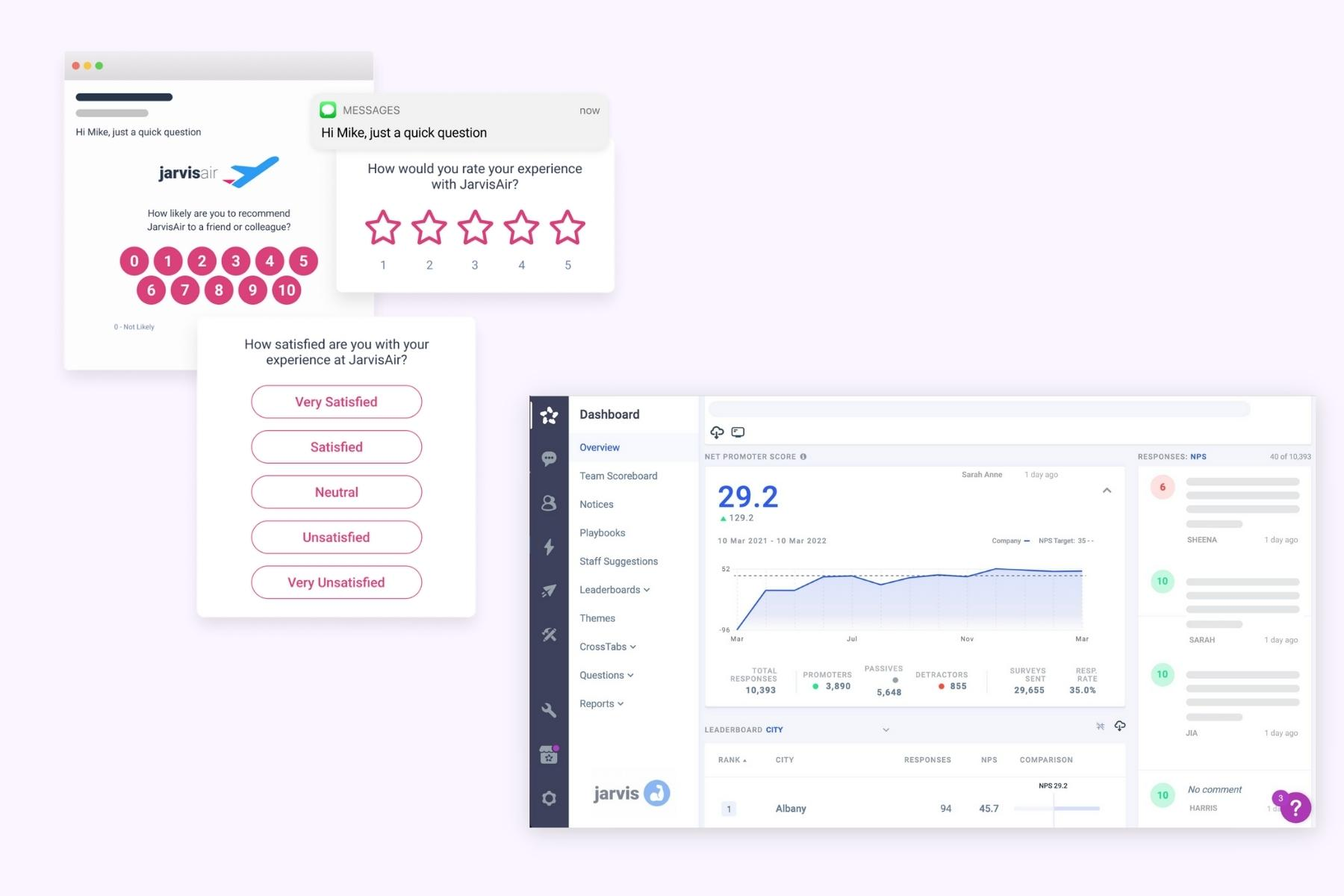
AskNicely is a customer experience platform built around Net Promoter Score (NPS) and Customer Satisfaction (CSAT) feedback. Its main differentiator is what happens after feedback is collected: results can be tied to employees or teams and used to guide frontline coaching.
This makes it particularly relevant for service businesses where customer experience depends heavily on day-to-day interactions with frontline staff.
Best for
Service businesses that want to turn customer feedback into frontline coaching and operational improvements.
What it does well
- Multichannel surveys: AskNicely supports NPS and CSAT surveys across email, SMS, WhatsApp, QR codes, and mobile channels.
- Real-time workflows: Feedback can trigger automated workflows and be assigned to specific team members for follow-up.
- Frontline coaching: Higher-tier plans include tools for coaching employees and tracking performance against customer experience goals.
- Reputation management: Teams can use positive feedback to request reviews and generate testimonials.
- AI assistance: AskNicely includes AI-generated summaries and suggested responses, while its NiceAI add-on can analyze feedback and automate additional actions.
Limitations and considerations
- AskNicely is heavily geared toward frontline service businesses, so its coaching and employee performance features may be less relevant to B2B SaaS teams.
- More advanced AI functionality, including NiceAI Agents, is sold as an optional add-on.
Pricing
AskNicely does not display fixed prices on its main pricing page. Plans start from 500 responses per year and scale based on response volume, with Learn, Grow, and Transform tiers offering progressively more advanced feedback and coaching features.
AskNicely separately states that pricing starts at $449 per month.
2. Retently
Overview
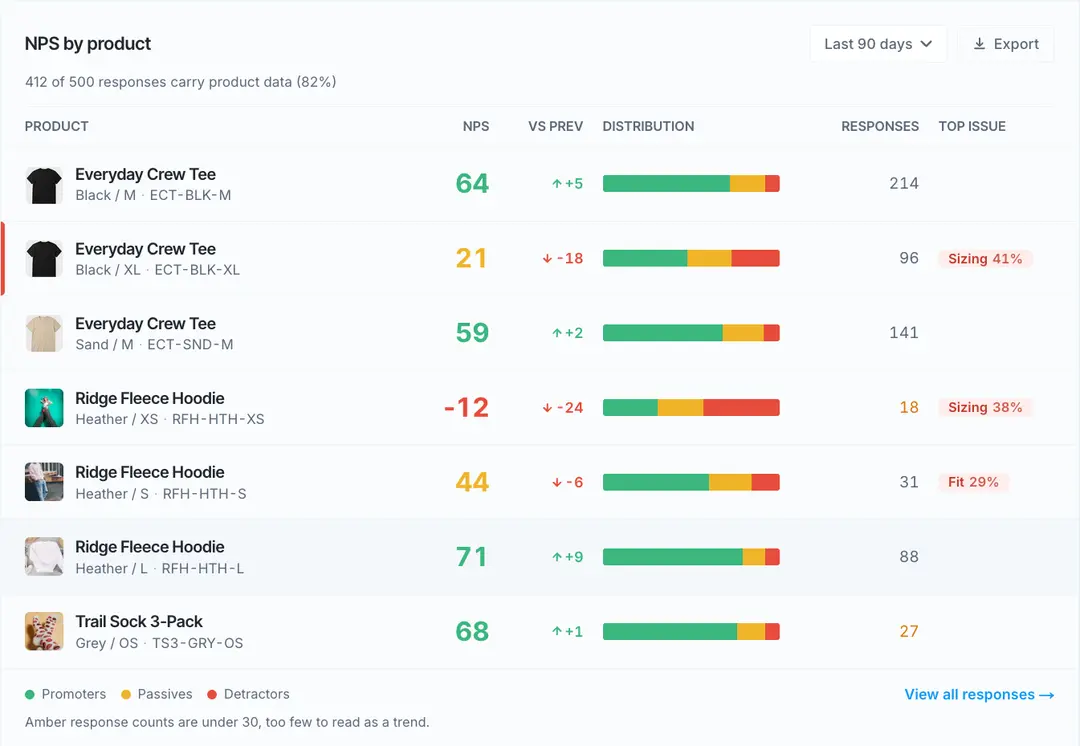
Retently is a dedicated customer experience platform for running Net Promoter Score (NPS), Customer Satisfaction (CSAT), and Customer Effort Score (CES) programs.
Its main strength is automation. Teams can trigger surveys at different points in the customer journey, then route responses into follow-up workflows or existing business systems.
Best for
SaaS, B2B, and ecommerce companies that want a dedicated feedback platform with strong survey automation.
What it does well
- Automated campaigns: Surveys can be sent on a recurring schedule or triggered by events such as onboarding milestones or support interactions.
- Multiple survey channels: Retently supports email, in-app, link, and SMS-based surveys.
- Survey personalization: Teams can customize survey branding and use customer data to personalize campaigns.
- Feedback alerts: New responses can trigger notifications through email, Slack, or Microsoft Teams.
- AI analysis: Retently can automatically classify feedback, identify topics, and analyze sentiment.
- Integrations: Native integrations include HubSpot, Salesforce, Intercom, Zendesk, and several ecommerce platforms.
Limitations and considerations
- Retently is primarily a feedback platform, so teams that want NPS embedded within a broader Customer Success workspace may still need another system.
- Some advanced integrations and enterprise functionality are limited to higher-tier plans.
Pricing
Retently publishes pricing for several plans. Its Ecommerce Basic plan currently starts at $99 per month, including 2,500 surveys, 10 campaigns, and three seats.
The Ecommerce Pro plan starts at $299 per month, while enterprise pricing is customized.
3. Velaris
Overview
Velaris is an AI-native Customer Success Platform for mid-market and enterprise B2B teams. It currently has a 4.5/5 rating on G2 across 126 reviews.
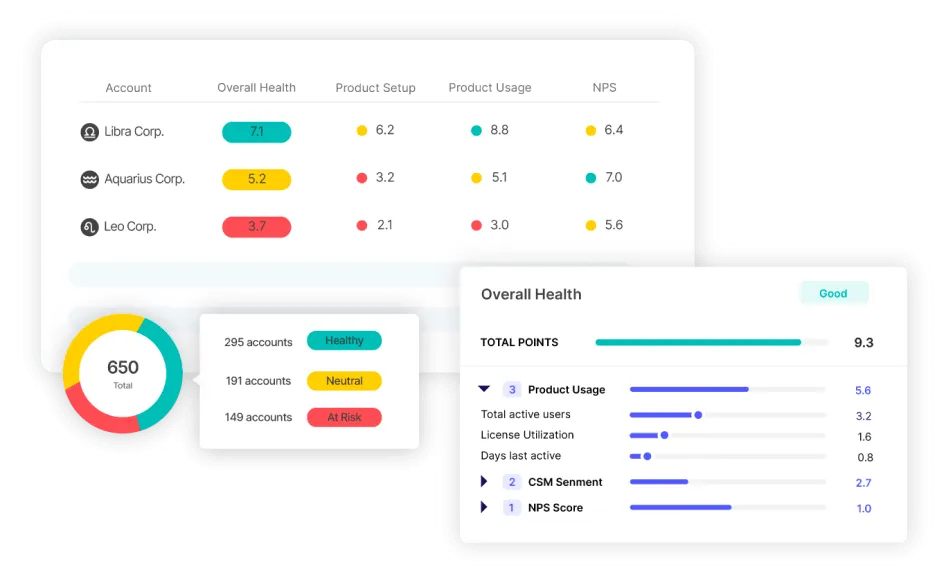
Unlike standalone NPS tools, Velaris connects survey responses to the wider customer relationship. NPS can sit alongside health scores, account activity, customer conversations, and other post-sales signals in the same platform.
Best for
B2B SaaS and recurring-revenue companies that want NPS to feed directly into Customer Success workflows.
What it does well
- Built-in surveys: Velaris supports NPS, Customer Satisfaction Score (CSAT), and Customer Effort Score (CES) surveys through email and web.
- Customer health: Survey responses can be considered alongside broader health and account data rather than viewed in isolation.
- Customer context: Feedback sits alongside product usage, account activity, and customer conversations in a unified customer view.
- Automation: Teams can use survey data within automated Customer Success workflows and campaigns.
- AI analysis: Velaris analyzes customer conversations for sentiment and recurring themes, helping teams put survey feedback into a wider qualitative context.
Limitations and considerations
- Velaris is a broader Customer Success Platform rather than a dedicated market research or survey product.
- Teams that only need to run occasional standalone NPS surveys may not need its wider health, automation, and post-sales functionality.
Pricing
Velaris does not publish fixed pricing. Plans are tailored to each organization, with the core license including five users and unlimited viewers. Surveys are included within the platform's Analyze functionality.
4. CustomerGauge
Overview
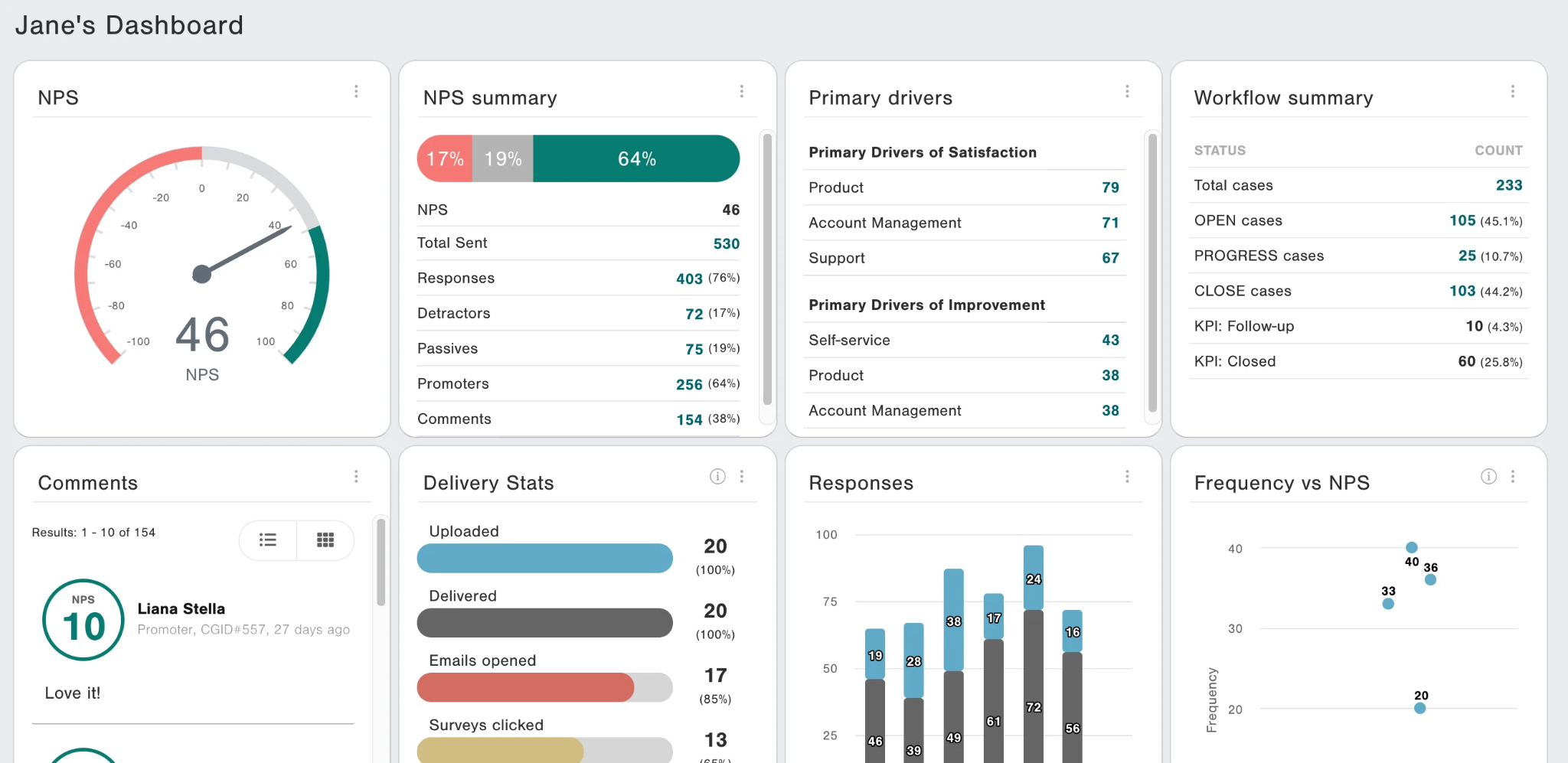
CustomerGauge is a B2B experience platform built around Account-Centric Net Promoter Score (NPS). Instead of looking at every survey response in isolation, it combines feedback across stakeholders to create a clearer view of the overall account.
It also connects NPS directly to revenue, helping teams understand which accounts are at risk and where poor customer experience could have the biggest financial impact.
Best for
Mid-market and enterprise B2B companies that want to connect NPS with account health, retention, and revenue.
What it does well
- Account-Centric NPS: Combines feedback from multiple stakeholders to give teams an account-level view rather than relying on a single contact.
- Revenue-Based NPS: Connects customer sentiment to revenue so teams can prioritize the accounts with the greatest financial impact.
- Account hierarchies: Teams can drill into individual accounts while still understanding relationships across larger customer structures.
- Closed-loop workflows: Responses can trigger churn alerts and follow-up workflows so feedback reaches the right team quickly.
- Root-cause analysis: CustomerGauge helps identify the factors driving NPS and shows which issues matter most among high-revenue customers.
- AI agents: CustomerGauge's AI agents can analyze feedback, flag risks, and help teams turn survey signals into action.
Limitations and considerations
- CustomerGauge is highly specialized around B2B customer experience and account-level NPS, so teams looking for a general-purpose survey platform may not need its depth.
- Its starting price also makes it better suited to established customer experience programs than smaller teams running occasional surveys.
Pricing
CustomerGauge pricing starts at $24,000 per year. Pricing is based on the size of the account base and the modules selected rather than the number of users or survey responses.
All plans include unlimited surveys, users, and integrations.
5. Qualtrics
Overview
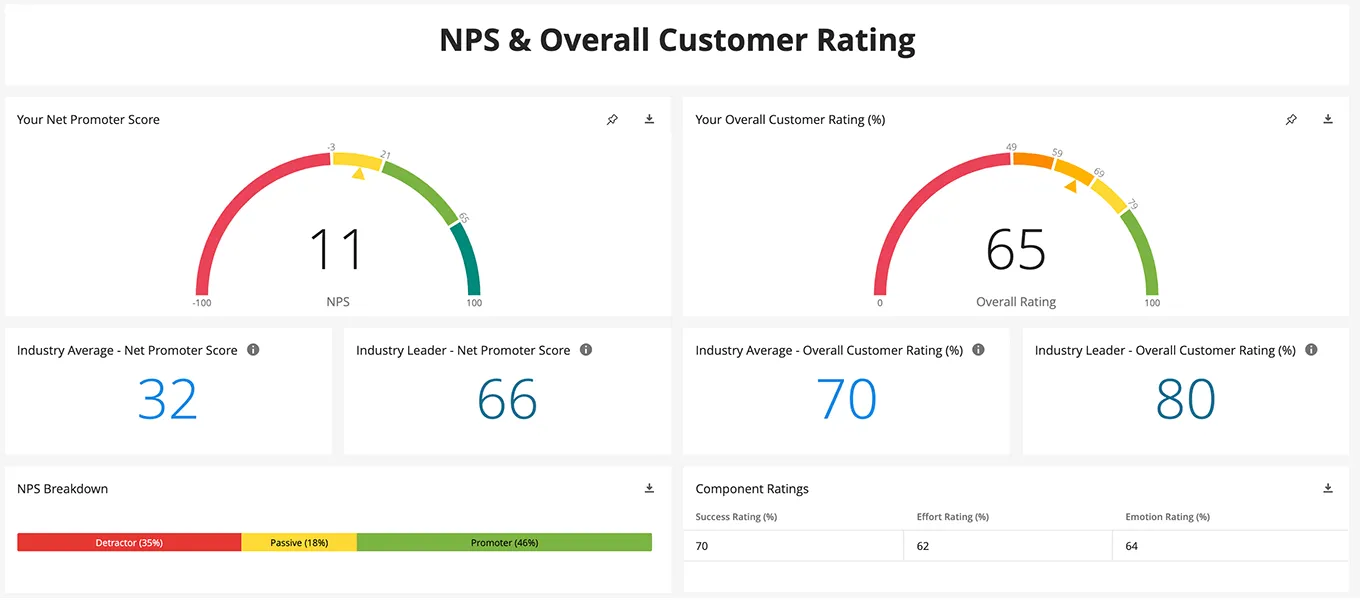
Qualtrics is an enterprise experience management platform that supports Net Promoter Score (NPS) as part of a much broader Voice of Customer program.
It can combine survey feedback with signals from digital channels, contact centers, reviews, and other customer interactions. This gives large organizations a more complete view of the customer journey than a standalone NPS tool.
Best for
Large enterprises running mature customer experience programs across multiple channels and business units.
What it does well
- Relationship and transactional NPS: Qualtrics supports both recurring relationship surveys and surveys triggered after specific customer interactions.
- Advanced survey design: Teams can build detailed surveys with branching, embedded customer data, and follow-up questions.
- Voice of Customer analysis: Feedback from surveys can be analyzed alongside signals from calls, digital experiences, social media, and reviews.
- AI analysis: Qualtrics uses AI to identify themes and drivers across open-text feedback and other unstructured customer data.
- Closed-loop workflows: Negative feedback can be routed to the appropriate team so issues are followed up rather than left in a dashboard.
- Customer journey insights: Teams can analyze which touchpoints are having the biggest impact on customer satisfaction and loyalty.
Limitations and considerations
- Qualtrics is considerably broader than most teams need if their main goal is simply to run NPS surveys.
- Its depth and flexibility can also make implementation and administration more involved than lightweight survey tools.
Pricing
Qualtrics does not publish fixed prices for its Customer Experience products. Pricing is provided on request and is based on planned usage and the number of customer interactions processed by the platform.
6. Medallia
Overview
Medallia is an enterprise experience management platform built for organizations that collect customer feedback across many different channels.
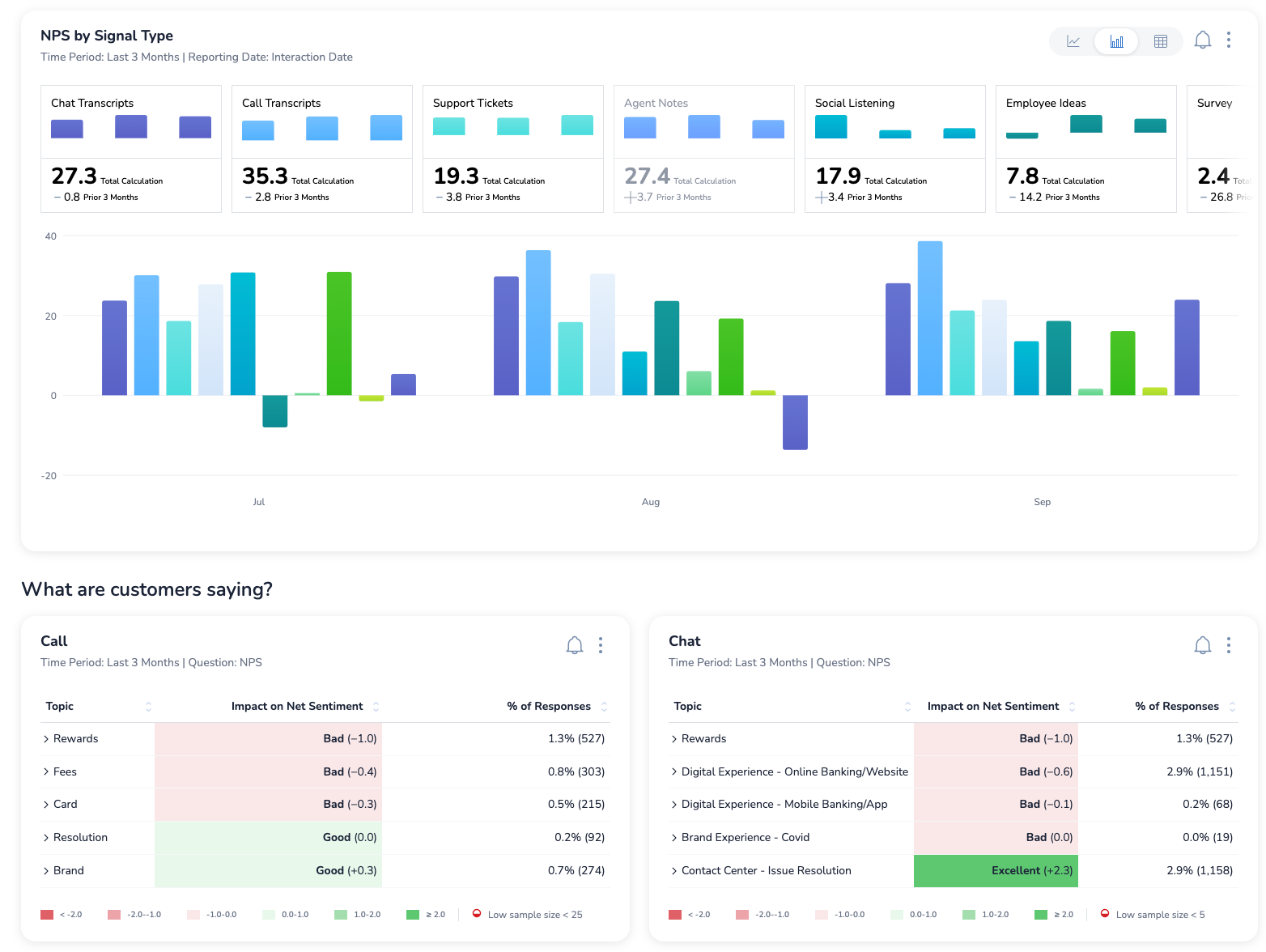
Rather than relying only on surveys, Medallia can combine NPS with signals from digital experiences, contact centers, social channels, and other customer interactions. This helps teams understand what is driving satisfaction at a much broader level.
Best for
Large enterprises running sophisticated customer experience programs across multiple channels.
What it does well
- Broad signal capture: Medallia can combine surveys with digital feedback, speech, social signals, and other customer data.
- Text and speech analytics: AI-powered analytics help teams identify themes and sentiment across written feedback and customer conversations.
- Root-cause analysis: Teams can investigate what is driving changes in NPS and other experience metrics.
- Automated alerts: Feedback can trigger alerts so teams know when an issue requires attention.
- Case management: Teams can assign and manage follow-up activity directly from customer feedback.
- Closed-loop feedback: Medallia supports workflows that help teams respond to customers and track issues through resolution.
Limitations and considerations
- Medallia is much broader than a dedicated NPS platform, so smaller businesses may not need the full range of experience management capabilities.
- Its enterprise focus also means implementation is likely to be more involved than with a lightweight survey tool.
Pricing
Medallia does not publish fixed prices. It uses an Experience Data Record (EDR) model, where pricing is based on the volume of customer or employee interactions processed by the platform rather than simply on users or survey responses.
Pricing is structured in annual tiers and includes analytics, workflows, reporting, and other Experience Cloud capabilities.
7. Survicate
Overview
Survicate is a customer feedback platform for collecting Net Promoter Score (NPS) alongside other types of customer research.
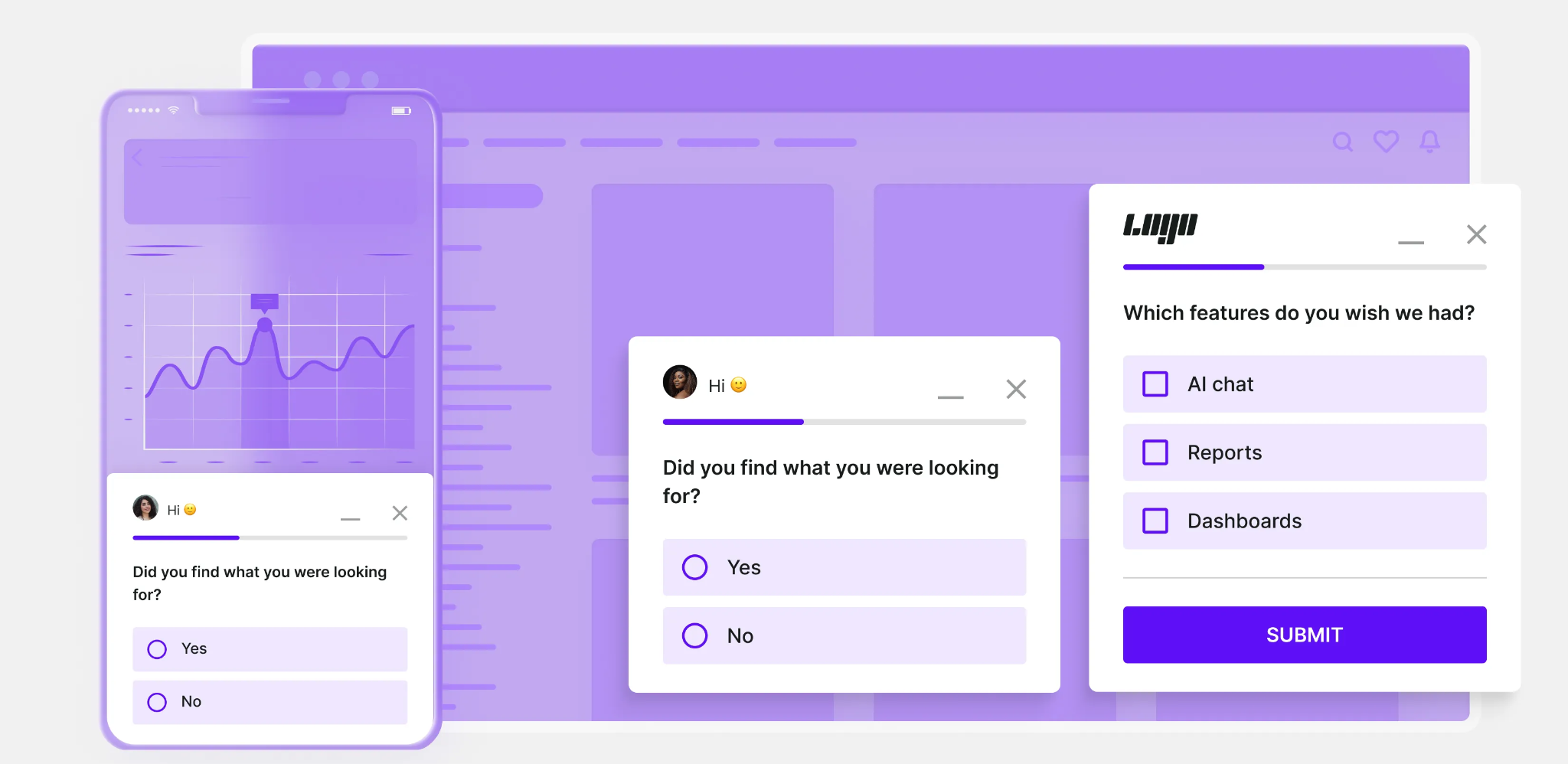
Its main strength is flexibility. Teams can run surveys across websites, products, mobile apps, email, and other digital touchpoints, then analyze the results in the same platform. (survicate.com)
Best for
Product, Customer Experience, and Customer Success teams that need flexible feedback collection across multiple digital channels.
What it does well
- Multichannel surveys: Survicate supports website, in-product, mobile, email, link, QR code, and kiosk surveys. (survicate.com)
- In-product NPS: Teams can collect NPS directly inside web and mobile products. (survicate.com)
- Targeting and segmentation: Surveys can be shown to specific users based on customer attributes and behavior.
- Integrations: Survicate connects with tools such as HubSpot and Intercom, letting teams pass survey responses into existing customer workflows. (survicate.com)
- AI analysis: Its Research Assistant can summarize feedback and surface recurring themes across surveys and connected sources. (survicate.com)
- Feedback repository: Research Hub brings NPS, CSAT, CES, interviews, and other qualitative feedback into one searchable workspace. (survicate.com)
Limitations and considerations
- Survicate is focused on collecting and analyzing feedback rather than managing the wider customer relationship.
- Response limits and access to more advanced analytics vary by plan. (survicate.com)
Pricing
Survicate offers a free option for teams that want to test the platform, with limits on responses and AI usage.
Paid plans increase the available response volume and add capabilities such as advanced analytics, segmentation, integrations, and reporting. Pricing varies based on the plan and usage required. (survicate.com)
8. Pendo
Overview
Pendo is primarily a product experience platform, but it also includes Net Promoter Score (NPS) surveys for web and mobile products.
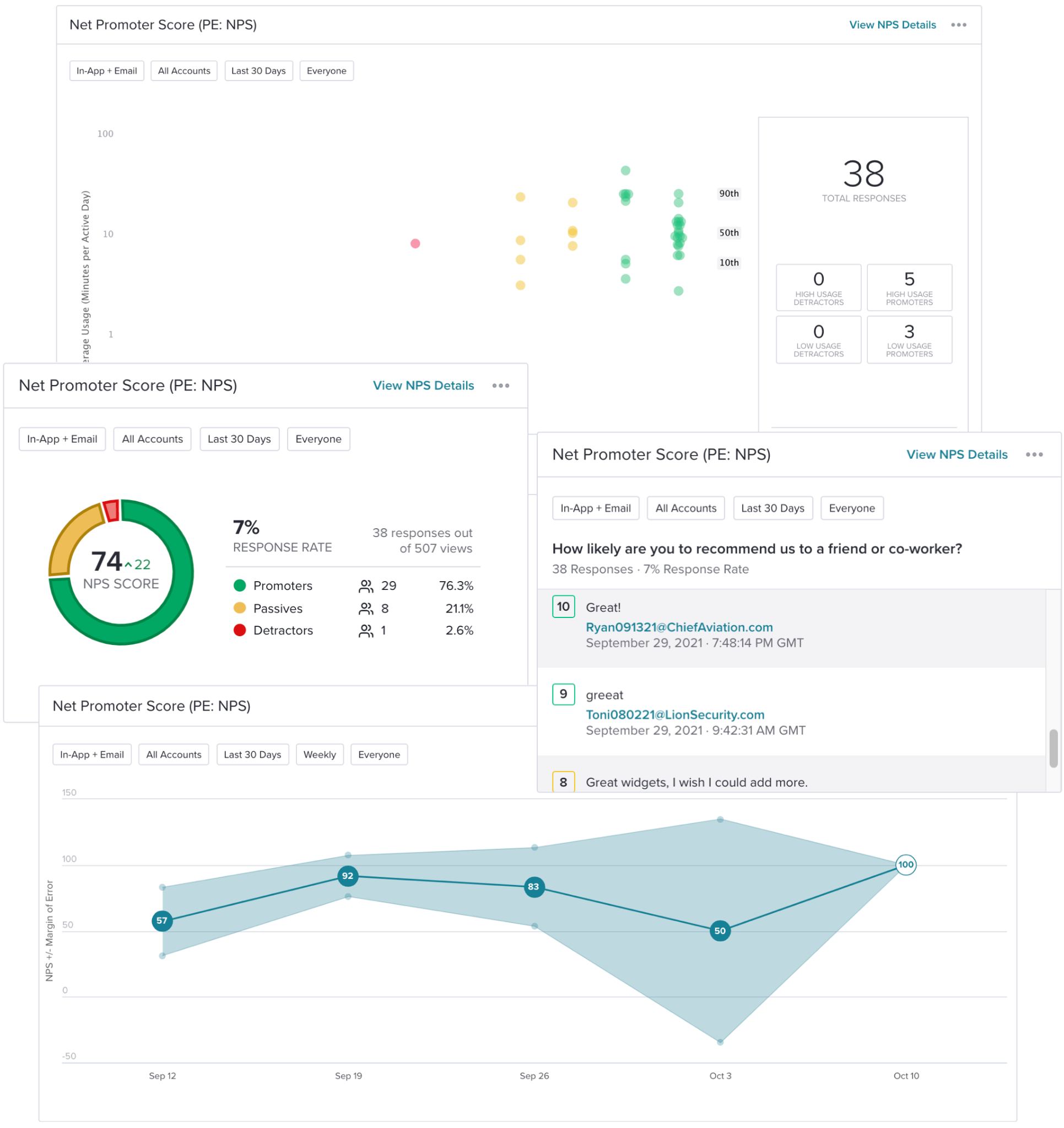
Its main advantage is context. Product teams can connect NPS responses with product usage data to better understand how customer sentiment relates to the way people actually use the product.
Best for
SaaS product teams that want to connect in-app NPS with product behavior and usage data.
What it does well
- In-app NPS: Surveys can be delivered directly inside web applications.
- Mobile surveys: Pendo also supports NPS collection inside mobile apps.
- Segmentation: Teams can target surveys to specific groups of users based on product or customer data.
- Recurring surveys: NPS campaigns can be scheduled and repeated over time.
- Product context: Teams can compare NPS with usage patterns and account revenue to better understand what may be influencing sentiment.
- Feedback analysis: Pendo can automatically identify themes in written NPS responses and generate summaries using AI.
- Email backup: Web surveys can send an email follow-up to users who do not see the in-app survey.
Limitations and considerations
- NPS is one part of a much broader product experience platform, so teams that only need surveys may not need the wider functionality.
- Its strongest use case is feedback from active product users. Relationship NPS involving executives or other stakeholders who rarely log in may require a different approach.
- On paid plans, NPS is accessed through Pendo Sentiment, which must be included in the customer’s contract.
Pricing
Pendo offers a free plan that includes standalone NPS surveys for up to 500 monthly active users.
For paid customers, NPS and other survey types are available through Pendo Sentiment. Sentiment is included with some plans and available as an add-on with others, while paid pricing is provided on request.
9. Nicereply
Overview
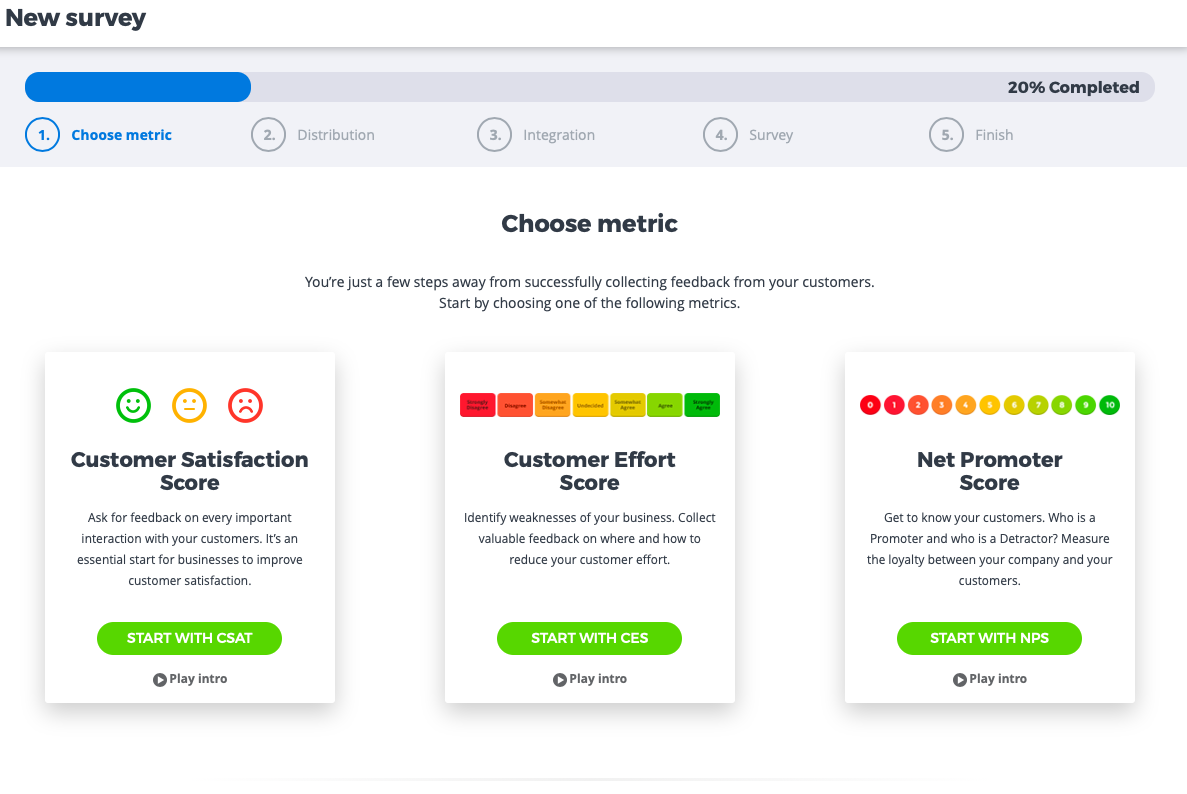
Nicereply is a customer feedback platform built largely around support and service interactions. It supports Net Promoter Score (NPS), Customer Satisfaction (CSAT), and Customer Effort Score (CES) surveys, with a strong focus on helpdesk workflows. (nicereply.com)
Teams can collect feedback directly after tickets or conversations, then connect responses back to the interaction that triggered them. (nicereply.com)
Best for
Customer support and service teams that want NPS closely connected to helpdesk tickets and agent workflows.
What it does well
- Multiple feedback metrics: Nicereply supports NPS, CSAT, and CES within the same platform. (nicereply.com)
- Post-resolution surveys: Teams can automatically ask for feedback after a ticket, chat, or conversation is resolved. (nicereply.com)
- Flexible survey delivery: Surveys can be added to email signatures or sent through links and website pop-ups. (nicereply.com)
- Helpdesk integrations: Nicereply integrates with tools including Zendesk, Front, Help Scout, Freshdesk, and Kustomer. (nicereply.com)
- Feedback in context: Survey responses can be pushed back into the relevant helpdesk ticket, making it easier to understand what happened before a customer gave their score. (nicereply.com)
- Feedback analytics: Dashboards and reporting help teams track trends and compare performance across agents or teams. (nicereply.com)
Limitations and considerations
- Nicereply is strongest when feedback is tied to customer support interactions, so it may be less suitable for broader Voice of Customer programs.
- It also provides less account-level context than platforms designed around B2B Customer Success or account management.
Pricing
Nicereply starts at $59 per month when billed annually for its Starter plan. This includes 100 responses per month and three users.
Higher tiers increase both response and user limits. Essential starts at $119 per month, Growth at $239, and Business at $359, when billed annually. (nicereply.com)
10. SurveyMonkey
Overview
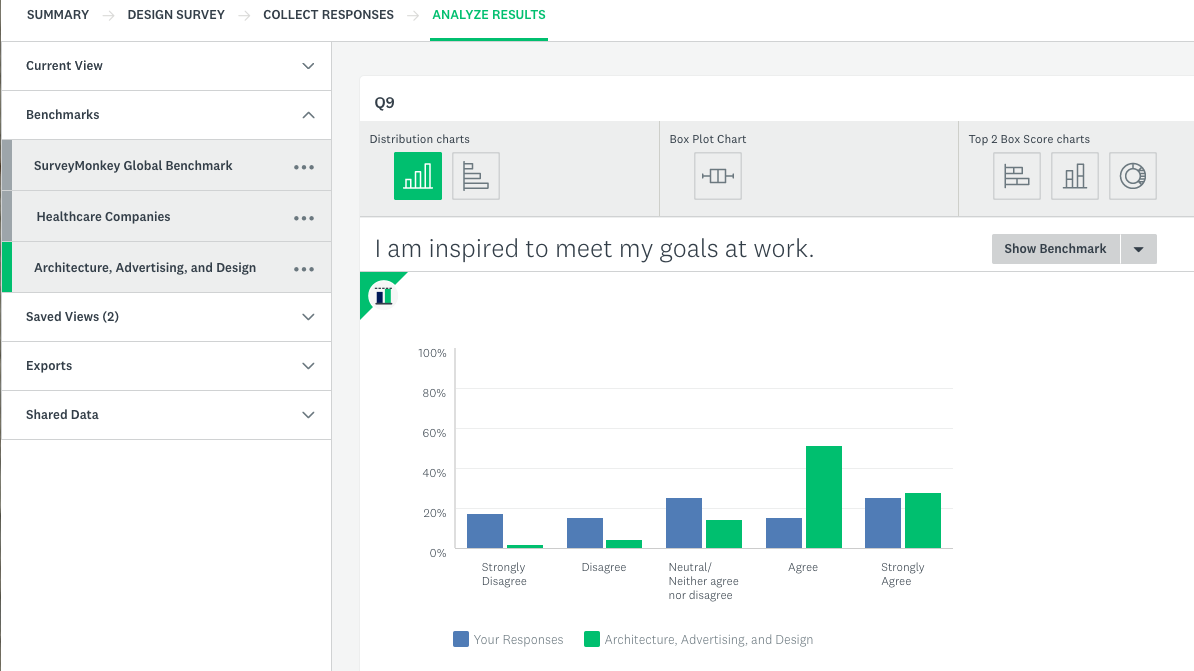
SurveyMonkey is a general-purpose survey platform that supports Net Promoter Score (NPS) alongside many other types of customer and market research.
It includes a dedicated NPS question type and automatically calculates the resulting score. This makes it a straightforward option for teams that want NPS without adopting a specialized customer experience platform.
Best for
Small and mid-sized businesses that want NPS as part of a broader survey and research toolkit.
What it does well
- Easy survey creation: Teams can build surveys using templates, pre-written questions, and different question types.
- Built-in NPS calculation: SurveyMonkey automatically classifies responses and calculates the overall NPS.
- Flexible survey design: Paid plans add more advanced logic, branding, and customization options.
- AI analysis: Analyze with AI can answer questions about survey results and generate summaries or charts.
- Thematic analysis: Open-text feedback can be grouped into recurring themes, while sentiment analysis helps teams understand the tone behind responses.
- Broad use cases: The same platform can be used for NPS, customer research, employee feedback, and other survey programs.
Limitations and considerations
- NPS is one survey type within a much broader platform rather than the main focus of the product.
- Closed-loop Customer Success workflows are less central than they are in dedicated NPS or Customer Success Platforms.
- Response limits and advanced analysis features vary by plan.
Pricing
SurveyMonkey offers a free Basic plan. Individual paid plans currently start at $39 per month for Advantage Annual, billed at $468 per year. Premier Annual costs $139 per month when billed annually.
For teams, Team Advantage starts at $30 per user per month with a minimum of three users. Team Premier starts at $92 per user per month, while Enterprise pricing is available on request.
Which Net Promoter Score software is right for your team?
The right NPS software depends on what you want to do with the feedback once you collect it.
SurveyMonkey and Survicate are strong options when survey collection is the main priority. AskNicely and Nicereply are better suited to teams that want feedback tied closely to frontline service workflows.
For Customer Success teams, the challenge is slightly different. Knowing that a customer gave you a low score is only useful if you also understand who gave it, what else is happening in the account, and what needs to happen next.
Velaris, which is highly rated on G2, brings NPS into the wider customer context. Survey feedback can contribute to customer health and sit alongside other account signals, helping teams identify risk and decide where to focus.
If you want to see how Velaris can help your team turn NPS feedback into Customer Success action, book a demo.
Frequently Asked Questions
Do you need dedicated Net Promoter Score software?
Not always. If you only run occasional Net Promoter Score (NPS) surveys, a general survey platform may be enough.
Dedicated NPS software becomes more useful when you want automated survey programs, closed-loop follow-up, deeper analysis, or stronger connections to customer data.
What is the difference between Net Promoter Score software and survey software?
Survey software is designed to collect many types of feedback. NPS software is more focused on running NPS programs and helping teams act on the results.
That often means stronger support for recurring surveys, Detractor follow-up, trend analysis, and customer segmentation.
Can Net Promoter Score software integrate with a Customer Relationship Management platform?
Yes. Many NPS tools integrate with Customer Relationship Management (CRM) platforms such as Salesforce or HubSpot.
This lets teams connect survey responses to customer records and use NPS data in follow-up workflows or reporting.
How often should you send Net Promoter Score surveys?
It depends on the type of survey. Relationship NPS is usually sent at regular intervals, while transactional NPS is triggered after a specific customer experience.
The most important thing is to avoid surveying customers so often that response quality drops.
What should you do when a customer gives a low Net Promoter Score?
Start by understanding why they gave the score. Review their feedback and look at the wider customer relationship before deciding what action to take.
A low score may indicate churn risk, but it should be considered alongside other signals such as engagement and customer health.
Can Net Promoter Score software measure Customer Satisfaction and Customer Effort too?
Many platforms support more than NPS. It is common for the same tool to also measure Customer Satisfaction (CSAT) and Customer Effort Score (CES).
Using several feedback metrics can give teams a more complete view of customer sentiment across different stages of the relationship.

The Velaris Team
A (our) team with years of experience in Customer Success have come together to redefine CS with Velaris. One platform, limitless Success.




Velaris is an AI-native Customer Success Platform built for mid-market and enterprise B2B SaaS teams. From customer health scoring and churn prediction to onboarding automation, renewals, and expansion workflows, Velaris helps recurring revenue teams understand account health, reduce churn, and scale customer success with greater visibility and control.